Gairsain session: Little time for meaningful legislative business
By ARUN PRATAP SINGH
Garhwal Post Bureau
Dehradun, 26 Oct: The Uttarakhand Assembly’s two-day session beginning tomorrow at Bhararisain in Gairsain is expected to witness considerable political heat, with the Opposition preparing to corner the Pushkar Singh Dhami government on several issues of public importance. The Congress has announced an Assembly gherao on the opening day tomorrow, while the government is preparing to table a supplementary budget of approximately Rs 7,000 crores and eight Bills during the session.
The proceedings will begin with the House paying tributes to former Chief Minister General BC Khanduri and former minister Hira Singh Bist. The supplementary budget and Bills will subsequently be introduced.
The second day is scheduled to include Question Hour and consideration of the legislative business introduced on the opening day.
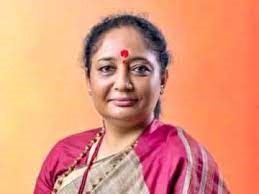
According to Assembly Speaker Ritu Khanduri Bhushan, 31 MLAs have submitted 426 questions for the session. The questions are expected to cover various issues concerning public amenities, infrastructure, healthcare, education, employment and other matters affecting the people of the state.
The Congress, meanwhile, has announced a demonstration and Assembly gherao, with the Pradesh Pradhan Sangathan and Uttarakhand Kranti Dal also expected to participate in protests against the government. In view of the anticipated demonstrations, extensive security arrangements have been made around the Assembly complex and adjoining areas.
However, beyond the immediate political confrontation, the forthcoming session once again draws attention to a rather disturbing trend in Uttarakhand’s parliamentary functioning. Assembly sessions have become increasingly short, particularly in recent years, often lasting just two to four days. This has considerably reduced the time available for legislators to discuss public issues, scrutinise government policies and hold the executive accountable. With so short sessions, questions asked during the session are not able to cover many departments and ministries. In fact, it has been quite long since the questions could really be asked regarding the departments under the direct control of the Chief Minister since Mondays have rarely witnessed any sittings of the House for long and it is the day fixed for the departments under the CM.
The Opposition has repeatedly accused the government of deliberately restricting the duration of sessions to avoid uncomfortable questions and meaningful debate. There is certainly merit in questioning the government’s reluctance to provide adequate time for legislative business. However, several political observers and news analysts have also pointed out that the Opposition cannot entirely absolve itself of responsibility for this situation.
The criticism is that Opposition parties, too, have not demonstrated consistent seriousness or sustained interest in ensuring longer and more productive sessions. Their participation in preparatory meetings, particularly those of the Business Advisory Committee, has often been inconsistent. This time, too, Congress representatives stayed away from the recent meetings convened by the Speaker to finalise the session’s agenda. Moreover, disruptions, walkouts and protests have, on several occasions, consumed valuable House time instead of being followed by sustained debate.
Garhwal Post had consistently highlighted how Assembly sittings in Uttarakhand have declined from 18 days in 2017 to just eight days in 2022. Even after this, there is hardly any improvement in the situation. It may be recalled that the Assembly’s Rules of Procedure envisage 60 sittings annually, although this benchmark has remained unmet ever since the formation of the state assembly. The August 2025 monsoon session provided another example when repeated disruptions resulted in its proceedings concluding in less than two days, with Question Hour and Zero Hour failing to take place.
The larger question, therefore, is not merely whether the government is avoiding questions or whether the Opposition is being denied opportunities to raise them. It is whether elected representatives on both sides are genuinely committed to making the Assembly an effective forum for democratic accountability.
Uttarakhand, with its persistent problems of unemployment, migration, inadequate healthcare, poor connectivity and recurring natural disasters, requires considerably more legislative attention than what its increasingly brief Assembly sessions provide. Merely submitting hundreds of questions or staging protests outside the House cannot substitute for meaningful legislative participation. Ultimately, the people of the state lose when both government accountability and Opposition scrutiny are reduced to parliamentary formalities.
Meanwhile, as far as the current session and the security arrangements related to the session beginning tomorrow go, Chamoli Police have divided the Assembly area and Gairsain region into five super zones and 13 sectors, deploying approximately 1,500 police personnel. The arrangements include civil and armed police, the Provincial Armed Constabulary, Anti-Terrorism Squad, dog squad and bomb disposal teams. Iron gates, barricades and concertina wire have been installed at sensitive approach routes to prevent demonstrators from reaching the Assembly premises.