State Foundation Day
Garhwal Post Bureau
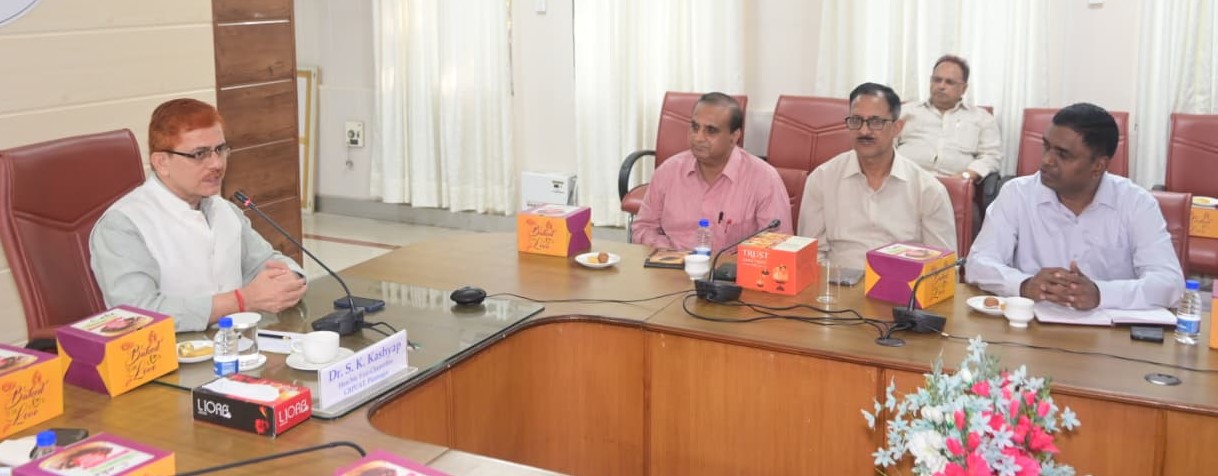
Pantnagar, 10 Nov: On the occasion of Uttarakhand State Foundation Day, Govind Ballabh Pant University of Agriculture and Technology (GBPUAT), Pantnagar, convened a high-level meeting to deliberate on strengthening the university’s role in the integrated and accelerated development of the state’s hill regions.
Vice-Chancellor Dr Shivendra Kumar Kashyap chaired the meeting, which was attended by the Registrar, all deans, directors and other senior officials.
Emphasising the need to extend the university’s academic, research and extension activities beyond the plains, the Vice-Chancellor called for a focused approach to ensure that the benefits of agricultural research and technological interventions reach farmers in the remotest parts of the hill districts. He observed that the progress of Uttarakhand is intrinsically linked to the development of its hilly regions and that strengthening hill agriculture is essential for the state’s overall prosperity. He further stated that the holistic development of the hill regions was among the fundamental objectives behind the formation of Uttarakhand, and Pantnagar University must take a leading role in realising this vision.
The meeting underscored the need to strengthen the university’s extension network across all districts through a well-defined, effective and time-bound action plan. The Vice-Chancellor directed that every Krishi Vigyan Kendra (KVK) should evolve into a district-level agricultural knowledge and resource centre, providing farmers with integrated support and solutions across the agricultural value chain, from quality seeds and production technologies to post-harvest management and market linkages.
During the deliberations, Registrar, Deans from various colleges, Directors and other senior officials presented action-oriented proposals for strengthening the functioning and outreach of KVKs through coordinated departmental efforts.
Director, Extension Education, outlined initiatives to promote climate-resilient and region-specific cropping systems, millets, pulses, oilseeds, apple, kiwi, malta (hill citrus) and medicinal plants. Special emphasis would also be placed on capacity-building programmes for women farmers and rural youth in agricultural entrepreneurship, mushroom cultivation, beekeeping, fisheries and value addition, with training and technology transfer extended to village level.
Director, Research, emphasised the need to align research priorities with the actual needs and field-level challenges of farmers. It stressed that research must be problem-driven, beginning with the identification of challenges in farmers’ fields and culminating in practical, field-tested solutions. Special research initiatives would focus on major constraints affecting hill agriculture, including crop damage caused by wild animals, irrigation constraints, soil erosion, climate change and rural migration.
The Dean, College of Agriculture, highlighted the need to give greater prominence to hill agriculture in the academic curriculum and provide students with practical exposure through field-based learning and stays in hill villages. This would enable future agricultural professionals to understand the specific challenges and opportunities associated with hill farming. The Dean, College of Community Science, and representatives of other colleges also emphasised nutritional security, women’s empowerment and skill development among rural youth.
The Registrar and Director, Administration & Monitoring, assured the Vice-Chancellor that necessary measures would be taken to make the university’s administrative system more responsive, efficient and transparent, facilitating the smooth implementation of research and extension initiatives.
Concluding the meeting, Dr Shivendra Kumar Kashyap stated, “Pantnagar gave the country the Green Revolution; now it must lead the way in bringing a Hilly Revolution to Uttarakhand.” He called upon all university functionaries to work collectively towards this shared objective and directed that tangible progress in implementing the proposed strategy should be visible within the next 30 days.
The meeting concluded with a collective commitment to strengthening the university’s engagement with hill communities and ensuring that Pantnagar University remains a committed partner in the agricultural transformation and sustainable development of every hill district of Uttarakhand.