 By: Ganesh Saili
‘Where had you disappeared?’ I asked the middle-aged man. ‘I haven’t seen you for two years!’
He batted his eyelids slyly, saying, ‘I didn’t want my warped deals blowing back upon you.’ He grins at me, adding, ‘Who needs folks saying I am your friend?’
‘You remember that plot I had bought from that property dealer? The crook had sold me private forest land, where construction is prohibited. I announced to all and sundry that I was a builder from Haryana, bent on chopping down green oak trees.’
‘‘You’ll go to jail!’ they warned.
‘That’s exactly why I am looking for a lawyer – a bail expert.’
‘Folks pointed me to a cubicle. I hired him and left money on his desk in case trouble knocked later.
‘Afterwards, I headed to the local offices to get my maps stamped. My favourite port of call was an office where we breezed through the process. They were very kind, and fixed everything, with some folks even offering to buy the chopped wood. Finding a buyer, I sold it last week. Now you can safely be friends with me again!’
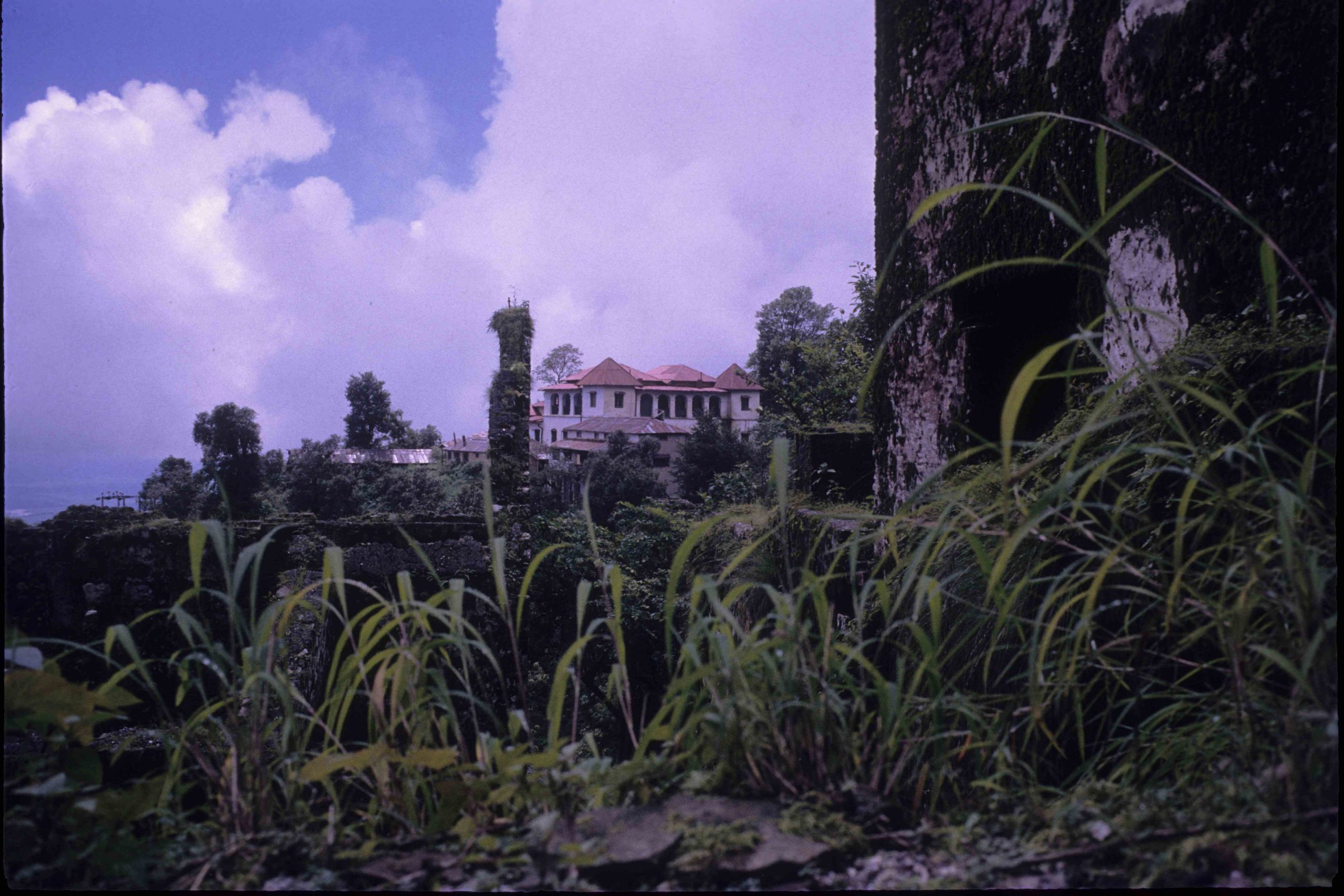
Further down the road, Sikander Hall marks its time. I wonder if grandmother Asgari Begum’s bones rattle at night? Buried at the end of the veranda, her grave had had to be shifted.
‘Damn! Who needs a grave in the middle of our forty-five cottages?’ the new owner had muttered.
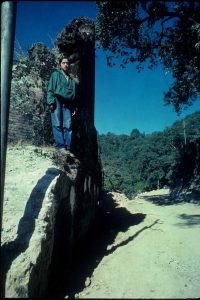
Pic courtesy: Author’s collection
The Skinner family’s Barlowganj connection dates to 1916 when Alice Skinner built a summer resort for her less fortunate cousins. Ever since, it has been home to the descendants of Colonel James Skinner, the grand patriarch of the family, who was blessed with a double inheritance of a Rajput mother and a Scottish father. He lived like a Moghul, preferring to be called Nasir-ud-Dowlah Colonel James Skinner Bahadur Ghalib Jung. The rest of his family lovingly called him ‘Sikander Sahib.’ Riding at the head of his mercenaries as an irregular, he fought for the Marathas and the Moghuls before joining the John Company. Founding Skinner’s Horse in 1803, he chose the yellow tunics, or ‘the Clothes of the Dead’, for warriors who had sworn that if they couldn’t win, they’d rather do battle and die. In their scarlet turbans, silver-edged girdles, black shields, and bright yellow tunics, his gallant Risalas rode from one victory to the next. With their jingling spurs, flashing sabres, and fluttering lance pennons, they struck terror in the enemy with the blood-curdling battle cry: Himmat-i-Mardan, Madad-i-Khuda. (God helps those who have courage!)
When he passed away in 1841, his men had never lost a battle. The late Brigadier Michael Alexander Skinner, a descendant of James’ fourth son was the last man to lead Skinner’s Horse in 1963.
With no Heritage Act, Uttarakhand has little to stop the owners from levelling the old, dilapidated bungalow. Although new construction in Mussoorie is illegal, renovating a pre-existing structure is not, and therein lies the loophole gleefully being exploited by all and sundry. Almost any new construction can be re-labelled as being merely renovation, helped by wheeler dealers who will expedite the process for a fee that may cost you the proverbial arm and a leg. It’s a story that finds repetition through the entire length of the ridge. Elsewhere, stones stuck together with mud have been neatly arranged to denote pre-existing structures that can be renovated into shops later on. Limited only by your audacity, they can show your house as having been there before Mussoorie came into existence, or even as old as the Indus Valley civilisation!
What’s stopping us from calling in experts from IIT Roorkee? Surely they can tell the difference between hundred-year-old lime mortar and yesterday’s concrete.
‘Are they still quarrying black gravel in Hathipaon at night?’ a concerned friend living in Dehradun asks alluding to the Supreme Court ban on quarrying following public agitation by the Save Mussoorie Society and a PIL (public interest litigation) by the Rural Litigation & Entitlement Kendra, some forty years ago.
‘Yes.’ I answer, sadly,
When the fence begins to eat up the field, it is time for a wake-up call.
Ganesh Saili, author-photographer, has written and illustrated twenty books, some translated into more than two dozen languages. He belongs to those select few who illustrate their writing. His work has found publication in periodicals, columns, journals and books.