By OUR STAFF REPORTER
Dehradun, 29 Nov: The second day of the 19th Uttarakhand State Science and Technology Conference 2024, organised by the Uttarakhand State Council for Science and Technology (UCOST), continued with thought-provoking sessions and impactful discussions. Held at the Dr Nityanand Auditorium of Doon University, this three-day conference is themed, “Water and Natural Resource Management”, and commemorates the first anniversary of the Silkyara Vijay Abhiyan. This historic initiative symbolises efforts to mitigate climate change impacts and promote environmental sustainability in the Himalayan region.
The highlight of Day 2 was a special session on “Building Emotional Resilience – The Science and Art of Emotional Adaptability”, aimed at equipping participants with tools to enhance emotional balance, adaptability, and mental toughness.
The session commenced with Dr Jai Shri, who emphasised the importance of emotional adaptability for personal and professional growth.
Renowned scientist Prof CNR Rao and his wife, Indumati Rao, addressed the conference virtually. Prof Rao expressed his gratitude to the organisers and participants, while Smt Rao shed light on the Gangolihat Project, which plays a pivotal role in promoting environmental and social welfare.
Day two, session three started with Deep Breathing and Emotional Energy exercise by Radhika Jain from Udaan Society, New Delhi, that helped participants relax and focus. She articulated that “emotion is energy in motion” and guided attendees on how to channel their emotional energy positively. Her practical techniques created a thoughtful and engaging atmosphere.
After that, Dr Reema Pant highlighted the intricate relationship between mind and body, explaining how emotional imbalances manifest as physical symptoms. He shared strategies to effectively manage emotions, particularly in cases such as ADHD or during challenges like the Silkyara Campaign. Dr Pant underscored that emotional resilience is a crucial tool for overcoming adversity and avoiding panic in difficult situations.
The Nervous System Awareness and Lifestyle Tips Session was conducted by Radhika Bhatt. She conducted physical warm-up exercises while explaining the roles of the parasympathetic and sympathetic nervous systems in maintaining calmness and responding to stress. She provided tips on resolving suppressed emotions, adopting a balanced diet, and prioritising rest, which resonated deeply with the participants.
Emotional Freedom Techniques (EFT) was the key highlight of today’s session. Towards the session’s conclusion, Radhika Jain demonstrated Emotional Freedom Techniques (EFT), involving tapping on specific meridian points. She elaborated on how this technique helps release emotional blockages, reduce stress, and enhance emotional resilience. Jain explained the nine primary tapping points and their benefits, making the session highly practical.
The day ended with a guided meditation session titled “Reset, Rejuvenate, and Recharge” led by Radhika Bhatt. This meditation left participants feeling refreshed and confident.
The second day of the conference underscored the critical role of emotional resilience in addressing modern challenges. It provided participants with practical tools and scientific insights to enhance stress management, emotional balance, and mental health.
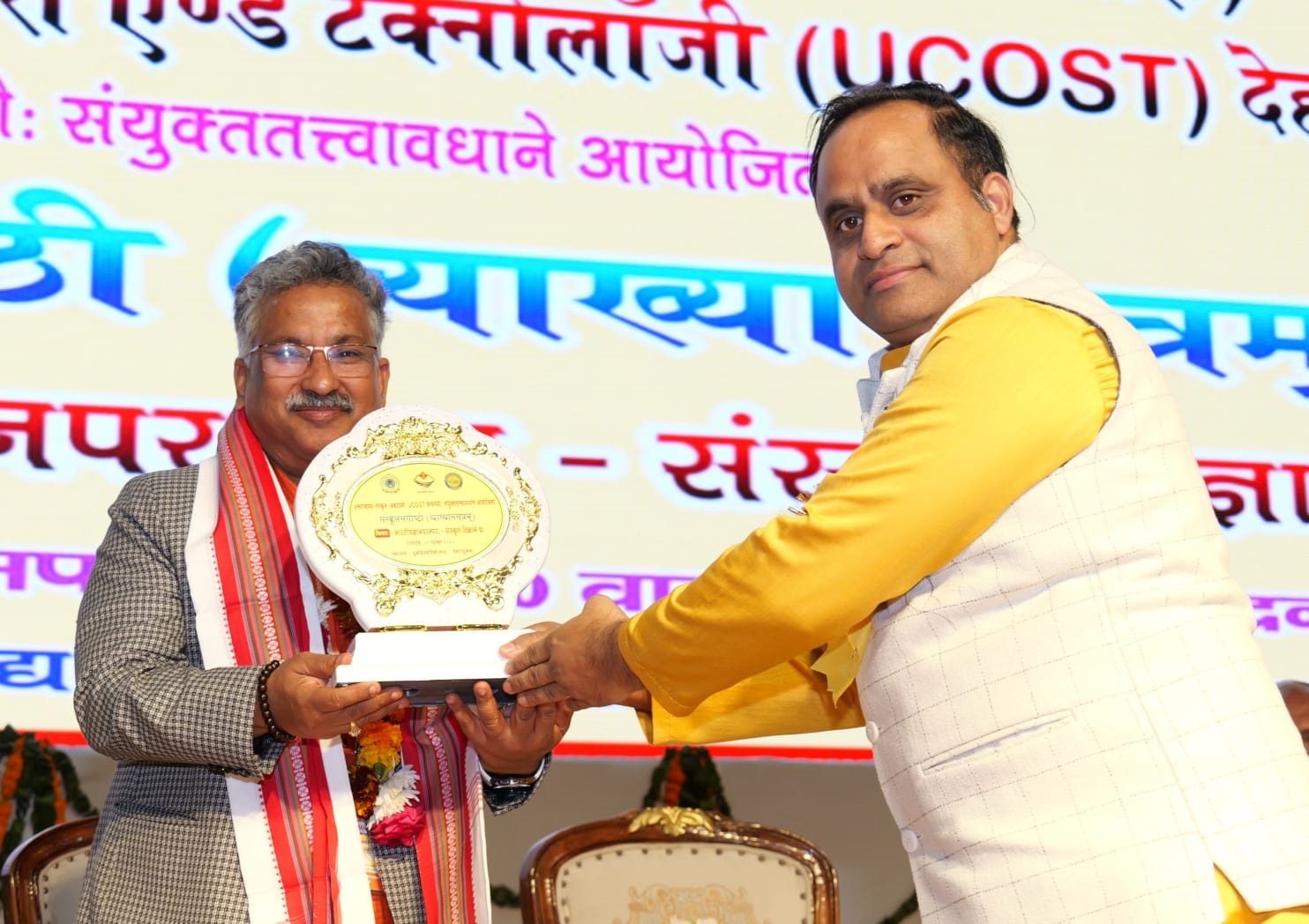
The fourth session was held on the theme “Indian Knowledge Tradition: Sanskrit and Science.” The session commenced with Vedic chants performed by the Sanskrit University, Haridwar, emphasising that Sanskrit is not just a language for rituals but a profound medium for knowledge and science.
The session was inaugurated by Prof Guru Rane from the Sanskrit University, who welcomed the dignitaries and highlighted how Indian culture, through Sanskrit, has consistently illuminated the world with wisdom.
In his address, Acharya Subhramaniam from Sanskrit University, Haridwar, remarked, “India was, is, and will always remain the ‘Vishwaguru.’ Sanskrit is the oldest language in the world. The Vedas are eternal truths; they don’t need to be discovered but understood as a means to uncover universal truths. The Vedas are boundless like the sky.”
The keynote speakers for the session included Acharya Prof PB Subrahmanyam, Dr Vaishali Gupta, Acharya Prof Siddhyuman, and UCOST Director General Durgesh Pant.
The session was coordinated by Dr Sudhanshu Joshi from Doon University, Dehradun. Key contributions were made by UCOST’s Arun Kumar Tyagi, Vinod Ojha, and Abhay Kumar Saxena.
The session highlighted that Sanskrit is the world’s oldest language and a repository of India’s uninterrupted flow of culture and scientific knowledge. Ancient Sanskrit scriptures like the Vedas, Upanishads, and philosophical treatises contain profound discussions on scientific topics. Fields such as mathematics, astronomy, chemistry, physics, medicine, agriculture, environmental science, and military science are deeply embedded in Sanskrit literature.
Speakers shared the scientific perspective of Sanskrit, emphasizing that ancient Sanskrit texts align closely with modern scientific principles. Discussions were held on how these ancient insights can be integrated with contemporary scientific theories to develop beneficial technologies and principles for societal welfare.
The session introduced participants to the profound scientific knowledge in ancient Indian texts and its relevance in the modern era.