 By Ashish Singh
Billy Wilder’s Some Like It Hot (1959) is not merely a comedy, it’s cinematic alchemy. It takes jazz-age mischief, gender politics, mafia mayhem, sexual tension, and an aching sense of loneliness, and spins them into one of the most subversive and sparkling films ever made.
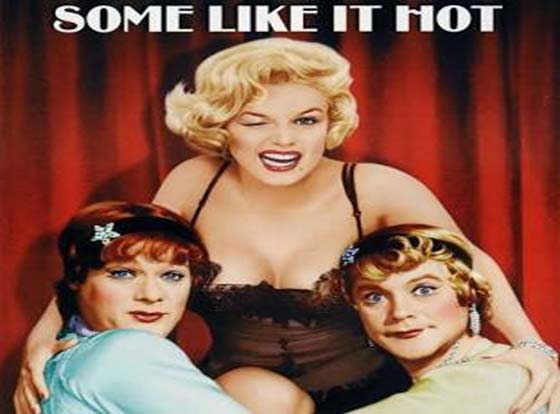
Set against the backdrop of 1929 Chicago, the film opens with machine guns and ends with a kiss, but everything in between is a waltz of perfectly timed chaos. Two down-on-their-luck musicians, Joe (Tony Curtis) and Jerry (Jack Lemmon), accidentally witness the St Valentine’s Day Massacre and are forced to flee the mob. Their hiding place? Disguising themselves as women—Josephine and Daphne—and joining an all-female band en route to Florida.
It’s the kind of absurd premise that could have easily become slapstick or sexist, but Wilder, sharpened by IAL Diamond’s screenwriting brilliance, crafts a film that transcends its time. He weaponises humour with elegance, challenging gender norms and social facades long before it was fashionable to do so. Beneath the laughter is a deep, sometimes uncomfortable interrogation of performance: sexual, social, and existential.
And then enters Marilyn Monroe.
As Sugar Kane Kowalczyk, Monroe doesn’t just inhabit the screen, she radiates through it. Vulnerable, sensual, lost, funny, and achingly sincere, Sugar is not a caricature of the “dumb blonde” but a tender commentary on the pain behind performative femininity. Her desire to escape heartbreak and marry a millionaire is not vanity, it’s survival. Her rendition of “I Wanna Be Loved by You” is less a song than a sigh from someone teetering between hope and despair.
Tony Curtis’s dual role, as the sarcastic Josephine and the absurdly accented “Shell Oil heir” Junior, is a masterclass in layered deception. He seduces Sugar not with bravado, but with calculated emotional manipulation, and somehow, the film makes us forgive him. Jack Lemmon, however, steals the show. His “Daphne” isn’t just a disguise, it becomes a revelation. Lemmon’s embrace of his feminine persona is both hilarious and oddly liberating. By the time Osgood proposes to him/her and Lemmon says, “I’m a man!” only to hear “Well, nobody’s perfect”, we are no longer watching a gag. We’re watching gender fluidity meet unconditional acceptance.
The comedy, often zany, never underestimates its audience. It’s filled with double entendre, farce, and physical gags, yet every joke is a brick in the palace of social satire that Wilder is quietly building. The mob subplot adds danger, but it’s also symbolic, a reminder that the world outside the performance is violent and rigid, while the world of disguise, artifice, and fluid identity is where real freedom lies.
Cinematographer Charles Lang bathes the black-and-white film in velvety greys, turning Monroe’s face into a landscape of vulnerability, and the Florida hotel into a liminal zone between danger and desire. Adolph Deutsch’s musical score elevates the sense of fevered playfulness yet always pulls back just enough to let the characters breathe in their pain.
At its core, ‘Some Like It Hot’ is not about disguise. It’s about disclosure. Everyone in the film is pretending, but by the end, we realise that what they discover in their masks is more authentic than anything they were before. It’s a comedy where the punchlines expose truth, where the music masks melancholy, and where romance blooms in the most improbable of places.
Wilder once said, “If you’re going to tell people the truth, be funny or they’ll kill you.” Some Like It Hot does exactly that. It tells us the truth about love, identity, and longing, but it does so with a wink, a giggle, and a feathered boa.
The film ends not with a grand moral or a final bow, but with a wry smile: “Nobody’s perfect.” But this film? It might just be.
(Ashish Singh is a social and political scientist.)