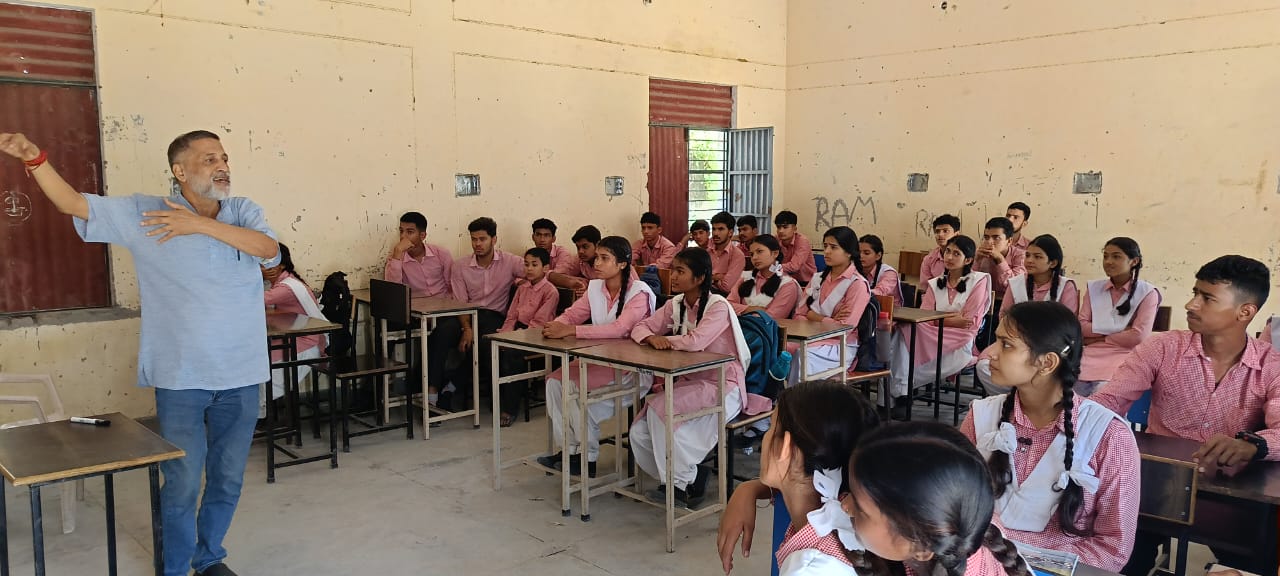
 By Devendra Kumar Budakoti
Recently, a video surfaced online showing students at a government primary school in Dehradun carrying construction materials—using shovels and lifting trays filled with sand and gravel from the nearby school wall and bringing them inside. The education department swiftly took notice, invoking the Child Labour Act to suspend the school’s headmistress and order an inquiry.
It is reported that recent rains had left potholes at the school entrance. The students, taking the initiative, suggested filling these potholes with the sand and gravel available by the roadside outside the school. While the headmistress denies any involvement in either the suggestion or the students’ actions, the department suspended her without delving into the actual circumstances.
When I shared this news with my 87-year-old mother, she recalled her own village school days in Garhwal, where students routinely performed various ‘Shramdaan’ (voluntary labour). They fetched water for teachers, brought firewood for the kitchen, and even washed dishes. I reminded her that today, corporal punishment is outlawed — not only can students no longer be physically disciplined but even scolding them can be legally questionable.
Yet, I firmly believe that voluntary ‘Shramdaan,’ both then and now, should never be considered a legal offence under any act in our country. Some might argue that students filling potholes amounts to child labour, but if that logic holds, then all forms of voluntary student service under the banner of Shramdaan would come under scrutiny. This would prevent students from learning how to keep their classrooms, schools, and surroundings clean, and discourage them from maintaining their own homes as well.
Shramdaan should be an integral part of education—an important means of instilling a sense of responsibility and citizenship in students.
Consider Japan, where schools have dedicated ‘cleaning time’. Japanese students clean not only their classrooms but also corridors and toilets. This practice encourages habits of cleanliness that extend beyond school premises to public places. Many believe that cleaning time also offers students a chance to focus inward, helping cultivate mindfulness and calm.
We don’t expect to import Japanese school culture wholesale, but we can certainly improve our school infrastructure and educational practices. This need is underscored by the fact that most teachers do not send their own children to government schools, preferring private institutions near their homes.
Indian culture traditionally values voluntary work or Shramdaan, practiced widely not only in schools and colleges but also by civil society organisations across the country. In this case, primary school students voluntarily chose to fill potholes—a commendable act of community spirit. Instead of appreciation, they are being treated as though forced into labour, and the headmistress was penalised despite denying involvement.
This situation calls for a clear definition of the scope and boundaries of Shramdaan—voluntary community service in educational institutions nationwide—to ensure students’ voluntary contributions are encouraged, not punished.
(The author is a sociologist with nearly four decades of experience in the development sector.)