Garhwal Post Bureau
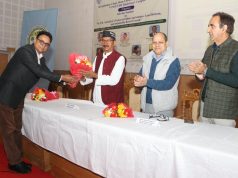
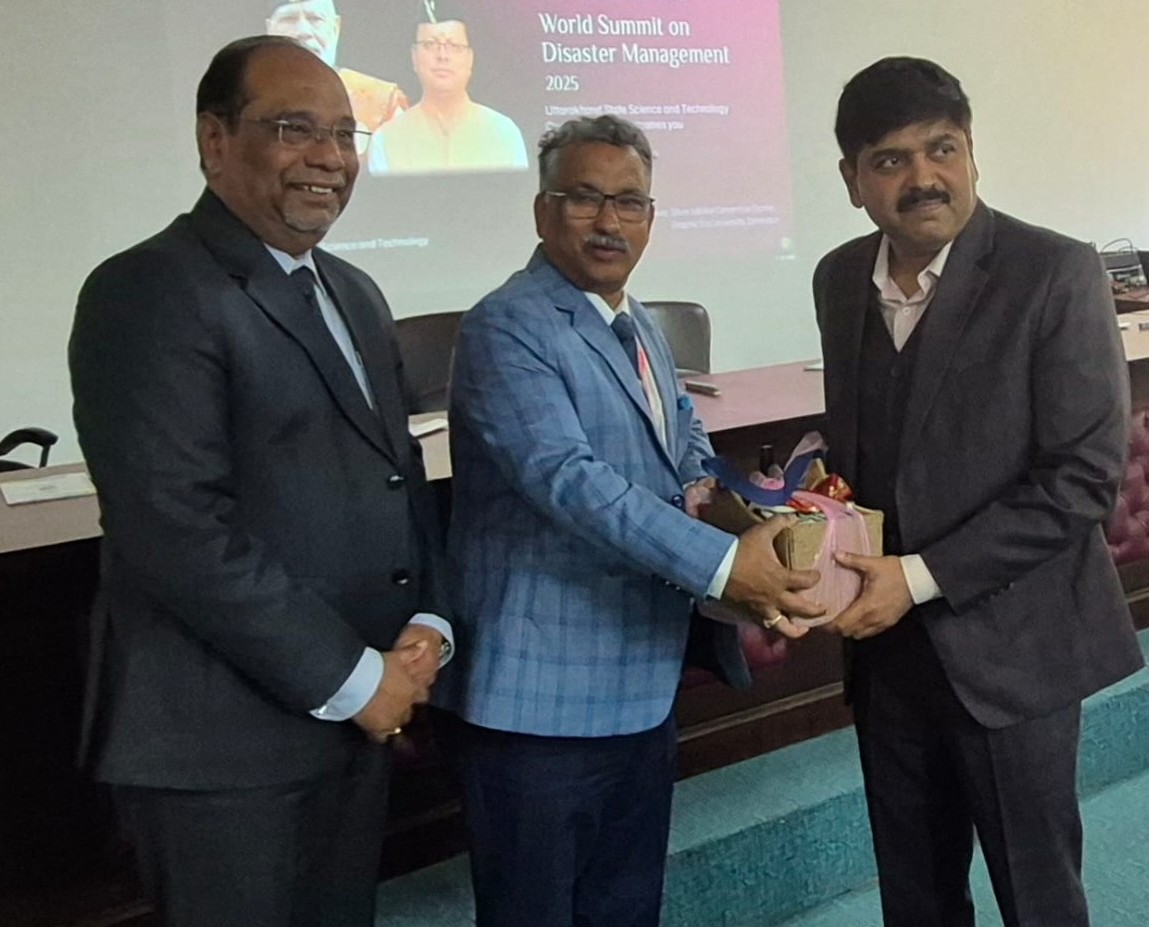
Dehradun, 29 Nov: Under the World Summit on Disaster Management (WSDM 2025) and the 20th Uttarakhand State Science & Technology Conference (USSTC), the Uttarakhand State Council for Science & Technology (UCOST) conducted a series of research presentations and technical sessions on 29 November 2025 at Graphic Era Deemed to Be University.
Researchers from Uttarakhand, various Indian states, and several countries presented their papers across more than twenty technical disciplines. Additionally, over ten special thematic sessions were organised.
The event brought together national and international experts on a common platform to discuss disaster management, climate change, scientific innovation, and technological advancement. A total of twelve specialised technology sessions were held, focusing on topics such as international collaboration, sustainable financing, disaster risk finance, space technology, carbon ecosystems, the role of media, the Sikkim model, and Himalayan corridor development.
Along with these, expert sessions were conducted on disaster risk reduction, social development, agriculture, healthcare, biotechnology, the environment, and other key areas to strengthen communities through science and technology.
The joint objective of both conferences is to promote scientific cooperation, strengthen evidence-based disaster management, support policy-making, and empower communities toward a safe and sustainable future.
A Water Conclave was also organised, where experts discussed the interlinkages between climate, water resources, and disaster management.
Prof Rajiv Sinha, Dr Raghavan Krishnan, Prof Anil Kulkarni, Dr Arvind Kumar, and Dr Rakesh shared insights on river systems, climatic variations, glaciers, and water governance.
Critical issues such as illegal sand mining, changes in Himalayan glaciers, and the need for an integrated water policy were highlighted. Shankar Koranga (Vice-Chairman, State Watershed Council) and IAS Meenakshi Sundaram emphasized the importance of coordination between scientific institutions and administrative systems. Special sessions were also organised for tribal communities.
In addition, a dedicated session on the role of media in disaster management was held, featuring eminent journalists from various media platforms who shared perspectives on effective communication during disasters.
More than 500 researchers presented their papers during the event.