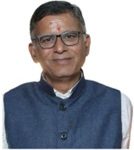
 By Kiran Kumar Sharma
In a Himalayan state like Uttarakhand, rural employment is not merely an economic issue; it is also a question of social stability, cultural continuity, and the very survival of the mountain region. The geographical challenges, rain-fed agriculture, limited industrial opportunities, and unpredictable weather have impacted the village economy for decades. The biggest consequence of this vulnerability is continuous migration. In such a scenario, the implementation of the Viksit Bharat-Guarantee for Rozgar and Ajeevika Mission (Gramin) (VB-G RAM G) Act, 2025, should be seen as a significant policy shift for Uttarakhand. This law is not merely a replacement for the Mahatma Gandhi National Rural Employment Guarantee Act (MGNREGA), but signifies a structural change in the approach to rural development. Increasing the statutory guarantee of employment from 100 to 125 days, making timely wage payments mandatory, giving panchayats a central role in planning, and linking employment to the creation of sustainable assets – all these provisions can have far-reaching effects in the specific context of Uttarakhand. Fundamentally, the difference between MGNREGA and VB-G RAM G is that MGNREGA was implemented with the objective of poverty alleviation, while VB-G RAM G is a step towards realising the dream of a developed India.
The Current Picture of Rural Labour in Uttarakhand
In Uttarakhand, approximately 16.12 lakh workers are registered under MGNREGA, of which 9.34 lakh are fully active. This figure clearly indicates that a large rural population in the state depends directly on the rural employment guarantee scheme for their livelihood. In the hill districts, where private sector opportunities are limited, this scheme has served not just as a support system, but as a lifeline. The VB-G RAM G Act provides a more robust foundation for income security for these workers. The statutory guarantee of 125 days means that rural families have an opportunity to better plan their work throughout the year. This will not only increase the flow of cash into households but also give a new impetus to local markets, small businesses, and services.
A Foundation of Trust
Job insecurity in the mountains has long been the biggest problem. Farming is seasonal, production is limited, and costs are high. In such a situation, 125 days of guaranteed employment is not just additional income, but a foundation of trust. This trust gives rural families the opportunity to believe that they can live a dignified life even while staying in their village. The provision for balancing agricultural and rural labour is also of special importance for Uttarakhand. A consolidated break period of up to 60 days during sowing and harvesting will ensure that there is no labour shortage in the fields and that the farmer’s yield is not affected. In hill areas, where farming is based on collective labour, this balance will help maintain the continuity of rural life.
Curbing Migration
Migration in Uttarakhand is no longer just an issue of seeking employment; it has become a story of the erosion of social life in the villages. According to various studies and government assessments, nearly 1700 villages in the state have become completely uninhabited. In these villages, neither do school bells ring, nor is the sound of the plough heard in the fields, nor is there any collective vibrancy of festivals and celebrations. This situation is not only an indication of the depopulation of the mountains but also a serious warning for the state’s cultural, social, and environmental security.
The ‘Viksit Bharat G RAM G’ law has the potential to curb this alarming trend. When guaranteed employment, timely wages, and sustainable development-related assets are created in the village itself, people will have a solid reason to stay in the village instead of leaving it. The 125-day statutory employment guarantee is especially important for marginal families who have been forced to migrate to metropolitan cities. This law sends the message that a village can be not only a place to live but also a centre of economic opportunity. If the infrastructure related to employment, water, roads, and livelihoods is strengthened in the villages, the process of revitalisation can begin even in villages that have become depopulated or are on the verge of becoming so. This will not only make it possible for people to return, but also allow the new generation to see a future in the village.
From Labour to Assets
The most important feature of this act is connecting employment with the creation of sustainable and useful assets. Water conservation, rural infrastructure, livelihood-related structures, and activities that mitigate the effects of climate change are all particularly relevant for Uttarakhand. The water crisis in the hilly state is constantly deepening. If works such as check dams, water source rejuvenation, small irrigation schemes, and rainwater harvesting are carried out in a planned manner, they will provide long-term support to agriculture, animal husbandry, and domestic life. Similarly, footpaths, rural roads, cowsheds, and community buildings will not only provide employment but also make villages liveable and self-reliant.
Financial Framework and Relief for Uttarakhand
The 90:10 financial sharing model for the Northeast and Himalayan states brings special relief to Uttarakhand. This will reduce the financial burden on the state government and increase the likelihood of effective implementation of the scheme. Increasing the limit for administrative expenses from six to nine percent is also a practical step.
(The author is a senior journalist of Uttarakhand.)