 By Kulbhushan Kain
Ruby Gupta is a writer who understands shadows—the alleys where motives whisper, and mysteries coil like smoke rings around the obvious. Crime and suspense are not merely her genres; they are her natural habitat. When she presented me her book “The Secret Of Leifeng Pagoda”, I treated it first like an ornament of intrigue, letting it rest on my book rack, its secrets sealed, its adrenaline corked.
It took a spell of winter to unseal it. One frigid Dehradun morning, cold weather sentenced me to bed arrest for an entire day. I needed a spark, a surge, a voltage of narrative thrill. I reached for Ruby’s book.
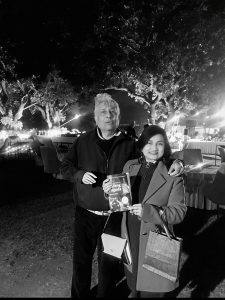
And what a reach it was. It kept me on the edge—ancient enigmas dissolving into modern espionage, whispers of nuclear peril, and Indian scientists caught in webs spun far beyond laboratories. But the sharpest twist was one I had never anticipated, never heard of: assassination attempts on Jawaharlal Nehru. Not one. Not two. But four—each audacious, each historic, each startlingly under-told….
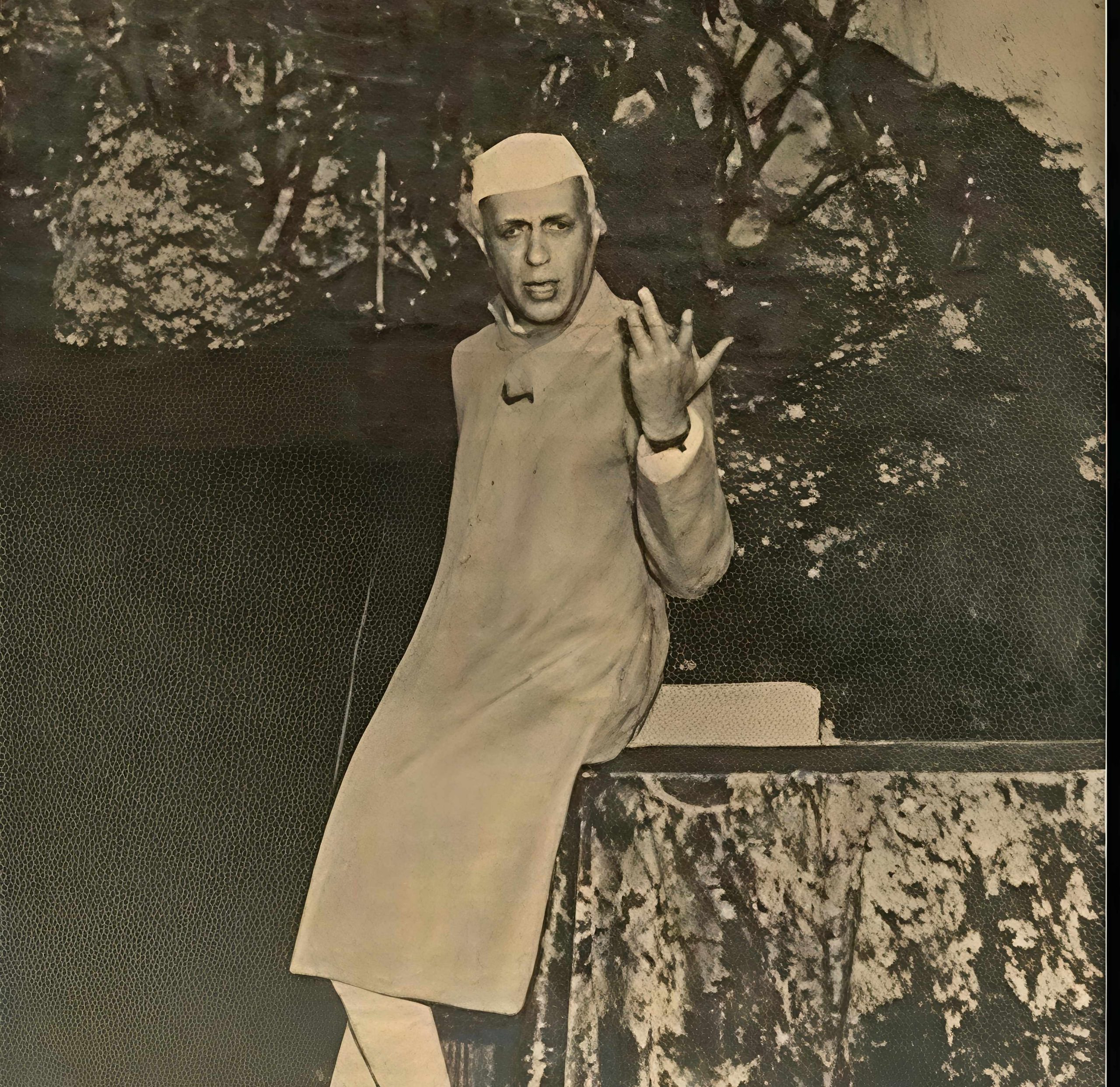
It was 12 March 1955 .The mid-1950s were years when India was still finding its democratic rhythm—optimistic, noisy with slogans, heavy with hope. Jawaharlal Nehru was not merely a Prime Minister. He was an idea in motion. A voice that had carried the promise of freedom and now carried the burden of building a nation from scratch.
Nagpur, that morning, was gleaming under a generous sun. The Bharat Sevak Samaj had organised a national convention, and Nehru was to grace it as chief guest. For the schoolchildren and students lined up along Wardha Road, it felt like a carnival of civics. They called him Chacha. They waited. The slow convoy of a Young Republic….
The first sign of his arrival came not from a siren, but choreography: two motorcycle-borne police officers gliding forward, one on each side of the road. A few moments later, a white open-top, chauffeur-driven car appeared, moving almost ceremonially, at walking speed. Nehru stood in the rear—smiling broadly, waving both hands, the familiar red rose pinned to his white sherwani, looking every bit the handsome man he was!
Behind him trailed a slow-moving van, carrying more police officers. The crowd cheered, rising to a crescendo. The children chanted rehearsed slogans. Seeing Nehru in the flesh, not a photograph, felt like touching a page of history before the ink dried.
And then—history blinked.
A Rickshaw. A Gap. A Glint of Steel.
From one side of the road, a well-built, mustachioed man pedaled a cycle-rickshaw with startling force, cutting through the crowd. The motorcycle escort had already passed northwards. A dangerous gap opened between the Prime Minister’s car and the outer cordon.
The rickshaw slammed into the car.
The chauffeur braked sharply. Nehru grabbed the seat for balance. Before anyone could process the sudden commotion, the rickshaw driver leapt onto the footboard behind the chauffeur’s seat, whipped out a six-inch clasp knife, and grabbed Nehru by the neck. He was one blow away from death.
Sunlight glinted off the blade like a signal flare of impending doom.
The crowd gasped. Children screamed. Teachers froze. For a terrifying moment, India stood on the edge of a plunge.
Nehru was years past his own youth, but instinct is timeless. Summoning every ounce of self-preservation, he pushed back violently. The attacker, unprepared for resistance from a middle-aged Prime Minister, lost his footing and toppled onto the road. Nehru himself nearly fell, saved only by leaning on the stunned chauffeur for support.
Within seconds, the police escort wheeled back, officers from the trailing van rushed in, and the assailant was overpowered and bundled away.
By evening, All India Radio carried the news across the nation. The next morning, newspapers identified the attacker as Baburao Chakole, apprehended by an Inspector of Sitabuldi Police Station. The official motive was dismissed as a bid for publicity, but subdued whispers spoke of conspiracy, intrigue, and unseen hands.
India had nearly lost its compass.
The attack triggered a silent revolution—not in politics, but in protection.
Until then, Nehru himself disliked rigid security. He preferred spontaneity over protocol, warmth over barricades, people over paranoia. But repeated threats altered the calculus. The security establishment concluded that India could no longer leave the Prime Minister’s safety to personal preference.
A revealing anecdote from this era comes from Bajrang Lal who was Delhi’s Police Commissioner during the years 1981 to 1983. I knew Bajranj Lal well – he was in my school’s management committee for a long time. He was also a wonderful raconteur – especially after a peg or two of whiskey which he enjoyed immensely. He told me that as a young police officer he was entrusted with Nehru’s protection in the late ‘50s. During a journey, Nehru casually asked him to ask the driver to turn into a side street. Bajrang Lal refused.
“How can you disobey the Prime Minister?” Nehru asked.
“Because, Prime Minister, I am in charge of your security,” Bajrang Lal replied.
It was a defining moment. Nehru relented. India’s security architecture did not. This single decision would go on to shape the future doctrine of PM protection in India — strict route discipline, layered cordons, zero deviation, total accountability.
The Nagpur incident was not the first, but the third of four known attempts on Nehru’s life. In
1947 – during Partition, an attempt was made while Nehru travelled by car in the North-West Frontier Province (now in Pakistan) in May 1953 – a failed bombing attempt was made when Nehru’s train was passing near Bombay. An alert police officer fired at a suspicious man, who escaped. Moments later, the train headlights revealed a bomb placed on the tracks—averting both assassination and disaster. In 1956, a final known attempt, was made – again in Bombay, before Maharashtra officially became a state in 1960. That he survived four assassination attempts is not just a matter of personal fortune—it is a reminder of how fragile India’s early years truly were.
While Nehru escaped death repeatedly, destiny collected its tragic toll later.
His daughter Indira Gandhi was assassinated in 1984 and his grandson Rajiv Gandhi was killed in a bombing in 1991. The chilling parallel to America’s Kennedy dynasty—a family shaped by leadership and loss—often raises the question: Is the Nehru–Gandhi family similarly “spooked”?
Not by superstition—but certainly by history’s cruel punctuation.
Like the Kennedys, the family produced charismatic national leaders, but endured violent, high-profile assassinations and attempts that shook the world.
Sometimes, destiny writes its favourites in bold, but edits them with the sharpest ink.
(Kulbhushan Kain is an award winning educationist with more than 4 decades of working in schools in India and abroad. He is a prolific writer who loves cricket, travelling and cooking. He can be reached at kulbhushan.kain@gmail.com)