 By Alok Ulfat
Even when one is born in India, that is Bharat, many remain unaware of its true depth and energy. This lies in the continuous flow of philosophical inquiry, spiritual exploration, art, science, and social life that has persisted across time and borders without interruption. Those who are receptive will realise that Bharat is more than just a piece of land; it is not governed by rulers alone, nor can it be controlled by any superpowers.
I grew up in Dehradun, between the Ganga and Yamuna mighty rivers, surrounded by temples, melas, and nature. I grew up hearing folk stories of the Himalaya, Rishikesh, Haridwar, Mussoorie, and the forests. I remember visiting villages, planting trees, harvesting, playing in sugarcane fields, swimming in streams, and eating rural home-cooked food. Things were slow paced, no hurry-no worry attitude. We had time to see stillness. These experiences deeply enriched our lives.
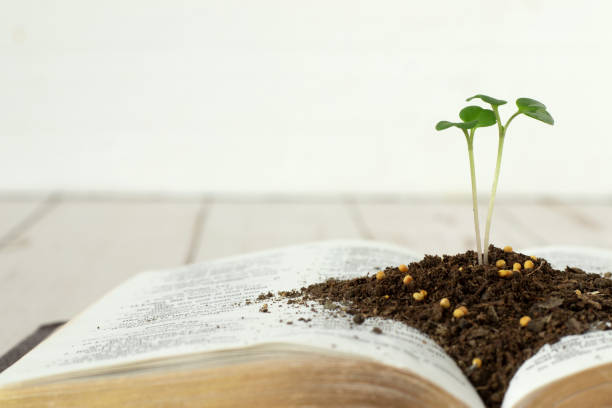
My life journey began with my parents’ quiet enquiry, with the gentle flame of their initiative, the Nanhi Dunya children’s movement. Their earnest struggle to touch the depth of the Indian spirit became the soil where my curiosity sprouted. Through youthful mischief and curiosity, I wandered gradually, like a river finding its course, my understanding matured.
Later journeys to the UK, Europe, and other parts of the world, and the distance from home helped me reconnect with India’s living spirit. Distance often brings perspective. I began to understand what masters like Sri Aurobindo, Rabindranath Thakur, Gandhi ji, Pandit Ravi Shankar and many others realised after travelling abroad.
I comprehend that chaotic modern life, popular education systems, and colonial legacies have distanced many Indians from their heritage. We mostly learn warped history but rarely experience living traditions. Temples become tourist sites, scriptures become mere texts, and philosophies become exam material, stripped of their essence. As a result, one may grow up surrounded by symbols without touching the source.
I wanted to know more, so I travelled in India by foot, bicycle, motor cycles, and trains in economy class, buses, boats, and ships to places of enquiry and to the feet of masters. With them, I learned much and spent time introspecting. I knew I had to struggle, as I was not as quick as many friends, but I was guided and challenged by family, friends, and often by the invisible.
To recognise India’s depth is to meet a culture that has long engaged with fundamental questions, Who am I? What is suffering? What is kartavya? (responsibility arising from conscience, values, and total awareness ) What is freedom? What is moksha? Across centuries, these questions have invited many responses: devotional, rational, mystical, and sceptical. Rather than insisting on a single, final truth, Indian thought has allowed multiple paths to coexist. This openness, along with its artistic and philosophical richness, remains one of India’s greatest strengths and continues to draw seekers from around the world.
After completing four-year teacher training at Emerson College, UK, I travelled and volunteered across Europe and in India, where I discovered other educational and spiritual missions. With new perspectives I carried on to work more. Life entrusted me with the role of a mentor and teacher, but above all, I remain an eager student.
I have been writing, teaching, directing plays, participating in talks, meeting people, attending seminars and workshops, hosting shows, and addressing social issues through interviews and podcasts. Yet all of this keeps bringing me back to the same questions: Where am I going? And where is the world being taken?
I was like many people who saw enormous problems but struggled to find solutions. Actually now I realise solutions already exist here; we just have to learn the art of seeking. We cannot search for the key to our lock in someone else’s home when we have lost it in our own space. Be inspired, but find your own truth in your own circumstances. Make friends and begin from the beginning.
Perhaps India, as a collective, could pause and reassess its direction. Beyond chemical or mechanical energy, there is a growing need for cultural energy. Alongside building roads and infrastructure, there is an opportunity to help people rediscover inner paths of joy. By preserving what is deeply human and nurturing quality of life through liberal learning and sustainable living, a more balanced future may begin to take shape.
We can try and invest in a creative world that supports holistic science, inclusive spirituality and a regenerative economy. Development must meet present needs without compromising the ability of future generations to meet theirs. We can overcome poverty by empowering each other, by becoming more creative, resourceful, and respecting elegant simplicity.
It is marvellous to see that Bharat’s vitality is subtle and all-encompassing, flowing through its languages, rituals, music, architecture, and daily gestures. From yogic practices and meditation to festivals, from logic and mathematics to poetry and mysticism, the energy is hidden behind its chaos and noise; it reveals itself only to those who pause, observe, and question. India is quantum, where multiple truths coexist, and the whole is greater than the sum of its parts. I think ultimately, India reveals itself not by birthright but by owning responsibility and engaging, listening, unlearning, relearning and practicing Dharma (the art of creating universal harmony).
Instead of only aiming to become a major industrial power, we can focus on practicing in a more conscious ways of living. It means nurturing our inner well-being while keeping life simple and inclusive, enabling us to live responsibly, freely, joyfully, and in harmony with the existence. Like undiscovered species and galaxies, India’s immense diversity hides many mysteries that can heal the world. Are we brave to change things? Can we practice non-violence and work in immense silence? Are we ready for a real Republic that can restore and heal the world?
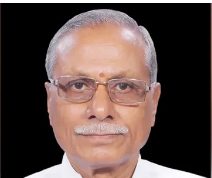
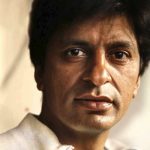
(Alok Ulfat is a cultural worker, dedicated to creating a greener, more sustainable, and artistically vibrant Bharat. You too can join his initiatives AVIKAL, ‘for life and active learning’ and Avikal Theatre Company. For details, pl call 98214 17495.)