 Ganesh Saili
Winter steals quietly upon the hills. A break in the monsoon, I take a walk along the figure of eight road that is the Upper Chakkar. I look around for someone to talk to, but most of the houses are vacant.
We start this walk from the Commandant’s House, which is just above the bridge built by Rahim Baksh in 1930.
Go past the bungalows still clinging to their old names. A roll call of names reveals Wolfsburn, Alyndale, Seaforth, Parsonage and Scotsburn. Once upon a time I used to drop by the Bank at Char Dukan to chit-chat with the Manager, but ever since I fell behind with my loan, this pleasure was denied. The last straw came when Nandu Jauhar sold his house Bellevue simply because all the ‘Sisters’ had gone.
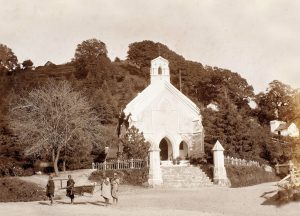
An 1890 image of Paul’s Church.
Pic courtesy: Author’s CollectionAfter tea and pakoras at Bipin’s Tip-top Café, we drop into St Paul’s Church. It looks like a Church. It also looks like it sorely needs a lick of paint! The brass plaques that commemorate various servants of the empire have lost their burnish. Nearby, on the other side of the bridge near Char Dukan, is Firs Estate – now a hostel for boys, where your stay includes access to a cross-fit gym.
Round the corner is Ahluwalias’ house. They are into building new airports, and have much improved Ramchandani’s Shamrock Cottage, screened from prying eyes by an extensive green plastic-coated metal screen. Unfortunately, it looks like it’s been riddled with bullet holes; the real culprits are the monkeys and high-spirited school boys.
I go past the lookout point of Lal Tibba. How did it get this name? I wonder. Could it be named after Baldev and Sheili Lal, who owned the cottage below the road called Alyndale? Today the grounds look sad and woebegone – the proud owners having gone to the happy hunting grounds.
Sujata Chauhan owns Seaforth, the next house that catches the cold breeze that comes off the mountain passes; it is a cold place especially in winter.
Just above Seaforth stands the Parsonage. ‘It’s probably the most photographed place along the chakkar!’ says a proud Victor Banerjee. (I do admit, it is a close second to Kempty Fall). A board warns you: ‘Beware Rabid Thespian!’
After this you come to the Landour Cemetery, where the lychgate seems to be padlocked and chained by the chowkidar’s family, to keep intruders like me out. You see how desperate one can get up here? Even conversation with the dead is denied.
I wish the authorities would do something about the monkeys – and not just the kind that toot their horns – simians here are the red-cheeked red-bottomed variety who move around with impunity. ‘They are addicted to sugary drinks!’ Anil Prakash of the Prakash store tells me. ‘Most of them are diabetics! Poor chaps prowl the roads late at night!’
One monsoon day, a pile of mutton shank bones cascaded on to the road, archaeological evidence of two hundred years of the mulligatawny soup, a favourite, that had been served to the troops at the NCO Mess above.
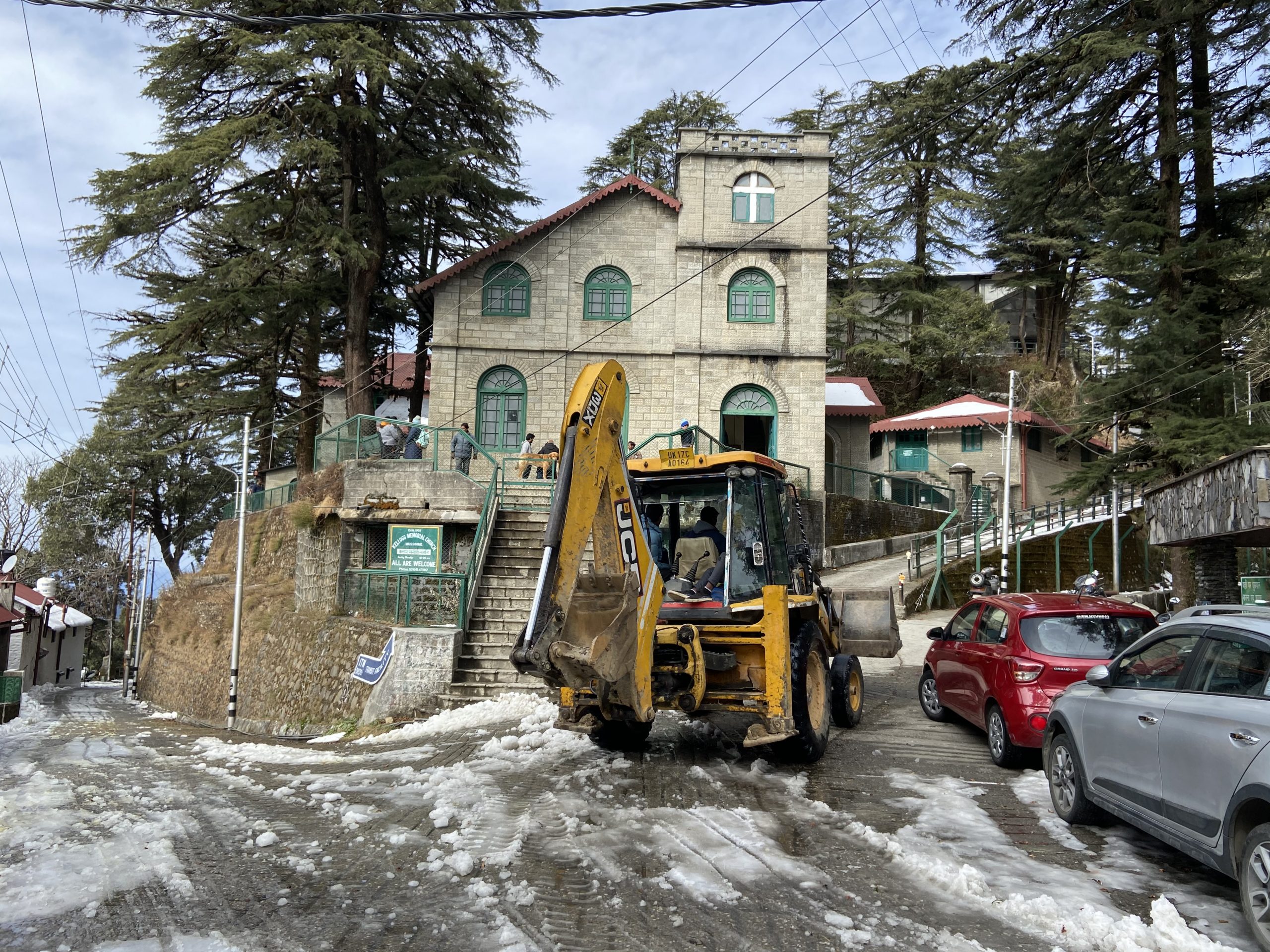
After this there is Kellog Church, that sits on a knoll atop a flight of stairs and looks like a Midwest (USA) church. Six days a week it houses the Language School. Sundays are reserved for the church. Theatre road skirts the steps of the school which begins at the Quarter Guard goes on to the NCO mess. It served as a lock-up for drunks and disorderly troops. Now it is a social centre for the local residents.
In the summer of 1969, looking for a job, my search began and ended with the Language School where Rev Caldwell Smith, that amazing linguist, could unerringly connect intonation with the place the speaker came from. Barely had I opened my mouth, he said: ‘Ah! A Garhwali from Chamoli district!’ His ‘Hari Kitab’ (pub: 1971) is still around; everybody uses it to this day. Students from universities afar like Berkeley, Arizona, Stanford, and Chicago come to learn Hindi or Hindustani.
A walk around the upper chakkar is like time travel. You end up where you started!
Ganesh Saili, born and raised in the hills, is one of the select few whose words are illustrated by their pictures. Author of two dozen books, some of which have been translated into twenty languages, his work has gained renown worldwide.