 By: Ganesh Saili
‘Who built Mussoorie?”
Ask any local, and nine times out of ten times; you will be told: ‘Capt. Young!’ And you will be pointed to Landour’s Mullingar, where atop a flat, you shall find yourself in the middle of a bustling slum.
It was not always like this.
At least not when Captain Frederick Young, Superintendent of the Doon, discovered it to give his weary troops a rest, recuperate, and recover from battle fatigue. His compatriot, F. J. Shore, Collector of the Doon, was fine-tuning the requirements of his new district and could only put up a shooting lodge at Zephyr Hall, above Camel’s Back Road.
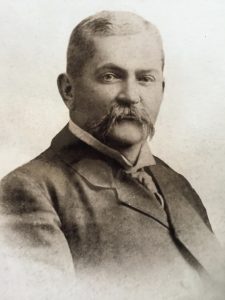
Captain Young gave us the skeleton. Who pampered, nursed and built this hill station by giving it sinews and muscles? One name rises to the top as I look – John Mackinnon.
That is exactly where this tale begins.
A Scotsman, John Mackinnon, founded one of the most prominent families of the Raj. We first heard of him when the hill station was barely fifteen years old, with the first houses having come up in the 1820s. In 1834, he moved his boarding school from Meerut to Mussoorie to set up the Mussoorie Seminary on the western edge of the station at Lyndale.
A year later, Emily Eden wrote that she found the place ideal for children born of ‘parents who are too poor to send them home.’ She had encountered a party of several children travelling to the school across the northern plains under the care of Indian bearers.
In 1838, Fanny Parkes notes: ‘The Children! It is charming to see their rosy faces; they look as well and as strong as any children in England. The climate of the hills, however, is certainly far superior to that of England.’
This is why Mussoorie acquired a reputation as a centre for European education, as the original Mussoorie School became a Diocesan school for boys in 1867. Other schools sprang up well before 1857, including the Convent of Jesus and Mary (a girls’ school founded in 1845), St George’s College (for boys in 1853) and Woodstock School (a finishing school for girls in 1856).
Maugher Monk, a twenty-four-year-old teacher, whose letters to his father were written from the Mussoorie Seminary. He found Mackinnon ‘Self-willed, obstinate and passionate. Anyone suggesting alterations in the established system threw him into a perfect fury, terminating in sulks.’
The school was doing well; five years after being established, it had a hundred boarders. But in mid-stream, as it were, Mackinnon switched careers, turning brewer after taking over the brewery owned by his brother-in-law Henry Bohle. He also started working on the Mussoorie Cart Road – later known as the Mackinnon Cart Road, to open up the economy of these hills.
Here was a man for all reasons: in 1842, he gave us our first newspaper, The Hills. It folded up in 1850 before propping up briefly in 1860 and finally sputtering to an end in 1865.
But there was no stopping the man himself, as his casting vote decided the location of present-day Christ Church near the Library. He had objected to another site in Kulri because it was too far away for the boys of his Seminary.
Mackinnon passed away in 1870, but by then, he had laid the foundations of a family that continued to contribute to the growth of the town.
His sons, Philip and Vincent, ran the brewery successfully for many years. They took over the entire western edge of town: Everest’s Park Estate, the Happy Valley Estate and the forests abutting these properties. Together, they built the Happy Valley Club.
All that remains today are six memorial plaques embedded into the walls of Christ Church – mute reminders of this once-famous family. Fame is a deceiving elf – here today, gone tomorrow. Philip Walter Mackinnon passed away in 1912, and the last of the clan, Lillian Mary, died in 1945.
Apart from the plaques, I found precious little. The only surviving portrait of John Mackinnon hangs on the wall above the mantelpiece of the Committee Room of the Mussoorie Library.
Ganesh Saili, born and homegrown in the hills, belongs to those select few whose words are illustrated by their pictures. Author of two dozen books, some translated into twenty languages, his work has found recognition worldwide.