By ARUN PRATAP SINGH
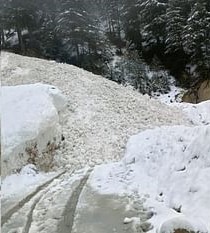
UTTARKASHI, 15 Mar: An avalanche has struck again in Uttarkashi district of the state, leading to the closure of the Gangotri National Highway. Fortunately, no loss of life or property has been reported in the incident. The highway however, remains buried under snow.
Rain and snowfall have been persistent across several districts of Uttarakhand since late Friday night. While rain has been recorded in the plains, the higher Himalayan regions are experiencing continuous snowfall. Amid these conditions, an avalanche occurred in Changthang, Uttarkashi, with its video surfacing online.
This marks the third avalanche within a month in Changthang, situated between Dharali and Jangla Bridge. The Gangotri Dham, along with the international border, has been cut off from the district headquarters. The District Disaster Management Department confirmed the incident and stated that many villages remain isolated due to the disrupted highway.
Efforts to reopen the highway are hindered by ongoing snowfall. The Disaster Management Authority on Saturday noted that the avalanche was captured on CCTV cameras installed in the area. The Meteorological Department has warned of continuing rain and snowfall until Saturday late night.
The frequency of avalanches in the region has raised concern. It may be recalled that on February 28, an avalanche in Mana, Chamoli district, trapping 54 BRO (Border Roads Organisation) workers took a heavy toll. A three-day rescue operation saved 46 individuals, but sadly, 8 workers had lost their lives.
In late February, heavy snowfall triggered avalanches also near Dabrani, Jhala, and Dharali-Bhairon Ghati. Now another significant avalanche occurred near Changthang, just 100 meters below the Gangotri highway, reaching the Bhagirathi river.
Experts have meanwhile, indicated growing threat of avalanches in March and April in Uttarakhand and other nearby Himalayan states. They say that global warming has altered seasonal patterns, drastically impacting glaciers and the Himalayan ecosystem. These shifts have led to an increased frequency of avalanches and the potential for other natural disasters.
SP Sati, a professor and renowned glacier expert, has pointed out that February snowfall often transforms into avalanches as temperatures rise. The phenomenon is akin to ice melting and detaching from a plate when exposed to heat. Similarly, snow on mountain slopes slides down as temperatures climb.
Scientists predict that avalanches will remain a significant danger through March and April, as changing weather patterns exacerbate the situation. The region continues to grapple with the implications of global warming on the fragile Himalayan environment.