
By Dr Asha Lal
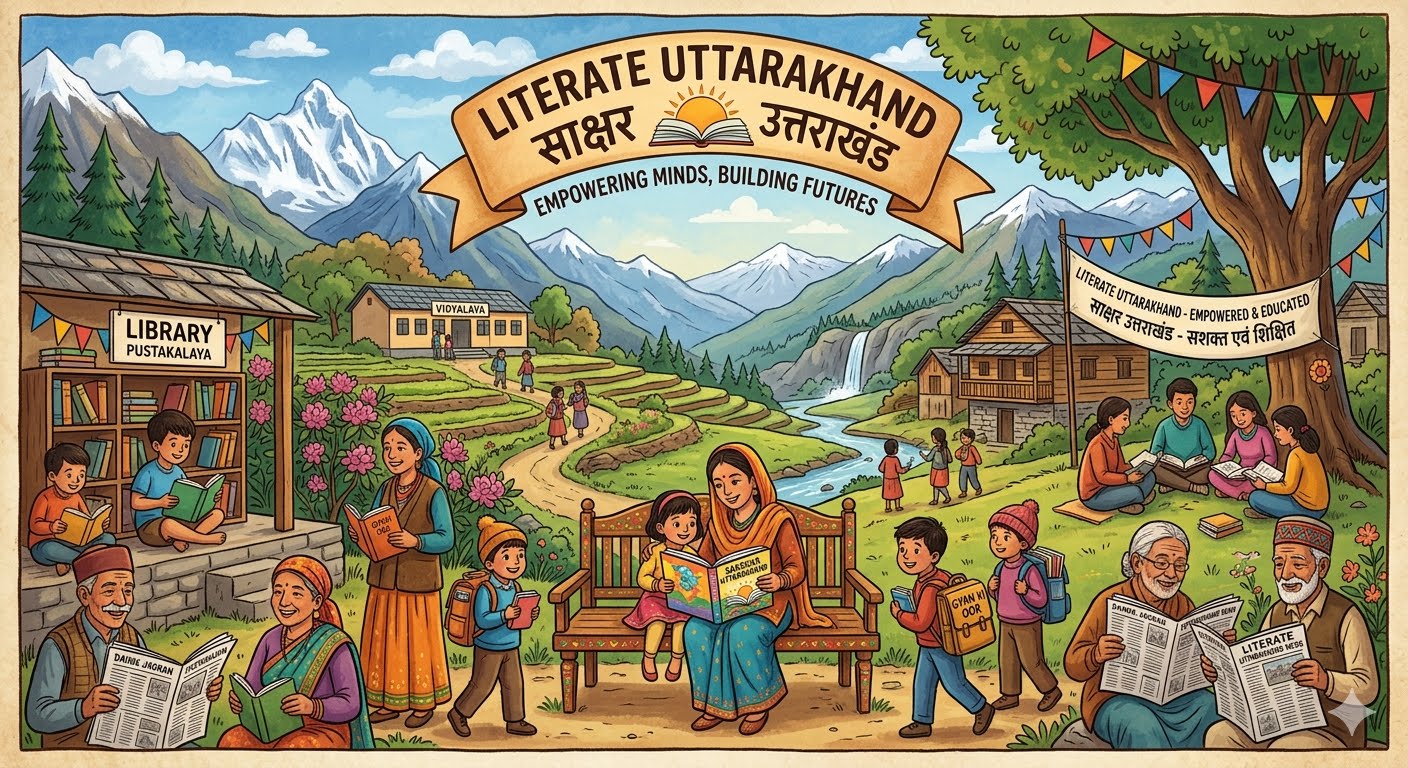
Uttarakhand has achieved a historic milestone. With a literacy rate of 98.7%, the state has crossed the benchmark prescribed under the Union Government’s ULLAS (Understanding Lifelong Learning for All in Society) programme and has been declared a Fully Literate State, joining an elite group of states that have achieved this distinction. The literacy rate has risen from 83.8% in 2023–24 to 98.7% in 2025, an extraordinary increase in just two years.
This is not merely a statistical achievement; it is a landmark in Uttarakhand’s social and educational history. It reflects the tireless efforts of teachers, volunteers, local communities, administrators, and every citizen who believed that education is the foundation of a progressive society.
But history reminds us of one important truth:
A literate society is not automatically an enlightened society.
The real examination begins after literacy is achieved.
Literacy Must Lead to Responsible Citizenship
Being able to read and write is only the first step. The real purpose of literacy is to create citizens who think critically, respect constitutional values, obey the law, reject misinformation, and contribute positively to society.
In recent years, Uttarakhand, despite its peaceful image, has witnessed disturbing incidents that demand introspection:
Crimes against women and children.
Drug abuse among sections of youth.
Cyber frauds targeting innocent citizens.
Mob violence and hate-filled social media campaigns.
Environmental degradation, illegal encroachments, and irresponsible tourism.
Rising road accidents caused by negligence.
Growing unemployment leading to migration from hill districts.
None of these problems can be solved by literacy certificates alone.
They require ethical literacy, constitutional literacy, digital literacy, financial literacy, environmental awareness, and civic responsibility.
Learning from Other States
India’s other fully literate states—such as Mizoram, Goa, Tripura, Himachal Pradesh and Sikkim—have demonstrated that literacy campaigns succeed best when they evolve into lifelong learning movements focused on digital skills, financial awareness, community participation and civic engagement.
Uttarakhand should aim not only to remain among the most literate states but also among the safest, cleanest, healthiest, and most innovative.
The New Definition of Literacy
Twenty-first century literacy is much more than reading newspapers.
A truly literate citizen should be able to:
Distinguish facts from fake news.
Respect women and uphold gender equality.
Follow traffic rules.
Understand digital payments and cybersecurity.
Protect forests, rivers, and wildlife.
Participate in democratic processes with informed judgment.
Reject communal hatred and violence.
Respect scientific thinking while preserving cultural traditions.
Only then does literacy become a force for nation-building.
What Should Every Citizen Do?
A state cannot become truly developed through government schemes alone.
Every household should adopt a few simple commitments:
Ensure that no child drops out of school.
Help elderly citizens become digitally literate.
Teach responsible use of social media.
Report crimes instead of remaining silent spectators.
Volunteer in community education programmes.
Read books beyond textbooks.
Encourage daughters equally in education and careers.
Preserve the fragile Himalayan ecosystem.
Education must leave the classroom and enter everyday life.
From Literacy to Knowledge Economy
The next challenge before Uttarakhand is employment.
A highly literate population must not become a highly unemployed population.
The government, universities, industries, and entrepreneurs must work together to create opportunities in Tourism and eco-tourism; Artificial Intelligence and Information Technology; Organic farming; Renewable energy; Himalayan research; Biotechnology; Adventure sports; Defence manufacturing; Start-ups and innovation; Skill development.
Literacy without livelihood eventually leads to frustration and migration.
A Moral Responsibility
This achievement also places greater responsibility on public representatives, government officials, teachers, religious leaders, media organisations, and civil society.
Public discourse should become more informed.
Politics should focus more on policy than polarisation.
Media should promote verified information instead of sensationalism.
Educational institutions should nurture character as much as careers.
Parents should teach values alongside academic success.
The Road Ahead
Uttarakhand’s declaration as a fully literate state deserves celebration. Yet the true measure of this success will not be found in percentages but in people’s conduct.
If crime decreases, corruption declines, women feel safer, forests are protected, civic discipline improves, innovation flourishes, and young people choose to build their future within the state, then this literacy movement will have achieved its true purpose.
A literacy rate of 98.7% is an extraordinary accomplishment.
Now Uttarakhand must strive for something even greater: 98.7% responsible citizens.
Only then will the state become not just fully literate, but fully enlightened—a model for the entire nation.
(Dr Asha Lal is Chairperson (Women) All India Freedom Fighter’s Samiti, Delhi.


