By Arun Pratap Singh
Garhwal Post Bureau
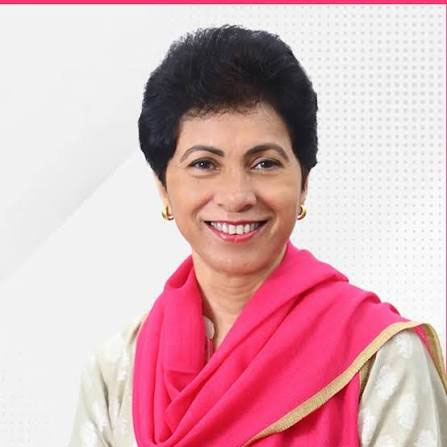
Dehradun, 27 Nov: The recently concluded six-day visit of Congress general secretary and party in-charge for Uttarakhand, Kumari Selja, assumes considerable political significance with the Assembly elections in the state drawing closer. Her participation in party programmes, organisational meetings and public protests indicates that the Congress high command is beginning to take its Uttarakhand assignment more seriously. More importantly, Selja appears keen to inject fresh energy into a state unit that has been struggling with factionalism, leadership rivalries and a lack of a coherent political narrative against the ruling BJP.
There is little doubt that the Congress has a significant political opportunity in Uttarakhand. The BJP is seeking a third consecutive term, and the natural expectation of anti-incumbency after two successive terms in office should offer the Opposition sufficient political space. Issues relating to unemployment, migration from the hills, the condition of roads and healthcare facilities, recruitment controversies, inflation, the plight of farmers and the growing concerns over unplanned development provide ample ammunition for the Congress. Yet, the party has so far appeared unable to convert public discontent into a sustained and convincing political campaign.
One of the problems confronting the Congress is that it often seems more interested in responding to political developments and raising issues selected for their immediate political value than in identifying concerns that genuinely resonate with ordinary people. Protests and demonstrations are necessary instruments of Opposition politics, but they cannot substitute for a sustained engagement with the electorate. The party needs to demonstrate that it has a credible alternative development agenda and a practical understanding of the problems confronting people in both the mountainous and plain regions of the State.
Selja’s visit, therefore, needs to be seen in the context of the larger challenge of bringing the organisation together before the electoral battle begins in earnest. The Congress in Uttarakhand has repeatedly suffered from factionalism, with different leaders nurturing their own political constituencies and frequently working at cross-purposes. While the party has several experienced leaders, the continued dominance of a familiar group has not necessarily translated into electoral success. Ganesh Godiyal, Harish Rawat and Karan Mahara remain prominent faces in the State organisation, but their own electoral and organisational limitations also underline the need for a broader leadership structure. The party cannot afford to depend indefinitely on leaders who have themselves faced repeated electoral setbacks or whose political influence has not been sufficient to deliver consistent victories.
Harish Rawat continues to enjoy considerable political visibility and has an established following among sections of the electorate. However, the Congress needs to look beyond individual personalities and develop a collective leadership capable of taking the party forward. Godiyal and Mahara, too, have their respective political strengths, but the organisation needs more than the familiar faces at the forefront of its campaigns. A conscious effort to identify, encourage and nurture younger leaders, particularly those with grassroots connections and public credibility, is essential. Unless new leadership is given meaningful organisational responsibilities and political space, the party risks entering another election with the same internal equations and the same limitations.
Another important challenge is to establish a cohesive campaign in which senior leaders speak in one voice and refrain from sending conflicting political signals. The electorate needs to see a Congress that is united, confident and capable of governing, rather than an organisation preoccupied with internal adjustments and leadership ambitions. Selja’s immediate task would consequently be to establish coordination between the senior leadership, the Pradesh Congress Committee, district units and grassroots workers. This will also require ensuring that organisational responsibilities are assigned on merit and that party workers are not reduced to spectators in a contest dominated by established political personalities.
The Congress must also recognise that anti-incumbency does not automatically translate into votes for the principal Opposition party. Voters need to be convinced that a change of government will bring a change in governance and political priorities. The party must identify a handful of issues with statewide relevance, build a sustained campaign around them and explain how it proposes to address them. It should also be prepared with credible candidates and a clear political message well before the election announcement.
While, Selja’s six-day visit may have provided an initial opportunity to energise the State unit, but the real test will be whether this engagement produces lasting organisational cohesion and a sharper political strategy. The Congress has an opportunity to mount a serious challenge to the BJP, but it will have to move beyond routine protests, factional calculations and dependence on established leaders. A united fight, a credible alternative agenda and the emergence of fresh leadership could make the difference between merely benefiting from anti-incumbency and actually converting it into an electoral victory.