 By Ganesh Saili
Don’t you dare so much as blink! If you do, you will miss out on the minuscule Barlowganj Bazaar. ‘Ganjing’ is to stroll and meet friends or browse through the bazaar that begins and ends after a handful of shops, but includes a temple, a police outpost and a post office, wrapped with the aroma of freshly baked loaves from a bakery.
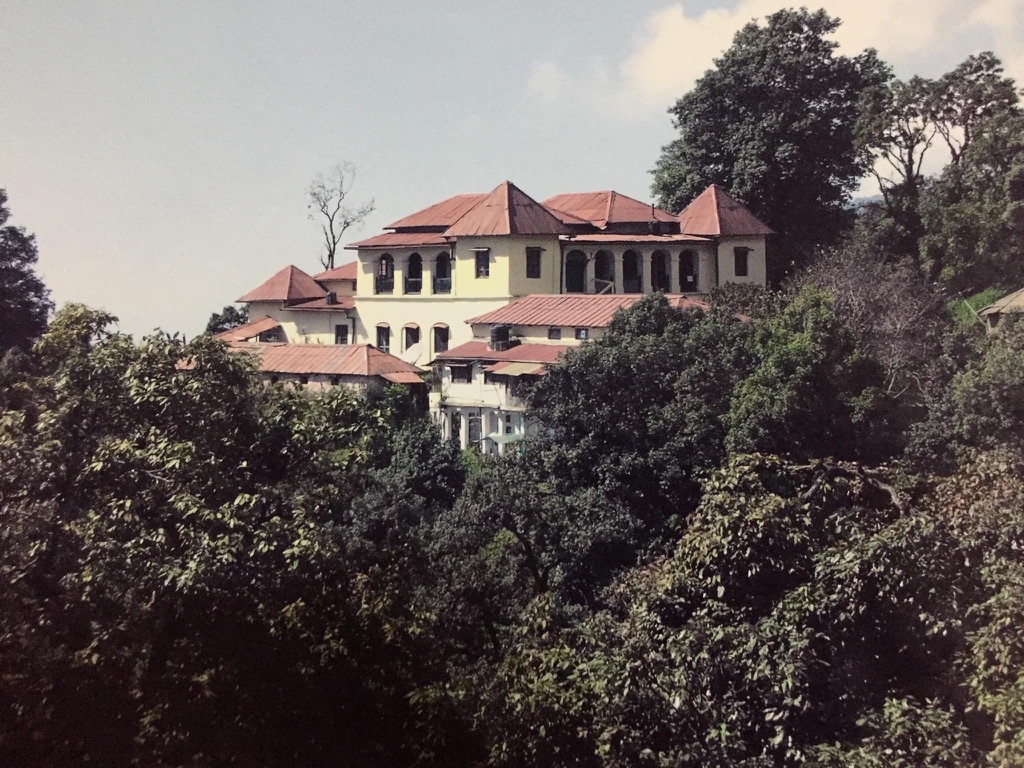
Most visitors to Mussoorie miss out on Barlowganj, as it lies along the old bridle path. Our present-day, Instagram-hit hordes have no time; they come via the motor road. This part of our history begins with Col Charles Grant Barlow, whose home, Barlow Castle, stood on a spur around which the bazaar grew. This property changed hands before it became a hotel. If you stray onto the rear deck, you get a stunning view of the façade of St George’s College, established in 1853, and it is the second oldest of the early Mussoorie schools that still exist. (Waverley Convent School is the oldest.)
If you walk a little way away, you pass an aqueduct, where the ruins of the Crown Brewery used to be. It was owned by Messrs Murch and Dyer in 1867. That folded up two years later, and by 1869, it was taken over by JW Whymper and AM Ket, who made further improvements. I remember going to Brookland’s pool for our swimming gala, as then, our school did not have a pool.
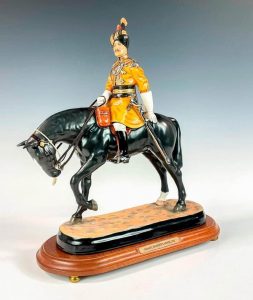
How can one write about Barlowganj without mentioning the Skinner-connection? In 1916, Alice Skinner built a summer resort for her less fortunate cousins, and it has been home to the descendants of Colonel James Skinner, the grand patriarch. His fairy tale begins with a double inheritance, son of a Rajput mother and a Scotsman, who lived like a Moghul, preferring to be addressed by his formal title: Nasir-ud-Dowlah Colonel James Skinner Bahadur Ghalib Jung. But those in the countryside called him ‘Sikander Sahib’. A Christian by upbringing, he had a harem of Hindu and Muslim wives, building for them in turn a church, a mosque and a temple. Riding at the head of his mercenaries and as an irregular, he fought for the Marathas and the Moghuls, before finally joining the John Company.
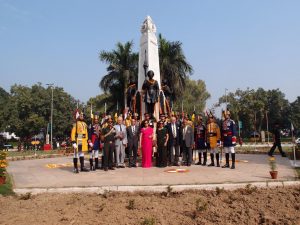
Pic courtesy: Sandra Skinner
Founding Skinner’s Horse in 1803, he chose the yellow tunics or ‘the Clothes of the Dead’ for warriors who had sworn that even if they couldn’t win, they’d rather go on fighting and die with honour on the battlefield. In their scarlet turbans, silver-edged girdles, black shields, and bright yellow tunics, his gallant risalas rode from one victory to the next. With their jingling spurs, flashing swords, and fluttering lance pennons, they struck terror in the hearts of the enemy with the blood-curdling battle cry: himmat-i-mardan, madad-i-khuda. (God helps those who have courage!)
He founded the St James Church at Kashmere Gate in Old Delhi, which cost Rs 2 lakhs in 1836. It is a tribute to his faith, where in a final act of atonement, he willed his remains to be interred in front of the altar so that ‘all men may step over my grave’. When he passed away in 1841, his men had never lost a battle. The last Skinner to lead Skinner’s Horse in 1963 was the late Brigadier Michael Alexander Skinner, a direct descendant of James’ fourth son.
Four years ago, I last lifted the latch on the gate. A knock on the door would have brought Lilian Skinner Singh, Mike’s ninety-five-year-old sister (who sadly passed away a few years ago). I’m afraid that put an end to my chai, pakoras, and cucumber sandwiches. When I was there last, she bubbled over with stories about her family, full of incredible energy.
She shares her secret mantra, which is meant to last for the rest of my days: ‘To live long, only two that you must remember: ‘Don’t get bored and don’t get boring!’
Recently, the family sold the property. It was next to impossible to repair, as the point of no return had been crossed long ago. Now the builder’s game is on, as they ‘discover’ older plinths to circumvent the strict building regulations.
(Ganesh Saili, born and home-grown in the hills, belongs to those select few whose words are illustrated by their pictures. Author of two dozen books, some translated into twenty languages, his work has garnered worldwide renown.)