Film Review:
 By Dr Anoop Virendra Kathait
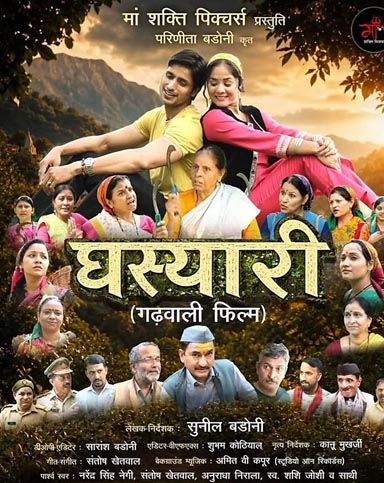
Some films entertain, some tell stories, and a rare few become the voice of a people and their lived experiences. Ghasyari, produced by Parinita Badoni under the banner of Maa Shakti Pictures and directed by Sunil Badoni, belongs to the rare creation of Uttarakhandi cinema. More than a cinematic endeavour, it is a heartfelt tribute to the mountain women whose labour, sacrifice and resilience have sustained generations in Uttarakhand.
The packed auditorium and the audience’s emotional connection with their own language were encouraging. The response offered a promising sign for Uttarakhandi cinema, demonstrating that regional films can draw audiences when they connect with their cultural roots and collective memories.
With its music dating back to 2000, Ghasyari carries the weight of a dream nurtured over 26 years. Its eventual arrival on the big screen is, in itself, a witness to the determination of its makers and their commitment to bringing a deeply rooted mountain story to life. A 26-year-old dream of director Sunil Badoni finally finds its way to the big screen, celebrating the resilience of mountain women and the enduring soul of Garhwali culture.
One of the film’s strongest assets is its music. Santosh Khetwal’s melodious compositions, complemented by the evocative cinematography of young Saransh Badoni, lend the songs an immersive quality. Each musical sequence feels like an invitation into the emotional and cultural landscape of the hills. Amit Kapoor’s background score further enriches the viewing experience, creating an atmosphere that lingers beyond individual scenes.
The voices of Garhratna Narendra Singh Negi, Anuradha Nirala, Santosh Khetwal and the late Shashi Joshi bring a distinct musical identity to the film. Their contributions revive the richness of Garhwali musical expression and remind audiences of the enduring power of melodies rooted in the soil of Uttarakhand. At a time when regional cinema is searching for its distinctive musical voice, Ghasyari offers a refreshing reminder that authenticity and emotional resonance remain its greatest strengths.
The performances are another significant strength of the film. Ramesh Rawat inhabits his character with remarkable ease, while Ajay Bisht brings renewed energy and the confidence of long experience to his role. Vlogger Indu Rawat and Vineeta Rawat also leave their mark with natural dialogue delivery and an engaging screen presence.
Drawing upon his technical understanding of filmmaking, Badoni demonstrates his creative instincts once again after ‘Kara’. His approach combines a concern for cinematic presentation with an engagement with the social realities of mountain life. By bringing their hardships into the cinematic foreground, Badoni directs attention towards lives that are often overlooked in mainstream narratives. The film’s social relevance lies not simply in depicting suffering but in reminding viewers of the dignity, endurance and indispensable contribution of mountain women.
The lead performances by Shivani Bhandari and Shubh Chandra carry the narrative towards its intended climax. Their roles anchor the central dramatic thread, while newcomer Ashok Negi makes a noticeable impression as the antagonist. Rajesh Joshi returns with his characteristic style, bringing an additional dimension to the film through a role with a double shade. Deepak Rawat and Dinesh Baudai also contribute assured, measured performances that support the larger narrative.
The story ultimately reaches its intended destination, although the film’s running time occasionally feels longer than necessary. A tighter edit could have improved the pace and made certain narrative stretches more engaging.
The most moving aspect of Ghasyari is its recognition of the women whose lives are intertwined with the forests of Uttarakhand.
The artists – Manju Bahuguna, Sanyogita Dhyani, Sushma Vyas, Srishti Rawat, Anshika, Bharti Anand, Poonam Lakhera and other performers bring these women to life on screen. The word Ghasyari refers to a woman who gathers grass and fodder, often travelling considerable distances through forested slopes to provide for her family’s livestock. Yet the word carries a much deeper meaning in the social and cultural landscape of Uttarakhand. It evokes generations of women whose physical labour, quiet endurance and daily sacrifices have sustained mountain households.
The film also brings to mind the intimate relationship between women and the forests of Uttarakhand. These women depend upon the forests for their livelihoods, while their lives and labour form part of the larger story of the region’s ecological and cultural heritage. Uttarakhandi cinema has immense potential, but its future depends on more than the production of new films. It requires compelling storytelling, technical excellence, linguistic authenticity and a sustained connection with the region’s cultural identity. However, the movie seems lengthy at the end.
Ghasyari brings several of these elements together. Its musical richness, sincere performances, cultural grounding and socially relevant subject matter make it a meaningful contribution to regional filmmaking. The film also demonstrates the value of stories emerging from the lived experiences of Uttarakhand’s people. Such narratives can preserve regional languages, bring local concerns to wider audiences and help younger generations reconnect with their heritage.
For the women who have carried grass on their backs, responsibility on their shoulders and entire families in their hearts, Ghasyari is a fitting cinematic salute as unsung symphony of mountain woman.
(The author is an educator, poet, critic and short story writer based in the Doon hills)