Culinary Chronicles
Dahi Bhalla
 By Yasmin Rahul Bakshi
There are certain traditions I am happy to preserve, particularly those that bring family and friends together around a good meal. Others I appreciate for the cultural richness they lend to our festivals, even if I do not necessarily observe them myself.
Growing up, festivities in our home were always occasions to look forward to. There was delicious food, a house full of friends, animated conversations and plenty of laughter. We celebrated with enthusiasm but without being bound by religious obligations or prescribed customs. Respect for every faith was deeply ingrained in our upbringing, as was the freedom to follow one’s own beliefs.
Marriage introduced me to a family where religious practices held greater prominence. Over time, Tiger and I gradually moved away from several of the customary observances followed in the family. It was simply a choice that suited our outlook on life, without diminishing our regard for the beliefs and sentiments of others. One aspect of those celebrations, however, continued to find an enthusiastic place in our household. The food!
Karwa Chauth is one such festival that has acquired a rather different character under our roof.
Of course, I wish Tiger a long, healthy and happy life. I cannot imagine my world without his familiar presence, his affection and all those little things that make him such an inseparable part of my existence. But I see no reason to reserve these prayers for one particular day. After all, a marriage is nurtured through 365 days of togetherness, not merely through an annual fast!
Our Karwa Chauth morning begins at an unhurried pace, with our customary cup of tea liquor. These early hours with Tiger are among my favourites. We discuss everything under the sun, exchange opinions, occasionally disagree and invariably find something amusing. There is a reassuring ease to these exchanges that I would not trade for the grandest of ceremonies.
There is no elaborate preparation for abstaining from food, no restrictions on eating and certainly no reason for the kitchen to remain quiet.
Quite the opposite!
A festive lunch is an essential part of our celebration, and preparing something that we can both relish gives me far greater pleasure than observing a fast.
The “kali dal” simmers gently for hours until the lentils turn tender and the gravy develops that rich, velvety consistency which only patient cooking can achieve. The “aloo gobhi” is prepared until the cauliflower takes on a delicate golden hue, the potatoes become beautifully soft and the aromatic spices coat every morsel.
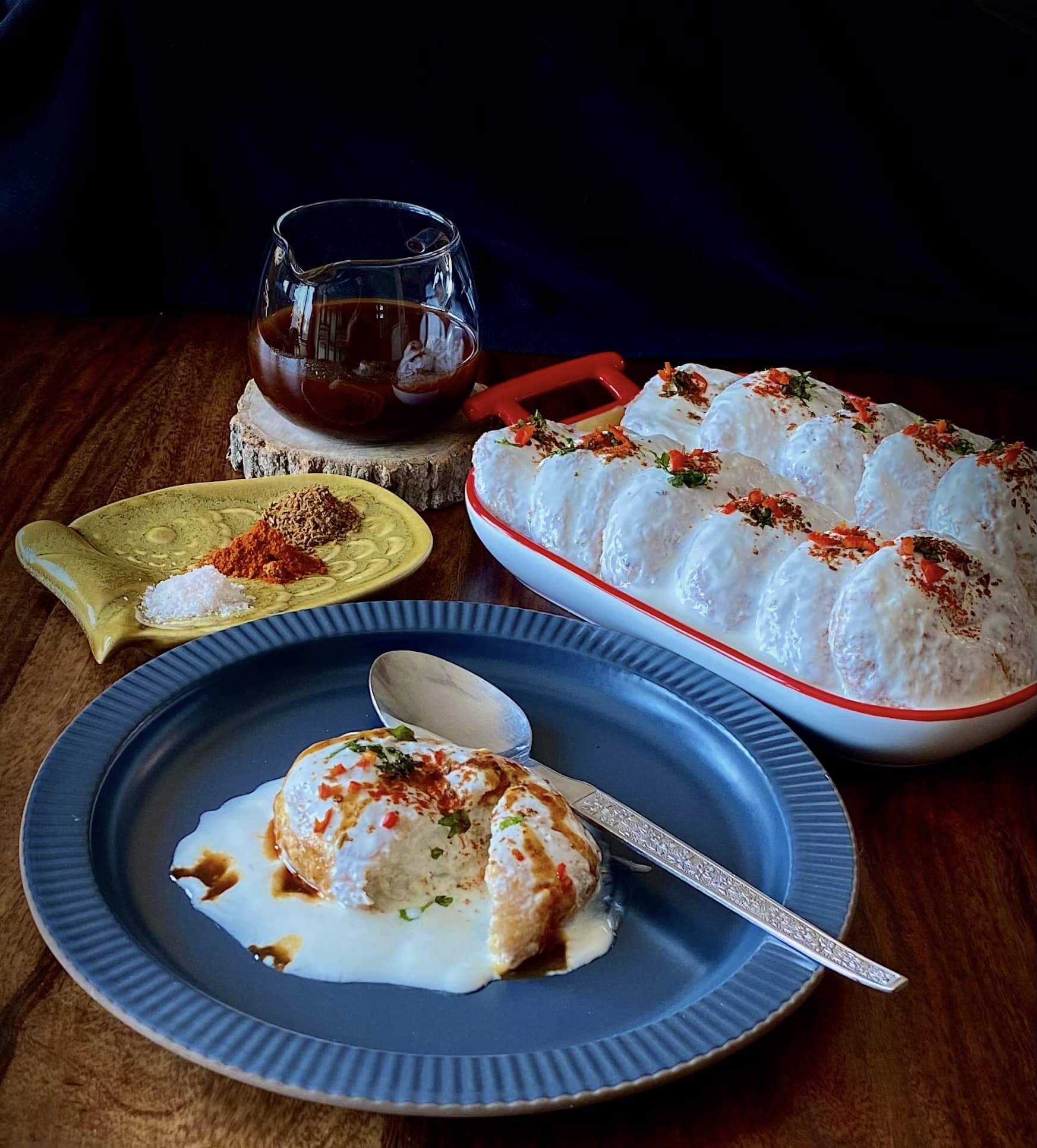
And then there are the “dahi bhallas”, a particular favourite of mine and an indispensable addition to our festive spread. Made from a light, well aerated lentil batter. They are fried to a pale golden colour, soaked and gently pressed before being enveloped in thick, chilled yoghurt. A dusting of roasted cumin and red chilli powder, followed by a drizzle of sweet and tangy chutney. This brings together those familiar flavours so many of us have grown up enjoying. The real delight lies in their texture – wonderfully soft, almost cloud like bhallas that yield effortlessly to the spoon, with sweetness, tartness and spice in perfect harmony.
Fresh paranthas, beautifully browned with crisp edges, arrive straight from the griddle. And because an Indian festive lunch seems incomplete without a sweet indulgence, there is kheer – slowly reduced to a luscious consistency and delicately scented with cardamom and saffron.
By the time everything reaches the dining table, the occasion looks considerably more like a feast than an exercise in abstinence!
Watching Tiger enjoy the meal, exchanging our usual remarks across the table and lingering over the last few bites is a pleasure in itself. There is something rather special about having someone with whom even an ordinary lunch can turn into a memorable occasion.
My enthusiasm for festive cooking, it seems, has remained far more steadfast than my inclination towards elaborate religious observances!
The afternoon is generally reserved for ourselves rather than attending the customary gatherings associated with Karwa Chauth. We have reached that comfortable stage of marriage where silence requires no explanation. At times we talk endlessly, occasionally pursue our individual interests and often find contentment simply in being under the same roof.
That does not mean we agree on everything! Like any couple who have spent decades together, we have our differences, little arguments and moments when one tests the other’s patience. Fortunately, a shared sense of humour usually comes to our rescue.
And as evening approaches, when the moon becomes the centre of attention in many households, my thoughts turn towards another pleasant possibility.
Perhaps Tiger will take me out for dinner!
I must admit, the prospect of dressing up for an evening with him holds considerably more appeal than waiting for the moon to make its appearance. A lovely restaurant, a leisurely supper and the opportunity to enjoy each other’s undivided attention are quite enough to round off the occasion.
After so many years of marriage, I have come to believe that affection is expressed less through grand gestures and more through the quiet constancy of daily life. It is in Tiger’s familiar voice, his instinctive concern when something is amiss, the ease with which we understand each other’s moods and the countless experiences that have become part of our shared history.
There is a particular charm in growing older alongside someone who knows your habits, recognises an unspoken thought and can make you laugh over something that would mean absolutely nothing to anyone else.
To me, that is what makes a marriage worth celebrating.
Such sentiments hardly require a designated date on the calendar. Although a festival does provide a delightful excuse to acknowledge them, preferably over a delicious meal!
I understand that for many women, Karwa Chauth carries profound emotional and spiritual significance. The fasting, prayers and ceremonies represent expressions of faith and devotion passed down through generations. I hold those convictions in high regard, just as I appreciate the liberty to convey my own feelings differently.
Our home continues to welcome festivals with warmth, culinary indulgence and an appreciation of the customs surrounding them. Tiger and I have simply embraced what resonates with us while allowing the rest to remain a cherished part of our cultural heritage.
So, while fasting may not feature in my Karwa Chauth, the feast most certainly does.
And as for the moon, I am perfectly content to let it rise at its own pace. The gentleman whose company makes the day worthwhile is already sitting beside me!
This is our Karwa Chauth. A little tradition, a generous helping of good food, a lifetime of memories and, most importantly, plenty of Tiger!
(With due respect to everyone’s faith, customs and sentiments.)
Ingredients:
- For the Bhallas
- Yellow moong dal (dhuli) – 2 cups
- Ginger, finely grated – 1 tbsp
- Green chillies, finely chopped – 2
- Cumin seeds – 1 tsp
- Asafoetida (hing) – ¼ tsp
- Salt – 1¼ tsp or to taste
- Chilled water for grinding – 3 to 5 tbsp or as required
- Oil – For deep frying
- For the Yoghurt
- Fresh thick curd (non-sour) – 1 kg
- Chilled milk or water – ½ to ¾ cup
- Powdered sugar – To taste
- Black salt – ½ tsp
- Roasted cumin powder – 1 tsp
- Regular salt – To taste
- For Garnishing
- Roasted cumin powder – 1 tsp
- Kashmiri red chilli powder – ½ tsp
- Tamarind chutney – As required
- Fresh coriander-mint chutney – As required
- Fresh coriander leaves – 2 tbsp
- Fresh mint leaves – 18 to 20 small leaves
Method:
- Preparing the Batter
- Wash and soak the moong dal for 4-5 hours.
- Drain thoroughly.
- Grind into a thick, smooth paste using minimal chilled water.
- Beat the batter vigorously for 7-10 minutes until light and fluffy.
- Add ginger, green chillies, cumin seeds, asafoetida and salt. Mix gently.
- Frying the Bhallas
- Heat oil over medium heat.
- Drop small round portions (equivalent to 2 Tbsp) of batter into the oil and fry until evenly light golden.
- Remove and drain excess oil.
- Soaking
- Immerse the fried bhallas in lightly salted warm water for 15-20 minutes.
- Gently squeeze between the palms to remove excess water without breaking them.
- Preparing the Yoghurt
- Whisk the curd until smooth and creamy.
- Add chilled milk or water to achieve a thick, pourable consistency.
- Mix in sweetener, black salt, roasted cumin powder and regular salt.
- Assembling
- Arrange the bhallas in a shallow serving dish and cover generously with seasoned yoghurt.
- Refrigerate for at least an hour. Sprinkle roasted cumin and Kashmiri chilli powder.
- Drizzle with tamarind and coriander-mint chutneys, if desired.
- Garnish with fresh coriander and a small mint leaf on each bhalla. Serve chilled.
(Yasmin Rahul Bakshi is an accomplished senior consultant Chef and a food historian. A widely travelled Army wife from the Mussoorie hills with exposure to international cuisines & preserving recipes with the medium of food photography and digital content creation in the form of stories.)