All Around the World with the Most Travelled Indian
 By NITIN GAIROLA
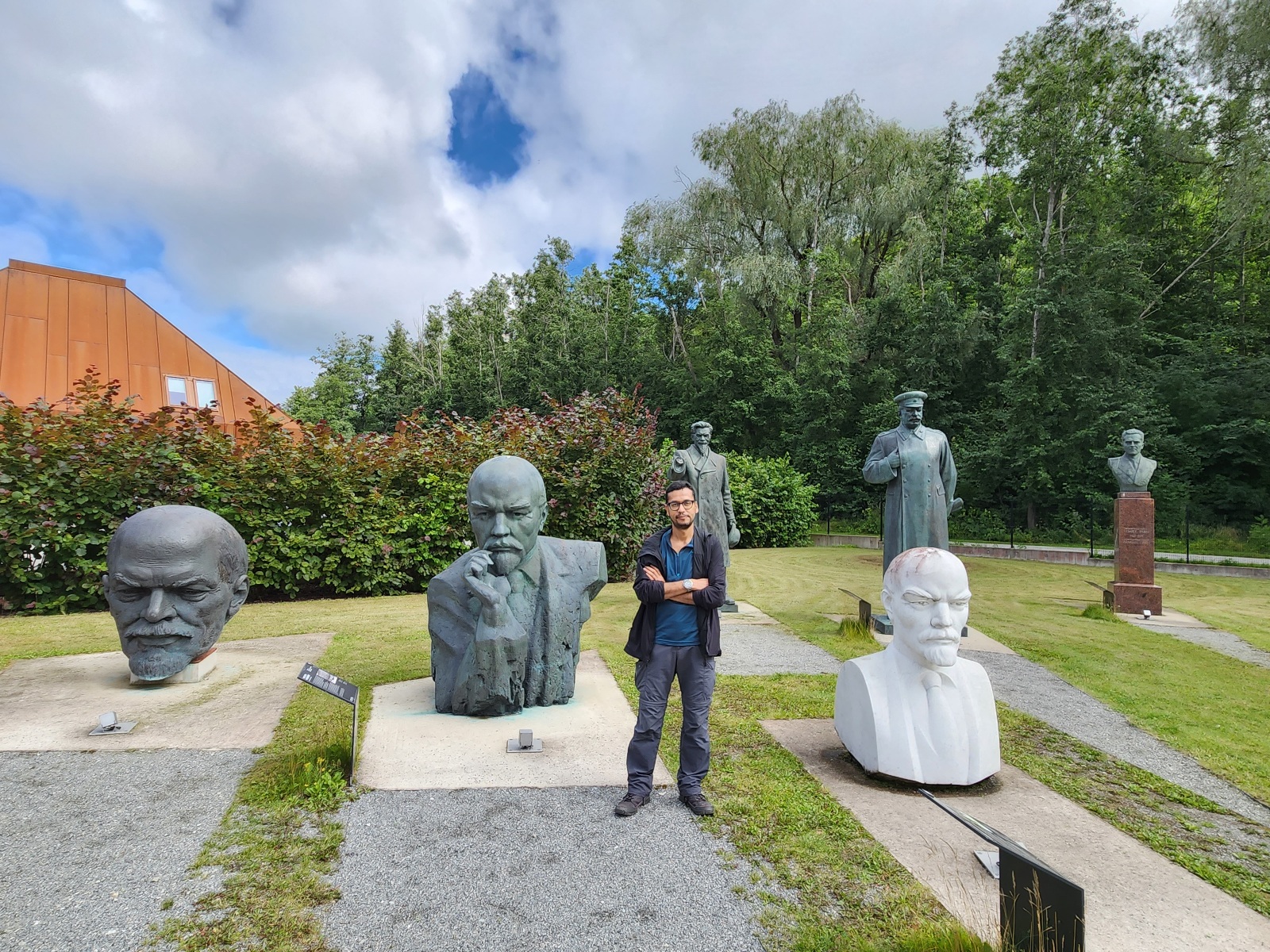
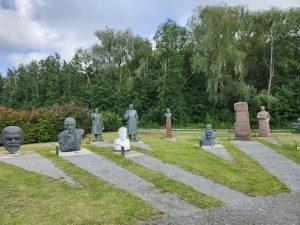
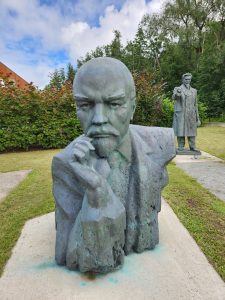
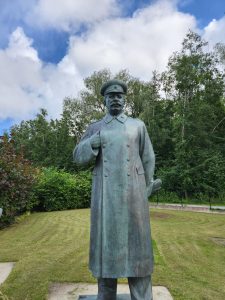
Do you want to go back in time and meet Vladimir Lenin? Perhaps ask him a few questions about the Bolshevik Revolution of 1917. Or do you want to catch a glimpse of Joseph Stalin and ask him what he thought about the aftermath of the Great Patriotic War (as World War II is referred to in Russia). Now what if I tell you about a very strange place where within one courtyard you will meet them all? Welcome to the statue courtyard in Tallinn, Estonia (referred as the statue graveyard) and it was indeed a very strange experience in a very unlikely location. So how did all these Russian statues end up at the same party in Estonia when they could have been scattered all over the massive landmass that is Russia?
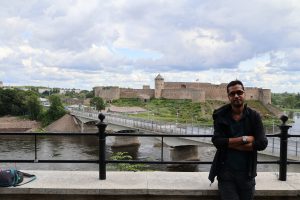
You see, Estonia is one of the three Baltic nations (others being Latvia and Lithuania) and these three small nations for the longest time had been under the occupation of erstwhile U.S.S.R i.e. from 1940 right upto the collapse of the U.S.S.R or Soviet Union in 1991. When the Soviet collapse came, the three Baltics brothers broke free and gained their sovereignty. But the fear of their very, very large neighbour never went away, so these countries joined the U.S. lead NATO alliance (North Atlantic Treaty Organization) in the 2000s. That gave them the military protection of the other giant across the Atlantic – U.S.A, not to mention the comfort of having the European Union (E.U.) member states at close quarters.
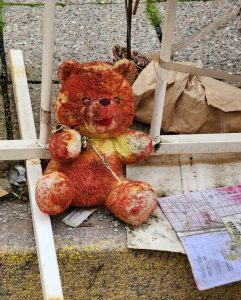
But despite joining NATO, the paranoia hasn’t really gone away and has become especially pronounced after the Russia-Ukraine war that started in February 2022 and continues to this day. It is an old fashioned and unfortunate land & air war (not a skirmish or a covert operation) that couldn’t be imagined in the 21st century. However this was not the case in the 20th century, which until 1945 was the time of some of the bloodiest conflicts in human history. The 2 World Wars left their scars deep across Europe and Europeans and around the world too. Since the Baltics lost their independence during WW-II, you can imagine with it must have done to their mindsets.
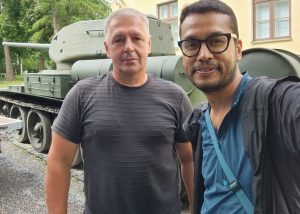
In Estonia, the fears are more heightened since they, along with Latvia, have the highest percentage of ethnic Russians amongst all countries other than Russia itself. Around 25% of the people in these countries are Russian natives and some towns on the Eastern side of Estonia, such as Narva, are almost fully Russian. So the Estonia government, fearing the ‘Russification’ of their land, confirmed their decision to stop funding Russian language education earlier this year and this move was led by ex-PM Kaja Kallas. However they have taken it further with the removal of Russian statues from various parts of their soil and placing them in one ‘hidden place’. So this is how these Russian statues ended up in a quiet courtyard in Tallinn, Estonia.
I also learned about another strange reality playing out in this Baltic nation, which is impacting the everyday man. Many native or ethnic Russians who live in Estonia have what is known as a ‘grey alien’s passport’ issued by the Estonian government. What actually happened is that at the time of their Independence from Soviet Union in 1991, many Russians found themselves on the wrong side of the border (32% of Estonia’s population at that time). The newly formed Estonian government didn’t allow dual citizenship and these ethnic Russians had to make a hard choice – which was to either get a Russian passport that would make their legal status in Estonia uncertain or to apply to become an Estonian citizen. In between the time of this decision they were considered ‘stateless’ and issued these grey alien passports. But the sad truth is that these alien passports have continued since and Estonia has one of the highest populations of stateless people today (almost 100,000 individuals). The reason many couldn’t acquire an Estonian passport is because it required a fluency in the language and that was very difficult for most on the eastern part of the country (especially the older folk who only knew Russian). I was in this eastern part too during my visit in July.
This alien status puts them a few notches below normal citizens in many areas such as freely working anywhere in the E.U. or requiring visas to visit, which other citizens don’t. They also can’t vote in national elections (only local elections) nor can they be members of a political party or work in public offices. Even many private jobs require a certificate of language proficiency thereby impacting their employment opportunities as well. Incidentally the town of Narva in Estonia (on the opposite side of Ivangorod at the Russian border) has the highest population of stateless Russians. I had the chance to interact with a few of them and got some basic insights into their plight and concerns.
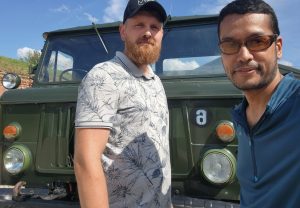
On the western side of Estonia (near their capital, Tallinn) I crossed paths with a few Ukrainians and naturally their views on the war were very strong and so were their worries. But equally strong were those of ethnic Russians. That is the reality on the ground when both sides believe they are right and the opinions never converge. I also met a Finnish army officer (and a good man) in Lithuania and naturally he was concerned about the safety of his family and was willing to fight for the freedom that was under threat.
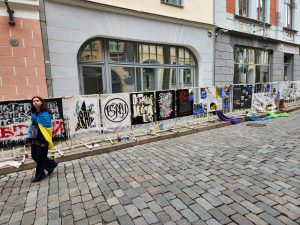
There were some peaceful demonstrations outside the Russian Embassy in Tallinn as well, with some very disturbing images of the war (most of which I don’t want to show here). In fact all through the three Baltic nations, I saw various images of the Russia-Ukraine war being placed to influence public opinion.
So I came back from this trip with more questions than answers. I still don’t know who is right and who is wrong. There is always a history to everything but can we really hold onto it to justify present actions? Clearly the people in the Baltics want peace but that applies to all people living there – Estonians, Latvians, Lithuanians, Russians and Ukrainians. Which normal person, European or Russian, would want war and hardship, but unfortunately some get caught in larger agendas and on the wrong side.
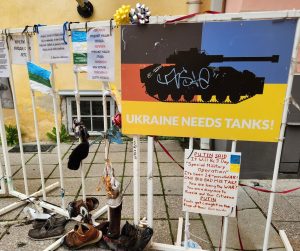
Today the world seems to have two sides. But the East and West world blocks that are forming now is not the only sign of a world being moved apart like a tectonic rift valley splits a continent into two. The East-West block represents the political world, but there is also the world of everyday folk that are influenced in part by rhetoric and in part by reality and this creates a deep chasm between people. They also get adversely impacted by strange measures, such as the alien passport of Estonia which had turned many into second grade citizens or rather ‘stateless’ humans. So I hope these wars outside and within end soon. I also hope that people (and statues) find their homes, wherever they may be.
I am very glad to see our P.M., Mr. Modi make a lot of efforts to start dialogue between Russia and Ukraine and the world community at large. First he visited Russia in July and now he is in Ukraine to meet President Volodymyr Zelenskyy. It would be truly wonderful to have the next Russia-Ukraine peace talks in India, which is seen as the leader of the ‘Global South’ (a loose term used for ‘developing countries’, most of which are in the southern part of the planet). It is time we got some world peace, what with wars in Ethiopia, Sudan, Yemen, Israel-Gaza (possibly Iran & Lebanon) and Russia-Ukraine. India should stand as an example of unity in diversity, as it always has. History should remember those who create peace and not those who make war.
Nitin Gairola is from Dehradun and has travelled the natural world more than almost any Indian ever. He has set world travel records certified by India Book of Records, has written for Lonely Planet, and holds National Geographic conservation certifications. He is also a senior corporate executive in an MNC and in his early days, used to be a published poet as well. More than anything else, he loves his Himalayan home. Reach him at facebook.com/MostTravelledIndian/