Around the World with the Most Travelled Indian
 By Nitin Gairola
Children are taught about the heroic tales of famous western explorers who ‘discovered’ the geographic or physical world in the last 500 years since the start of the voyages of discovery – From the old world of Europe and into the new world of the 2 Americas, Australia and Antarctica. But this discovery also included Africa and really a lot of Asia as well. And so, it’s quite clear that this idea of new geographic discoveries is a very Eurocentric view of the world since the world was always discovered. That’s why I used to be so confused as a child when I read my history lessons. I never understood how Columbus discovered a continent teeming with life already. And that too life that was Homo Sapien as well, no different from Columbus & his crew – right down to the DNA level. But I am sure they didn’t see it that way in 1492 AD.
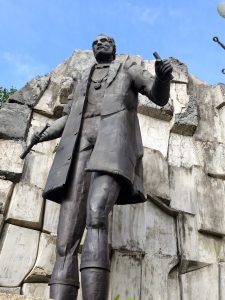
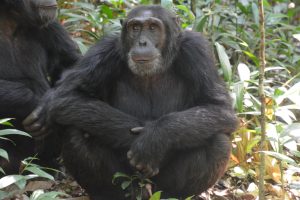
You see the world was discovered not just by Homo Sapiens but to a large extent by our 20-30 extinct ancestor hominid species such as Neanderthals, Homo Erectus, Homo Habilis etc (Example – the Homo Erectus crossed India about a million or 10 lakh years ago, well before our current sole species came here around ‘just’ 60,000 years back). Today we happen to be the only surviving hominid species on Earth (pure chance) and the 8+ billion of us living around the world and the 100 odd billion that lived before were quite restless it must be said. Let’s say we are addicted or hardwired for movement and we really moved to ‘almost’ every corner of the Earth before the end of the last Ice Age 12,000 years ago. Also, to re-clarify, we really are the only surviving hominid species and so while we may look different going by outside appearances but we really have the same genetic code (with minor variations). This is a scientific statement, not a liberal view, although I am a liberal for scientific reasons. How can I be otherwise in the face of so much hard evidence?
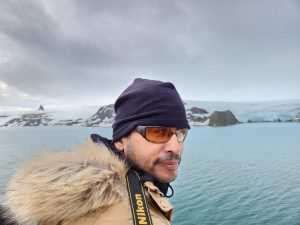

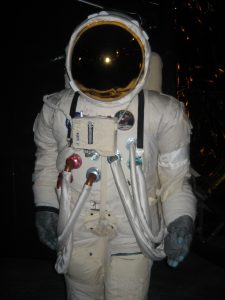
So, what did these great explorers really discover as a world first? (not a Europe first alone). The immediate thoughts that come to my mind are the highest and deepest points on our planet. The highest would be Mount Everest however it’s not just Mount Everest but also all the remaining 13 peaks over 8,000 meters and frankly many peaks over 5,000 or 6,000 meters as well (who knows how many were scaled in the past by the locals there). Besides the highest one, the deepest point is Mariana Trench, off Philippines. But it’s not just the Mariana Trench ‘deep dive’ that we did but also pretty much all serious underwater exploration done in the 20th century can be said to be a world first. I can also think of some deep interiors of dense rain forests, possibly some of the remotest parts of hot deserts and the polar regions as well. The polar regions will definitely include the 2 poles, and all of Antarctica besides big chunks of northern Greenland and Siberia. And how can I forget first to space (Yuri Gagarin) and first to land on the Moon (Neil Armstrong & Buzz Aldrin).
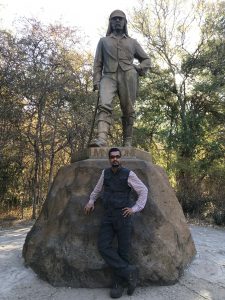
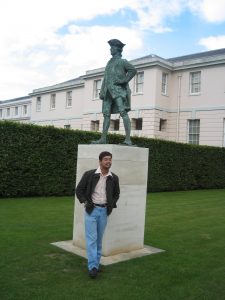
But can someone say that he or she was the first to see any historic place? The answer is comically and obviously no since the ‘historic’ thing was made by humans only (it really sounds silly when you write it down). On the other hand, can anyone say that they were the first to see anything in the natural world (other than to study it scientifically)? Well barring the examples I gave (of highest peaks, the poles, Antarctica, the underwater realm and all things up in space), the interiors of forests & deserts are hard to stake a claim on since they are rather arbitrary overall. I am sure many tribes have been living inside dense & dark forests, hot deserts, wildlife infested grasslands and brutally cold tundra (i.e. the biomes) for years and years as they have been moving from place to place. And let’s be clear that these tribes are also Homo Sapiens scientifically and not any other form of hominid as few who don’t study genetic science argue from time to time.
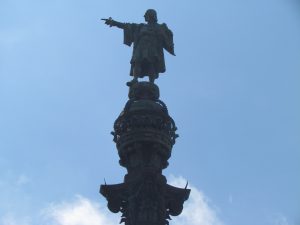
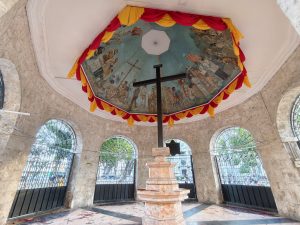
start the Voyages of
Discovery in the 1400s.
I think the appropriate claim to fame for explorers and adventurers should be that they had amazing expeditions where they made personal and scientific discoveries, met locals, saw the flora and fauna and made notes for those back home. In that sense, almost all European discoveries can be considered as ‘scientific’ but rarely ‘geographic’ and a little humility from some western writers (and definitely not all) would go a long way. As I mentioned, my entire childhood went in this confusion as to how it was generally only the Europeans who ended up discovering the world when in fact they didn’t really discover in the sense it is understood by many young minds (although the young minds today are a lot sharper than what I was back then).
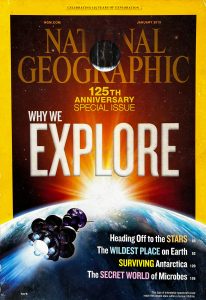
Today one of my idols, who happens to be a National Geographic Fellow, is travelling on the footsteps of our Homo Sapien ancestors in a project called ‘Out of Eden’. This Nat Geo writer is Paul Salopek and he has been walking for over a decade now (since January 2013) from Ethiopia in Africa across all of West and South Asia, and then upto China, into Siberia and in 2026 has now crossed over to Alaska via the Bearing Strait between Russian Siberia & Alaska. The walk will end in the southernmost tip of South America after 38,000 kilometres since the start from Ethiopia and the aim of this project is to show the ‘collective’ movement of our ancestors who had walked these routes without knowing they were discovering any place for posterity or personal immortality. It kind of drives home the point that Paul Salopek is simply retracing the ancestral steps of thousands of humans before him and that he is certainly not seeking glory by claiming to be the first person to walk this path.
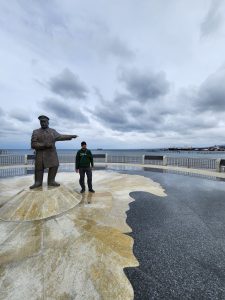
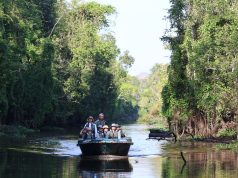
If I were to link and apply this explorer’s reality on me, then I have to admit in front of the mirror that I am in no mental or physical frame to do a multi-decade walk, let alone to find some ‘undiscovered’ site for humanity. So, I have taken the alternate route under my ‘Borderless Biomes’ project wherein I will just consolidate and visit all the major deserts, forests, grasslands and tundra biomes of the world and use all modern facilities and modes of transport that are at my disposal today and were not available to others earlier. So one can say that this is a project in logistics and organisational skills and nothing more.
In this ‘travel collection’ story of mine, I just want to pay homage to all those who were there earlier, whether they were referred to as nomads or explorers. It’s the only way I can feel truly connected to the story of the planet and its people before I, just like the other 100 billion, have to leave the planet myself. Well, that’s the plan and you know what they say about the best-laid plans…
Nitin Gairola is from Dehradun and is an extreme world traveller who has seen the natural world extensively and is often referred to as the ‘Most Travelled Indian’. He is on a quest to become the first person to travel to every major desert, forest, grassland, tundra & ice biome on Earth, besides every country. Nitin has set world travel records certified by India Book of Records, has written for Lonely Planet, holds National Geographic conservation certifications and loves Bio-Geography. He is also a senior corporate executive in an MNC and in his early days, used to be a published poet as well. Join him @ www.instagram.com/ MostTravelledIndian.