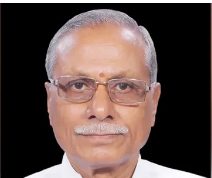
 By Col Bhaskar Bharti (Retd)
As the calendar turns and a New Year dawns, nations, like individuals, are offered a quiet moment of introspection. New Year resolutions are not merely about ambition; they are about intention. They are not promises of perfection, but pledges of direction. As India steps into 2026, a year rich with possibilities and challenges alike, perhaps it is time for the world’s largest democracy to pause, reflect, and collectively resolve to become a kinder, fairer, and more confident version of itself. India’s strength has always been its plurality – of languages, faiths, regions, and ideas. The task before us is not to flatten this diversity, but to nurture it with empathy, justice, and shared responsibility.
Resolving to Heal Our Air, Water, and Land
Pollution has quietly become one of India’s most democratic afflictions – it spares no one. From choking city air to polluted rivers and vanishing green cover, environmental degradation now touches health, productivity, and dignity. In 2026, India can resolve to treat clean air and water not as privileges but as fundamental rights. This means stricter enforcement of environmental norms, incentivising green transport, supporting sustainable agriculture, and investing seriously in renewable energy. But it also means behavioural change – less plastic, more public transport, community participation in cleanliness drives, and civic responsibility that goes beyond slogans. Environmental consciousness must shift from being a campaign to becoming a culture.
Resolving to Make Women Feel Safe, Everywhere
Women’s safety cannot remain a reactive conversation sparked only by tragedy. It must become a proactive national mission. Safety is not merely about policing—it is about infrastructure, lighting, public transport, fast-track justice, education, and social attitudes. In 2026, India must resolve that safety is not conditional on time, attire, or location. Streets, homes, workplaces, and digital spaces must all become zones of dignity. Empowerment also means economic independence, representation, and respect – at home and in public life. A nation that truly progresses ensures its women walk without fear and speak without hesitation.
Resolving to Reject Intolerance and Protect the Idea of India
India’s Constitution does not merely permit diversity, it celebrates it. Yet, rising intolerance toward minorities – religious, linguistic, cultural, or ideological, threatens the very soul of the republic. As a nation, India can resolve in 2026 to disagree without dehumanising, to debate without demonising, and to practice faith without fear. Respecting all religious practices, beliefs, and ways of life is not weakness, it is constitutional strength. Unity in India has never meant uniformity. It has always meant coexistence.
Resolving to Make Cleanliness a Habit, Not a Campaign
Cleanliness is one of the simplest yet most powerful markers of civic pride. While India has taken notable strides, true cleanliness cannot be achieved through drives alone – it requires sustained behaviour change. In 2026, let us resolve that public spaces are as sacred as private ones. Clean streets, toilets, railway stations, rivers, and villages reflect respect for us and for each other. Cleanliness also creates jobs, improves tourism, and safeguards health. A clean India is not just about appearances – it is about dignity.
Resolving to Confront Corruption with Courage
Corruption erodes trust, efficiency, and morale. While systemic reforms have begun, public faith is strengthened not by rhetoric but by example. India’s resolution for 2026 must be transparency with teeth. Unearthing corrupt practices, ensuring accountability, strengthening institutions, and punishing wrongdoing, regardless of power or position and send a clear message that honesty is not optional. Equally important is creating systems that reduce discretion, simplify procedures, and reward integrity. A corruption-free India may be aspirational, but a corruption-resistant India is achievable.
Resolving to Strengthen Cooperative Federalism
India’s federal structure is one of its greatest assets. The Centre and States are not competitors but collaborators in national progress. In 2026, India can resolve to deepen amicable Centre-State relations based on dialogue, mutual respect, and shared goals. Policies succeed best when regions feel heard, empowered, and respected. Cooperative federalism boosts development, reduces friction, and reflects democratic maturity. Strong States make a stronger Union.
Resolving to Invest Seriously in Education and Health
Education and healthcare are not expenditures – they are investments with lifelong returns. Yet, too often, they remain trapped between policy announcements and ground realities. India’s New Year resolve must be to move beyond lip service. Schools need trained teachers, infrastructure, and relevance. Higher education must encourage innovation, research, and critical thinking. Healthcare must be affordable, accessible, and humane—especially in rural and underserved areas. A healthy, educated population is the strongest guarantee of national resilience.
Resolving to Use Resources for All, Not a Few
India is resource-rich, not just in minerals and manpower, but in talent, creativity, and tradition. The true test lies in equitable distribution. In 2026, India can resolve to ensure growth reaches the last mile. Welfare schemes must translate into real empowerment. Infrastructure development must uplift marginalised communities. Economic progress should reduce – not widen the gap between the haves and have-nots. Growth that excludes is not progress; it is imbalance.
Resolving to Restore Empathy and Dignity
Racial slurs, caste-based discrimination, and everyday humiliation of the underprivileged corrode the moral fabric of society. They normalise cruelty and perpetuate inequality. India must resolve to restore empathy as a national value – towards domestic workers, sanitation staff, migrants, tribal communities, the disabled, and the powerless. Language matters. Behaviour matters. Respect must not depend on status. Removing or drastically reducing the class and caste mindset is perhaps India’s hardest but most necessary resolution.
Resolving to Be One India, With Many Voices
India’s regions are not footnotes; they are chapters in the national story. Empathy towards all regions, whether border states, hill states, the Northeast, islands, or aspirational districts must be renewed. Development must be sensitive to geography, culture, and local aspirations. Listening is as important as delivering.
Resolving to Reclaim Gandhian Wisdom in a Troubled World
At a time when much of the world appears consumed by violence, war, coercive diplomacy, and deepening mistrust, India’s New Year resolution for 2026 can also extend beyond its borders. This is a moment for India to reclaim and reassert the timeless relevance of Gandhian thought – non-violence, dialogue, restraint, and moral courage, in global affairs. Gandhiji showed the world that lasting change does not emerge from brute force, but from ethical conviction. In an international environment increasingly shaped by power blocs, arms races, and zero-sum rivalries, India can resolve to act as a moral anchor—one that believes peace is not weakness, and restraint is not surrender.
India’s engagements with global superpowers must continue to be guided by strategic autonomy and national interest, but without abandoning ethical clarity. Being friendly with all, aligned with none blindly and firm on principles has long been India’s diplomatic strength. In 2026, India can resolve to remain a bridge between competing powers—advocating dialogue where others choose division, and cooperation where others seek confrontation.
Equally important is India’s relationship with its neighbours. No nation can aspire to global leadership without regional stability. Gandhian philosophy teaches patience, perseverance, and the courage to pursue peace even when it is difficult. While safeguarding its security and sovereignty, India can continue efforts toward peaceful coexistence, dialogue, and economic cooperation in its neighbourhood – understanding that prosperity is more sustainable when shared.
In a world fatigued by aggression and sorrow, India’s greatest contribution may not be dominance, but direction – a reminder that humanity still has alternatives to hatred and violence.
A New Year – A Renewed Republic
New Year resolutions are not about instant transformation. They are about collective will. India does not need to become something new – it needs to become more fully itself. If 2026 can be the year we choose empathy over anger, inclusion over exclusion, integrity over convenience, dialogue over discord, and action over apathy, then the promise of the Republic will feel a little more fulfilled. Guided by the wisdom of Gandhi, rooted in constitutional values, and confident in its civilisational strength, India can offer hope not just to its citizens, but to a world searching for balance and compassion. May this New Year not just mark the passage of time, but the progress of conscience. Because when a nation resolves together and resolves wisely – the future listens, and the world takes note.
(The author is an army veteran and a social commentator. He is an alumnus of National Defence Academy and Indian Military Academy. He is a Post Graduate in HRM and Journalism and Mass Communication. He is based in Dehradun.)