Raising Day – 1 February
 By Addl DG AK Harbola (Retd)
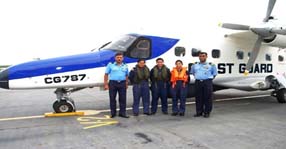
The Indian Coast Guard (ICG) celebrates its Raising Day on 1 February. Raised on 1 February 1977 as an interim organisation, it is the fourth ‘uniformed’ armed force under the control of the Ministry of Defence. Commencing operations with two old frigates and five seaward defence boats of the Navy, the ICG today has a fleet of 155 ships and 78 aircraft, and is expanding.
The organisation is governed by the CG Act, 1978. It provides absolute clarity on the service’s mandate, a well-defined mission statement, and the required freedom to execute its charter. According to the Act, the mission of this multifaceted organisation is to ‘safeguard the national maritime interests’ in the maritime zones of India. The Coast Guard has done much more, even going beyond these zones. The ICG has participated in numerous overseas missions, and its list of operational achievements is extensive.
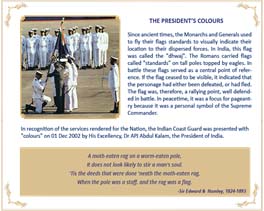
Having played its part in IPKF operations, where its personnel were awarded the coveted ‘Yudh Seva Medal’, it has proven its credentials by undertaking a wide range of operations, including supporting military functions during Parakram, Vijay, and, recently, Sindoor, Humanitarian Assistance and Disaster Relief (HADR), Search and Rescue (SAR), Anti-Piracy, Anti-Smuggling, drug interdictions, and marine pollution response, among others. In 2002, the then President of India presented ‘Colours’ to the ICG. Its officers and personnel have regularly been bestowed Param Vishisht Seva Medal (PVSM), Ati Vishisht Seva Medal (AVSM), Presidents Tatrakshak Medal(PTM), Tatrakshak Padak and Jeevan Raksha Padak.
The fourth largest Coast Guard in the world, ICG has excelled in executing its charter since its inception. In 1988, Coast Guard Ship (CGS) Varuna apprehended the boat ‘Al Khalidi’ in the Arabian Sea, carrying 70 jackets of smuggled gold worth Rs 26 crore, one of the biggest catches by any Indian agency at that time.
In the Government’s ongoing anti-narcotics crusade, the Coast Guard has been a major contributor. Either single-handedly or in joint operations, it has apprehended drugs worth Rs 54,140.19 crore till date. The apprehension of MV Henry with 1,445 kg of drugs worth Rs 3,500 crore off the Porbandar coast on 29 June 2017 was one of the biggest such catches. During April 2021 to July 2024, a series of 12 anti-narcotics operations off Gujarat coast resulted in seizure of drugs worth Rs 3,313 crore. On 12 Apr 2025, off Gujarat, and on 23 Nov 2024 in the Andaman Sea, ICG ships again seized drugs worth Rs 1,800 crore and Rs 36,000 crore, respectively. The latter is said to be the biggest seizure independently by any Indian agency.
During the last 49 years, the service has been entrusted with additional responsibilities. The Director General of the organisation (DGICG) is the Chairman of the Offshore Security Coordination Committee (OSCC). The DGICG also chairs the National Maritime SAR Board and the National Committee for Maritime Oil Spill Contingency Planning (NOSDCP). He also represents India as ‘India’s Governor’ at the Regional Cooperation Agreement on Combating Piracy and Armed Robbery against Ships in Asia (ReCAAP), an international organisation of 21 countries, including the US and Australia and reflects India’s commitment to international treaties and conventions.
The Coast Guard, to execute its vast charter, routinely interacts with approximately 16/17 ministries of the central and state governments. The government has nominated the ICG as the nodal agency to coordinate with all the stakeholders for implementing coastal security measures. The DGICG has been entrusted with the responsibility of Commander, Coastal Command.
The very name of the organisation, ‘Coast Guard’, however is a misnomer and often misunderstood. The Coast Guard also has a vast international footprint, operating far beyond territorial waters and exclusive economic zone (EEZ). Coast Guard Maritime Rescue Coordination Centres have ensured mariners’ safety within India’s international search and rescue region (ISRR), which covers approximately 4.6 million square kilometres. In line with India’s vision of Security and Growth for All in the Region (SAGAR), the Indian government has given a ‘standing approval’ to ICG ships to enter foreign ports in 13 littoral nations, without asking specific approvals while undertaking SAR operations.
After the historic apprehension of the Japanese-hijacked merchant vessel ‘Alondra Rainbow’ by the ICG in November 1999, a biennial exercise was institutionalised through an MoU with the Japanese Self-Defence Forces. At present, the ICG has MoUs with many countries, sharing its expertise in anti-piracy, drug interdictions, pollution response, and boarding under training exchange programmes.
The service has become an inseparable element of the government’s ‘white hull diplomacy’. In 2025 alone, ICG ships visited several friendly countries, including Djibouti, Mozambique, Sri Lanka, and Yemen, transporting medical and humanitarian material.
The ICG’s expertise in responding to maritime oil slicks has received international acclaim. It was asked to assist during a 166-ton oil slick that threatened Mauritian ‘Blue Bay’ beaches in July 2020, after MV Wakashio, a Japanese-controlled bulk carrier, ran aground. On 3 September 2022, a massive fire and explosion onboard ‘MT New Diamond’ threatened a probable 2.75 lakh tons of oil slick 40 NM east of Sri Lankan coast, but ICG ships and aircraft quickly responded, averting disaster in a week-long operation.
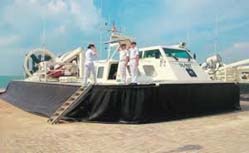
The ICG can boast of highly professional and dedicated personnel, with many firsts to their credit. It is the country’s first ‘armed service’ to have amphibious hovercraft in its inventory, manned by both male and female officers, making these women among the first to occupy the sea-going billets. In 1996, the ICG became the first maritime armed force in the country to recruit lady officers, other than medical officers on permanent appointments. The first ‘all-women surveillance sortie over the sea’ was also undertaken by ICG women officers.
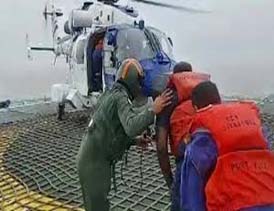
To its credit, the ICG has saved a total of 11,806 lives so far. The evacuation of 50 personnel from the oil rig ‘Key Singapore’ off the Gujarat coast during super cyclone ‘Biporjoy’ in highly adverse weather conditions displayed the doggedness of ICG personnel.
Unfortunately, the service, over the period has lost some of its brightest professionals in its glorious journey. Probably its personnel, while discharging their duties and, despite being aware of the inherent risks in ensuring the safety of other’s lives at sea, did not care about their own lives.
While the Government of India has consistently supported the service’s endeavours, the list of its achievements continues to grow. Credit to the hard work of highly motivated personnel, the true strength behind the service’s success. Let’s cheer the ICG and its personnel on their Raising Day by acknowledging their contribution to safeguarding India’s national interests in the oceans. Policymakers must continue to provide the support needed so that it can meet the expectations of the nation and uphold its motto ‘Vayam Rakshamah’.
(Additional DG AK Harbola, Indian Coast Guard (Retd), is a former Coast Guard Commander (Western Seaboard). He is currently associated with Rashtriya Raksha University, Ganghinagar, Gujarat.)