By Satpal S Gandhi
Dehradun, 10 May: The Doon Gardening Society was born in 1955 when the late DD Suri after retirement decided to settle down in this beautiful garden city of Dehradun. The first meeting and the laying of the foundation stone took place in 1959.
DD Suri, an eminent botanist, after his retirement made Dehradun his home. He was a keen gardener and believed that Dehradun could be called the city of gardens. He visualised the Dehradun of those days with houses in 2 Bigha (2000 Sq Yards) and more were ideal for a proper garden. With this in mind and to make Dehradun a city of Gardens, he founded the Doon Gardening Society. Soon a number of eminent Doonites joined the group and the DGS was formed.
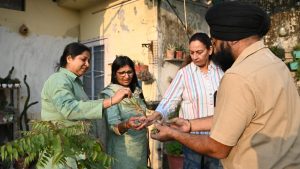
Usually there are maximum 20 members in the society. The monthly meeting is held at a member’s house every second Saturday of the month. If the number of members decreases due to whatever reason, the new member is introduced by any of the existing members. The aspirant member is invited to the next monthly meeting. The next meeting is proposed at the residence of the new member to judge whether the new member is a keen gardener and has keen interest in gardening. After the old members are satisfied, they include the new introduced person as a member of Doon Gardening Society.
With the experience of members, a monthly Baramasa of gardening has been prepared, which is a write-up of dos and don’ts in gardening in each month. A member is appointed as a President of the evening who reads the monthly Baramasa related to the month when the meeting is held. The write-up explains various aspects of Gardening, like flowering, fruiting, insecticides, manure, lawn treatment, trees, pruning, etc.

Every member is an expert in their own way, members are expert in bonsais, hanging plants, succulents, kitchen gardening, orchids, perennials, etc. The meeting is focused on sharing the knowledge amongst members.
The host member has to present themself or has to arrange a resource person to deliver a talk on any topic on gardening. After reading the Baramasa and the talk, the members visit the host’s garden. The host shares his or her experience in gardening. The host makes arrangements for a high tea for the members and thereafter the president of the day proposes the vote of thanks. Before leaving the host’s house, the host either shares the garden produce, vegetables grown in his/ her garden or presents some plants, seeds, etc., cultivated by them. Other members who attend the meeting also bring plants, seeds, bulbs, etc., which are surplus with them.

The unique group of Dehradun gardeners shares the joy of gardening amongst the members.
The monthly meeting for the month of May was held at Sharajeet and Satpal S Gandhi’s home. The gathering brought together plant lovers, horticulture enthusiasts, and environmentalists for an inspiring exchange of ideas on sustainable gardening and self-reliant living.
Satpal’s garden itself became the highlight of the meeting. Designed thoughtfully across three levels, the garden reflects innovation, adaptability, and a deep understanding of plants and sunlight conditions.
The courtyard garden on the ground level is dedicated primarily to lush foliage plants. Since sunlight reaches this area only for a short duration each day, shade-loving ornamental plant thrive beautifully, creating a calm and refreshing green retreat. The carefully arranged textures and shades of foliage demonstrate how even limited sunlight spaces can be transformed into vibrant gardens.
The first-floor terrace garden presents a striking contrast, bursting with seasonal flowering plants in a variety of colours. Rows of flowering pots add brightness and fragrance to the atmosphere, attracting admiration from all visiting members of the society. The terrace reflected the joy and creativity that home gardening can bring to urban living.
At the top level, where sunlight is available for the longest duration, Satpal Singh Gandhi has developed a productive vegetable garden using grow bags. A wide range of seasonal vegetables are cultivated organically in this sunlit area, showcasing an efficient model of terrace farming suitable for city homes. Members appreciated the practical use of vertical space and the integration of ornamental and edible gardening within the same residence. Satpal has successfully grown seasonal vegetables like capsicum, brinjals, beetroots, sponge gourd, bottle gourd, French beans, etc. Herbs and complementary vegetables can also be seen in his small garden.
Satpal’s main interest is in growing succulents. He has more than 50 variety of succulents and has also developed a small nursery of succulents to be shared freely amongst garden enthusiasts.
His innovation for gardening shows how to use vertical space in gardening where there is very less space in urban city houses. He has used the parapet wall by putting grow bags on top and used iron frames on the wall for planter and posts. A small green house on the top floor keeps plants protected from summer heat.
“Right plant right place” is Satpal’s thumb rule for potted plants. He says every small or big garden has a micro-climate, such as there are corners with full day shade, some corners have semi shade and some are sunlit throughout the day. He says, if any plant is not growing well try placing the pot at some other place for a week, if the plant shows positive growth that means new space is favourable to the plant, else shift it back to the same place.
A major attraction of the meeting was the enlightening talk delivered by renowned botanist JP Maithani, a respected figure in Uttarakhand known for his dedication to sustainable living and rural development.
During his address, Maithani shared his inspiring journey and struggles in establishing a self-reliant society in the remote village region of Pipalkoti in Chamoli district. His experiences highlighted the importance of reconnecting communities with traditional agricultural practices and local biodiversity.
He spoke extensively about the cultivation and value of millets, medicinal plants, herbs, and fruit-bearing trees, emphasising their nutritional, ecological, and economic significance. He encouraged gardeners and citizens to revive indigenous plant varieties and traditional farming wisdom that are gradually disappearing in modern urban lifestyles.
Maithani also shared his experiments and observations from gardening in the plains of Dehradun to the hilly terrain of Chamoli district. His comparative insights into climate, soil conditions, plant adaptability, and water management fascinated the audience and sparked meaningful discussions among members.
The meeting concluded with an interactive session, exchange of plants and seeds, and appreciation for the efforts of Satpal Singh Gandhi in creating a unique urban garden space that beautifully balances aesthetics, sustainability, and productivity.
Gandhi presented each member with a special plant of Kalkatia Mirch (Chili) which he propagated from the seeds grown in his garden. The Chilli is also called Guldasta mirch (extremely hot green chili) as the chillies grow upside in a bunch. Satyavrat Bansal said that it is also called Asmani Mirch as it grows upside. Succulents were also distributed amongst the members.
Maithani had brought packets of tea made from Kandali, a popular herb of the hills also known as Bichhoo ghaas. The packets of tea were distributed to the members. He also shared seeds of Kachnar which he had brought.
The vote of thanks was proposed by Anurag Sanghal, who was appointed President of the day by the Secretary, Dr Meena Bakshi. Anurag thanked the hosts Sharanjeet and Satpal Gandhi for hosting the meeting. He mentioned Surinderjeet Kaur for her skills in the kitchen with special thanks to two young girls, Evana George and Kuhelika Bist, for looking after the guests by offering refreshments.
The gathering once again reflected the enduring spirit of the Doon Gardening Society in promoting environmental awareness, gardening culture, and community learning through nature.
“A true gardener grows more than plants — he grows peace, beauty, and life.”