In conversation with Michelle Ann Gardner, Educationist
By AMEESHA MD NATHANIEL
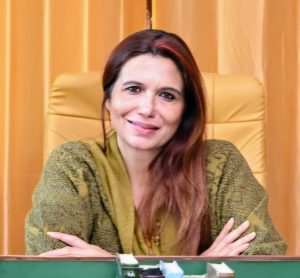
As India celebrates its 76th Republic Day, we speak with Michelle Ann Gardner, a celebrated educationist from Dehradun whose work has touched countless lives through her immense love, care and concern for children, whom she calls the upcoming pillars of India. In this candid interview, she shares her journey, inspirations, challenges, and hope for the future.
What inspired you to pursue a career in education?
“I was, quite literally, born into the field of education. I was born in a residential school, my parents were teachers at Allahabad High School, then in Nainital, and then in Cambrian Hall where both my parents were teachers. Growing up, I lived in school environments—mostly where my parents were posted but for a significant part of my life I was at St. Thomas’ College, where I’ve stayed within the campus for the most part of my life. Education feels natural to me because it’s always been a part of who I am. My uncle, a well-known educationist at St. George’s Homes in Nilgiris, also had a significant influence on me. I excelled academically and played basketball as the state vice-captain during school. For a while, I considered becoming a lawyer or a journalist, but my love for learning and teaching steered me towards education. I pursued my Bachelor of Liberal Studies and B.Ed. in Australia, which broadened my perspective and honed my creative thinking—a skill that has been invaluable in my role as a principal. Besides my endeavours as Principal of St Judes’, I was- for at least two months each year in New South Wales and Victoria, Australia – teaching English to students ranging from class 2 to University. Working with teenagers is especially rewarding, it’s a job that fits me like a glove. One day, I hope to start a college that not only educates children but also helps them find meaningful employment, and overcome barriers like financial constraints, etc. Education is something which fits me like a glove.”
What values do you believe are important for students to learn in today’s world, especially in the context of India’s rich history and diversity?
“I feel immensely proud to be an Indian, to belong to a nation with such deep-rooted traditions and a hoary history of sacrifice. Students must realise the efforts and sacrifices of the visionary individuals who fought for our Independence and shaped our nation. They must understand that we cannot rely on others to bring change—we have to be the catalysts for it ourselves. If we want better conditions, we must act, just as our forefathers did. History teaches us that if our ancestors had simply accepted being colonised, we would never have achieved freedom. The same principle applies today—if students see issues or problems around them, it’s up to them to step up and create change. That change begins with a shift in attitude and a willingness to take responsibility. Inclusivity is another vital value. Growing up, I often heard the phrase, “Hindu, Muslim, Sikh, Eesaai, bhai bhai,” and it’s something I deeply believe in. In Australia, where I also teach, I’ve observed a beautiful multiculturalism that embraces diversity while fostering unity. That’s a lesson we can take to heart. As Indians, we might belong to different states, languages, or religions, but we are one country. It’s essential to instil in our students that being Indian comes before all else. Progress requires us to be accepting, tolerant, and appreciative of one another. On our campus, we emphasise this sense of community and unity. We teach our students that by living and working together as one, we can achieve greatness. It’s not just about understanding diversity but also about celebrating it, because that’s what makes India truly extraordinary.”
What is one activity which you believe is essential part of your school’s curriculum?
“It is Charity for us which is an essential part of our school’s ethos, and we emphasise its importance in every student’s life. It’s not just something we talk about; it’s actively included in our curriculum. For instance, in their board classes, students are required to perform Socially Useful Productive Work (SUPW), and we ensure they take it very seriously. Our students engage with the community three times a year in various ways. Sometimes we focus on our school itself, such as by making the campus greener or helping the Class Four employees. Each child buys a gift for our support staff, and it’s a heartfelt gesture of appreciation. Beyond that, we work with organisations like the Sisters of Charity, Raphael Home, and Cheshire Home, where our students actively contribute and learn about compassion and empathy. Before COVID, we also supported nearby villages, providing rations and other essentials. While some of that has shifted, the spirit of giving remains strong. One of our cherished traditions is called Chris-kindle, where students give a gift that they would like to receive. This promotes the idea that giving is as fulfilling as receiving and helps them understand the joy and satisfaction that come from sharing with others. I believe that the greatest joy comes from giving. It’s a value I’ve always tried to impart to my students. I want them to understand that charity is not just about helping others; it’s also about building a sense of community, empathy, and gratitude. These are qualities that will stay with them long after they leave school and make them better human beings.”
Any advice for aspiring educators?
“My message to educators is to help each child grow to their fullest individual potential. Every child is unique, with his/her own set of God-given gifts, and it is our responsibility to recognise, nurture, and promote that in-born talent. To do this effectively, it’s essential to have an open mind about children and accept them as they are. Communication plays a pivotal role in this process. At our school, we place a strong emphasis on fostering open and meaningful communication with our students. It helps us understand their needs, strengths, and challenges, allowing us to bring out the best in each child. As educators, our goal should not be to fit children into a mould but to guide and support them as they discover their paths. When we approach teaching with acceptance, empathy, and open dialogue, we empower children to thrive and realise their potential, both academically and personally.”
How can we, as a nation, use technology responsibly while upholding the values of critical thinking, social interaction, and unity this Republic Day?
“Firstly, when it comes to technology, we must embrace it as a tool to make our lives easier, but also ensure that we do not lose the ability to think critically for ourselves. Artificial Intelligence, for example, can greatly simplify tasks, but excessive dependence on it is not advisable. Our education system does a commendable job of maintaining a balance, nurturing young minds, and encouraging them to read, write, and think independently. Schools play a vital role in fostering this balance by providing facilities like laboratories while not wholly relying on technology. It’s also important to take inspiration from countries that have imposed restrictions on AI, reminding us that life is lived in the real and not the virtual world. Social interaction and community-building, which were deeply missed during the isolation of the COVID era, are crucial for children. Encouraging interpersonal connections is a priority we should uphold. Secondly, professional development is essential for nation-building. In addressing challenges like global warming, we must learn to work together, treating everyone with equality and dignity, irrespective of their religion, caste, or background. Collaboration and respect for diverse perspectives can lead to innovative solutions. Our population is our strength, and we need to ensure our children are equipped to thrive independently in a world full of opportunities. India’s diversity provides unique avenues for growth that do not exist elsewhere. Promoting dignity of labour and taking our responsibilities seriously can pave the way for a stronger, more united nation.” This Republic Day, let us commit to nurturing independent thinking, fostering respect, and working towards a brighter future for our country.