 By Devendra Kumar Budakoti
India has a rich tradition of democratic governance dating back to ancient times, with the republic of Vaishali often cited as an early example. The modern Panchayati Raj system in rural India also has its roots in the Vedic era. The term Panchayat comes from Panch, meaning five, referring to a five-member village committee that was traditionally responsible for resolving disputes and maintaining harmony in village life. These village councils served as institutions of arbitration whose decisions were widely respected and accepted.
During British rule, the Panchayat system was incorporated into the colonial administrative framework. The British used it primarily for revenue collection and for managing land records, especially in relation to land acquisition for infrastructure and development projects. The British-era forest laws also relied heavily on village-level land demarcation and commons management. Many forest movements in Uttarakhand have their roots in resistance to these colonial forest policies.
After India gained independence, the Constitution provided policy direction for the Panchayat system through the Directive Principles of State Policy. It states: “The State shall take steps to organise village panchayats and endow them with such power and authority as may be necessary to enable them to function as units of self-government.” This laid the foundational vision for grassroots democracy in India.
The Panchayati Raj system was further strengthened by the recommendations of the Balwant Rai Mehta Committee in 1957. The committee proposed a three-tier system: Gram Panchayat at the village level, Panchayat Samiti at the block level, and Zila Parishad at the district level.
However, while Gram Pradhans (village heads) are elected directly by the people, the chairpersons of the block and district levels are chosen by elected committee members. This system of indirect elections often leads to the exchange of money and political manipulation. There is a growing demand for reform to ensure that block and district leaders are also elected directly by the public.
The 73rd and 74th Constitutional Amendments in 1992 marked a significant step in deepening Indian democracy. These amendments not only provided for reservations for women and marginalised communities but also mandated the devolution of powers and responsibilities to Panchayati Raj institutions.
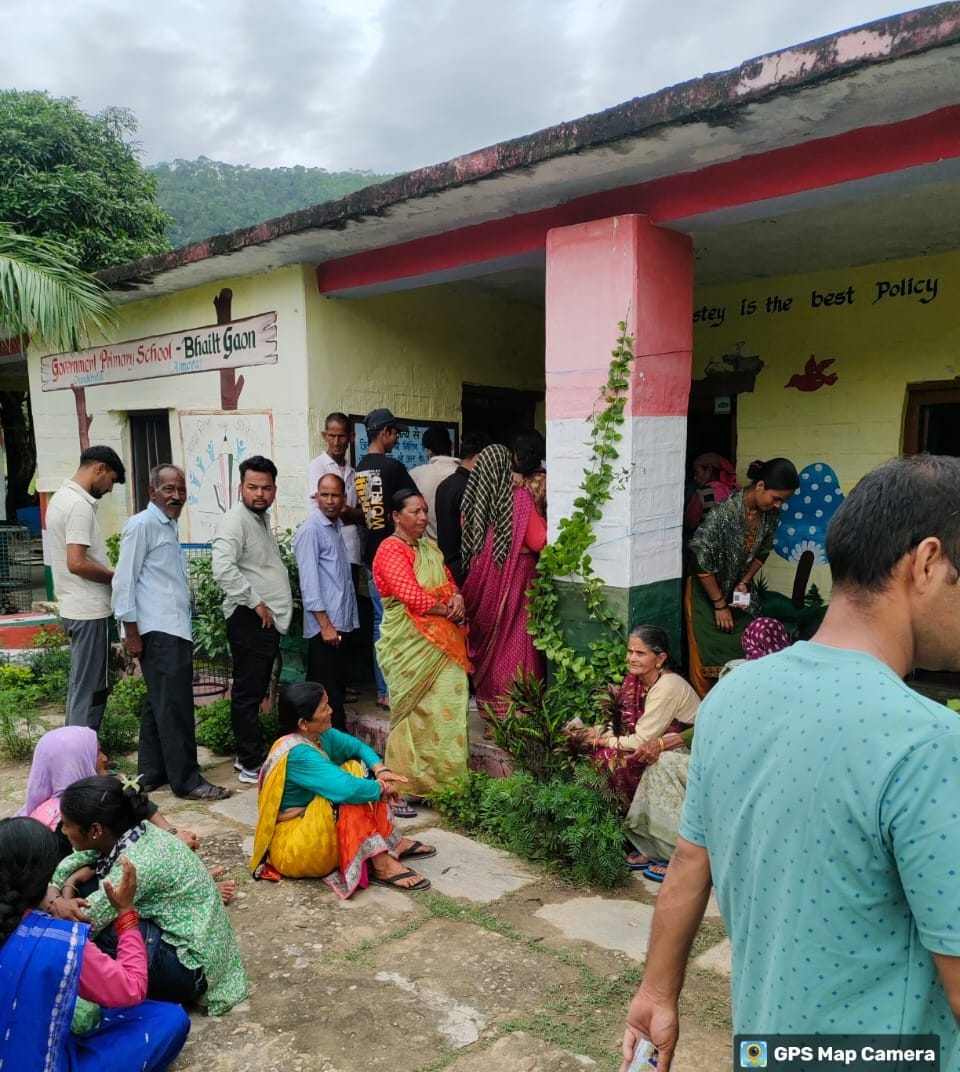
The 2025 Panchayat elections in Uttarakhand showcase grassroots democracy in action. Although reports have emerged of liquor and cash being seized by police and excise officials, suggesting attempts to influence voters, such tactics are increasingly ineffective in a literate state like Uttarakhand. Conversations with local political workers suggest that while alcohol may be consumed during the campaign, it is unlikely to significantly sway voter decisions.
Though official party symbols have not been assigned in these elections, political parties have backed candidates for district-level positions. These candidates have openly used party affiliations in their campaign materials, blurring the lines between independent and party-backed candidates.
Some social activists have flagged unethical practices in the days leading up to the elections. Nonetheless, the first phase of polling on 24 July proceeded smoothly. Concerns remain, however, about the increasing presence of contractors and individuals with business interests among candidates. This trend could hinder the rise of genuine grassroots leadership. Many long-time party workers—who have toiled for years spreading party ideology—now feel sidelined in favour of moneyed candidates.
As Uttarakhand prepares for the second phase of Panchayat elections on 27 July, one thing remains clear: despite challenges and imperfections, grassroots democracy is alive and thriving. The energetic campaigns and widespread voter participation reflect the enduring strength of democratic values at the village level in India.