 By Nadir F Bilimoria
For millennia, the greatest empires in the world made the exact same fatal mistake. They marched onto the Iranian plateau with swords drawn, absolutely certain they could wipe this civilisation off the face of the earth forever.
Birth of a Civilisation
The history of the Iranian plateau (interchangeable with Persian Plateau) stretches back far beyond the familiar narratives that place Mesopotamia and Egypt at the centre of civilisation. Archaeological evidence reveals urban settlements in the region dating to 6,000–7,000 years ago, while ceramic finds from the fourth millennium BCE place Iran among the world’s oldest civilisations, standing shoulder to shoulder with Mesopotamia and China.
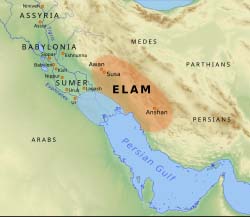
Elam, a state in the southwest of modern-day Iran with its capital at Susa, was an early geopolitical power. By the 26th century BCE, it exerted influence over neighbouring Sumer. In the 23rd century BCE, a written treaty between Elam and Akkad (an ancient Mesopotamian city) – guaranteeing Elamite independence in exchange for aligned foreign policy—represents one of the earliest documented international agreements.
Between the 20th and 15th centuries BCE, Indo-Iranian tribes migrated onto the plateau from Central Asia and the Caucasus. These peoples, who called themselves Aryans (hence its morphing into the name Iran), spoke languages related to Latin, Greek, and other Indo-European tongues. Over time, they mixed with older cultures such as Elam and formed the groups later known as the Medes and the Persians.
Zoroastrianism and the invention of linear time
For the ancient Iranians, life was not a chain of meaningless accidents or mere cycles of nature. They believed the universe was a battlefield where truth and order contended against falsehood and chaos. One of Iran’s most consequential contributions was ideological, it introduced something profound: Zoroastrianism.
Emerging on the plateau long before Christianity and Islam, it framed existence as a cosmic struggle between Ahura Mazda (light, truth, order) and Angra Mainyu or Ahriman (evil, deceit, darkness). Zoroastrianism was the first tradition in history to proclaim that time does not circle endlessly. Instead, time advances in a line—beginning, unfolding, and moving toward an ultimate end.
Thus, Zoroastrian thought introduced a linear conception of time—a beginning, a moral history, and an eventual end marked by judgment and purification. This prophetic framework influenced Jewish thought during the Persian period and later resonated in Christian and Islamic eschatologies, shaping how much of the world conceives of history and destiny. When the Persians conquered Babylon in the sixth century BCE, they liberated the Jews from captivity. Judea then became a province of the Persian Empire for nearly two centuries. During this period of close contact, Jewish thinkers encountered Zoroastrian ideas of linear time, the end of days, and final judgment, which left a lasting imprint on their religious imagination.
From Satrapies to Superpower
The first major Iranian state among the Aryans was Media (7th century BCE), which briefly dominated the region and played a decisive role in the destruction of the Assyrian Empire. In 550 BCE, Cyrus the Great—himself of mixed Persian and Median heritage—united the two peoples to establish the Achaemenid Empire, often regarded as the world’s first true superpower. Cyrus stood apart from the tyrants of the past. In Lydia, the Greek city-states of Asia Minor, and Babylon, he neither razed temples nor enslaved populations. Instead, he forged an empire built on respect.
Under Cyrus and his successors, most notably Darius I, the empire stretched from Egypt to the Indus Valley, ruling tens of millions of subjects. This vast dominion earned Darius the epithet, “Half the World, One King”. Darius organised the realm into satrapies (provinces), standardised taxation, minted gold coinage, and created an efficient road and postal system.
We often imagine that the famous Greco‑Persian wars—the battles of the 300 Spartans—brought Persia to its knees. In truth, that is a Western myth. The Greeks did defend their independence, but for the vast Achaemenid Empire, these clashes on its distant western frontier were little more than an insect bite.
Persian strategy combined military force with cultural and administrative accommodation. When direct conquest failed, Persians often used diplomacy and patronage—funding rival Greek city-states, for example—to secure their interests. Even after Alexander’s conquest in 330 BCE and the collapse of Achaemenid political power, Persian cultural influence endured and later reasserted itself under Parthian and Sassanian rule.
From Alexander to the Mongols
Iran’s history is marked by cycles of violent conquest followed by cultural assimilation. After Alexander, Hellenistic rule gave way to the Parthians, who resisted Rome with mobile cavalry and the famed Parthian shot. The Sassanian Empire (224–651 CE) revived Persian centralisation and made Zoroastrianism the state religion, creating a powerful rival to Rome and Byzantium.
The mid‑7th century brought the Arab conquests and the spread of a new religion, Islam. Although the Sassanian state fell and Zoroastrianism declined, Persian culture and language proved resilient. Under the Abbasids and later Islamic dynasties, Persian bureaucrats, scholars, and poets shaped administration, literature, and science; Persian became a major literary and court language across a wide region.
After the Arab conquest, a true apocalypse descended upon Iran. In 1220, Genghis Khan swept in from the steppes of Central Asia. The Mongols did not merely conquer—they annihilated. Entire cities were slaughtered, and irrigation systems that had sustained civilisations for a thousand years were erased from the earth. For a time, it seemed Iran would be reduced to pastureland for nomads.
Yet when Genghis’s grandson Hulagu established the Ilkhanid state, something remarkable unfolded. These harsh warriors, once dwelling in yurts, embraced Islam. They elevated Persian into the language of governance, raised magnificent mosques crowned with blue domes, and became patrons of scholars and poets. In the ruins of conquest, Persian culture was reborn under foreign rulers. Later conquerors, such as Timur and the Timurids, became great patrons of Persian art and literature, fueling renaissances in miniature painting, architecture, and poetry. Over generations, many foreign rulers were absorbed into the Persian cultural sphere.
Modern transformations and the name Iran
By the 19th and early 20th centuries, Iran suffered significant territorial losses and increasing foreign interference, becoming a pawn in the “Great Game” between Britain and Russia. The Russian Empire annexed territories in the Caucasus—modern-day Georgia, Armenia, and Azerbaijan—through a series of wars and treaties. Meanwhile, Britain extended its influence in Iran, particularly after the discovery of oil in 1908, when British interests began to dominate the exploitation of Iranian petroleum resources.
In 1925 Reza Shah Pahlavi initiated rapid modernisation and, in 1935, formally requested that the country be called Iran—the name its people had long used—rather than the exonym “Persia”. This change was both symbolic and political: it asserted national sovereignty and modern identity on the world stage.
The 20th century brought further upheaval, culminating in the 1979 Islamic Revolution, which transformed Iran into a theocratic republic and redefined its relations with the West. Today, the dual images of “Iran” (modern geopolitics, sanctions, conflict) and “Persia” (romanticised history, poetry, and cultural grandeur) coexist in global imagination, reflecting an ongoing struggle over identity and memory.
From Conquest to Continuity
For thousands of years, waves of conquerors thundered across the Iranian plateau, each convinced they could extinguish its civilisation. Macedonians under Alexander, Roman legions, Arab armies, and Mongol hordes stormed its cities, shattering institutions and scattering peoples. Any other nation might have dissolved into the dust of history, vanishing like the Babylonians and the Assyrians. Yet Iran endured, walking a path unlike any other.
Time and again, though its capitals fell and its armies broke, the spirit of Iran achieved something extraordinary: it absorbed its conquerors. Invaders who came with fire and steel left speaking Persian, wearing Persian robes, and ruling with Persian laws. The battlefield may have been lost, but the realm of culture was won. Through this miracle of survival, Iran preserved a continuous identity across five millennia.
Across five thousand years, Iran forged a singular survival mechanism: to transform defeat into continuity. When faced with conquest, it reshaped its conquerors, turning them into heirs of Persian civilisation. From the vision of Zoroastrianism to the resilience of its people, Iran’s legacy was not merely survival but enduring influence—shaping religion, governance, literature, and even humanity’s understanding of time and destiny.
[The author is one of only five permanent Parsi Zoroastrians residing in Dehradun. The worldwide Parsi population is just over one lakh. In India, they constitute less than 0.005% of the population, making them one of the smallest yet historically most influential communities in the country.]