By Arun Pratap Singh
Garhwal Post Bureau
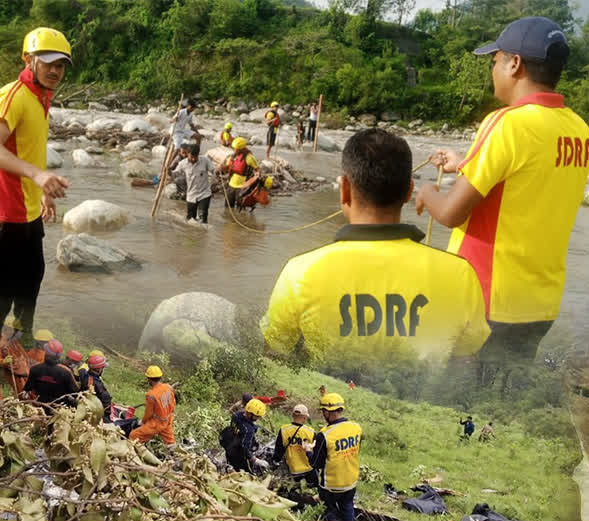
DEHRADUN, 5 Jul: In response to Uttarakhand’s recurring vulnerability to natural disasters, particularly in the hills during monsoon, the state government has decided to significantly upgrade the State Disaster Response Force (SDRF) and equip the force with advanced technologies and infrastructural reinforcements. With a renewed focus on Artificial Intelligence (AI), high-tech drones, and sophisticated rescue equipment, the SDRF is poised to become a more agile and efficient force in times of crises.
It may be recalled that SDRF was formed after the 2013 Kedarnath tragedy to provide rapid relief and rescue services with just one company but now it has grown from one to five companies and is now expanding further. The sixth company is currently being formed, while administrative approval has already been granted for an additional battalion, which will be stationed in the Kumaon region once financial clearance is obtained.
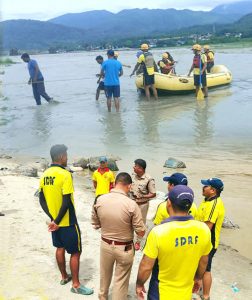
Sources in the SDRF have shared that deployments for 2025 have been strategically planned based on past flood data and vulnerability assessments. Twelve sub-teams have been deployed across eight key locations including Dhalwala, Koti Colony, Chinyalisaur, Dakpathar, Laksar, Rudrapur, Tanakpur, and Nainital. These sub-teams, each comprising six to seven personnel, were in position by July 1. In total, the SDRF has been mobilised across 42 sites throughout the state, all of which remain in real-time coordination with a round-the-clock control room. The teams comprise deep-diving experts trained at premier institutions and are equipped with life-saving devices and flood-specific apparatus. The current response time is under five minutes, with efforts underway to reduce it further.
During the Kanwar Yatra, an annual pilgrimage requiring heightened vigilance, SDRF units will be deployed at six strategic locations in Haridwar and Rishikesh. Seven sub-teams and 55 water rescue specialists termed ‘Jal Shakti’ personnel will also be stationed at vital points including Kangra Ghat Bridge, Bairagi Camp, Premnagar Ashram, Ramjhula, Neelkanth Temple, and Dhalwala. Commandant Yaduvanshi confirmed that the SDRF will ensure the Yatra is smooth, secure, and well-coordinated in line with the directives of Chief Minister Pushkar Singh Dhami.
These teams will include deep divers and carry rescue equipment such as rafts, inflatable kayaks (duckies), motor boats, life jackets, throw bags, floating ropes, diving suits, underwater communication sets, side-scan sonar systems, and underwater drones. Last year, SDRF teams successfully rescued around 250 Kanwariyas from drowning; this year’s deployment has been scaled up in anticipation of a higher pilgrim footfall.
Recognising the potential of AI and drone technology in disaster response, the SDRF is now also preparing to integrate these tools to enhance accuracy and reduce response times during emergencies. There are plans to acquire high-tech models capable of real-time terrain mapping and search operations. Additional investments in advanced rescue gear are also on the agenda.
In a bid to empower local communities as the first line of defence, the government is set to train 1700 ‘Disaster Mitras’ community volunteers identified across 13 districts. These individuals will undergo specialised training at the SDRF battalion in Jolly Grant starting from 15 July. The training will span four to five months and equip them to act as effective first responders in crisis situations.
With an integrated strategy encompassing technological advancement, infrastructural growth, and grassroots training, the Uttarakhand SDRF is positioned to prevent any untoward mishaps in future.