By Arun Pratap Singh
Garhwal Post Bureau
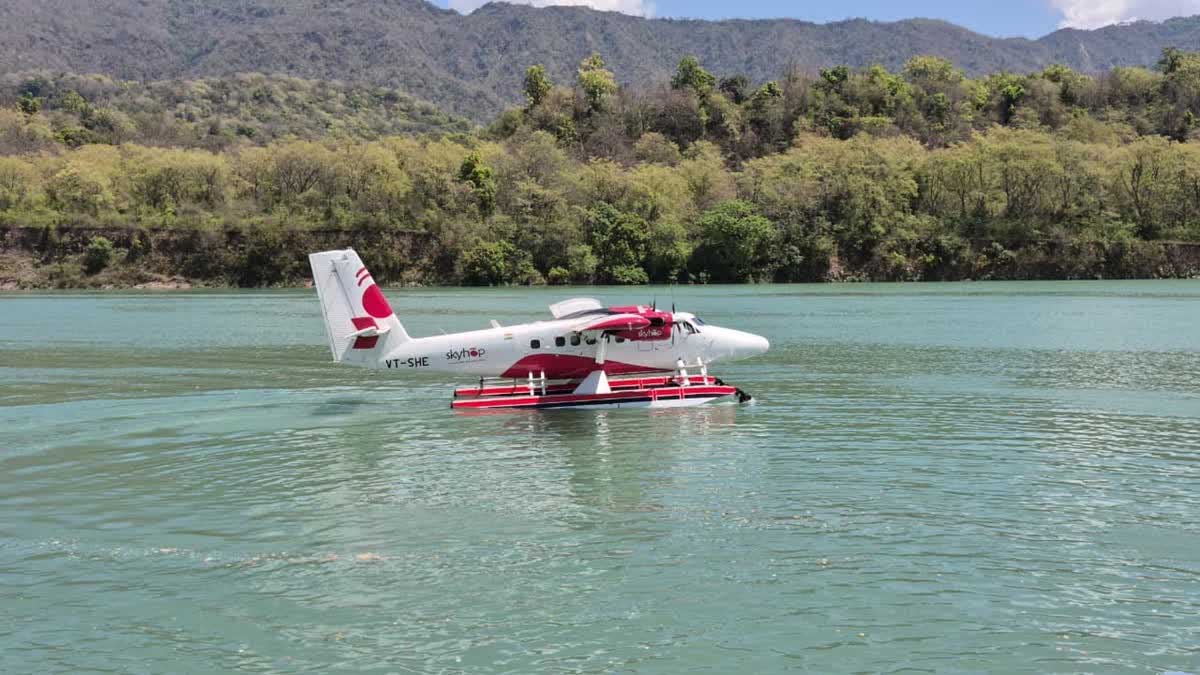
Rishikesh, 9 Apr: A new chapter has been added to the tourism history of Uttarakhand with the successful trial of a 19-seater sea plane at the Ganga Barrage reservoir in Rishikesh. This was the second trial of the aircraft, operated by Sky Hop Company, which not only skimmed the waves of the Ganga but also demonstrated its strength against the river’s counter-current. Officials say that similar trials will now be held also at Tehri Lake.
The trial held today was technically significant as the sea plane executed two smooth take-offs and landings on the main stream of the Ganga as well as against the counter-current. The successful operation against the river’s flow indicates that the technology being used is safe and suitable for the geographical conditions of Rishikesh.
The trial was conducted under strict security arrangements with teams from the police, SDRF, fire brigade and UJVNL present at the site. The exercise, which began from Jolly Grant Airport on 6 April, is now showing concrete results. Experts believe that once the service is launched, foreign and affluent tourists will be able to reach the heart of Rishikesh directly, thereby boosting the region’s tourism potential.
It may be recalled that a sea plane had landed in Rishikesh earlier on 6 April, while the first amphibious plane to touch down on the Ganga in the region was operated by SpiceJet in 2020, also on a trial basis. The latest successful trial has rekindled hopes of establishing a unique tourism service that could transform connectivity and visitor experience in Uttarakhand.
Local taxi operators, the guides and the local markets are also expected to benefit immensely from the project, which will reduce travel time between Jolly Grant and the barrage to mere minutes, easing traffic congestion as well. Project Manager Manisha Jha confirmed that the trial at the Rishikesh Barrage Dam has been successful and that crew training will now follow. Significantly, she also shared that similar trials will soon be conducted at Tehri Dam.
It may be noted that the sea planes are specialised aircraft capable of taking off and landing on water surfaces such as rivers, lakes or seas. Typically seating between 12 and 19 passengers, they require only 300 to 500 metres of water surface for take-off. These aircraft are versatile, being able to operate both on land and water.