By ARUN PRATAP SINGH
Garhwal Post Bureau
Dehradun, 18 Jul: In a significant breakthrough, the Special Task Force (STF) has apprehended the mastermind of a vast counterfeit pharmaceutical racket, bringing the total number of accused in custody to four. The syndicate, which operates across multiple North Indian states, was reportedly engaged in the manufacture and distribution of spurious medicines falsely branded under the names of reputed pharmaceutical companies. The STF’s investigation has further revealed the racket’s connections with wider organised criminal networks, raising serious concerns over the unchecked proliferation of substandard medicines in the region.
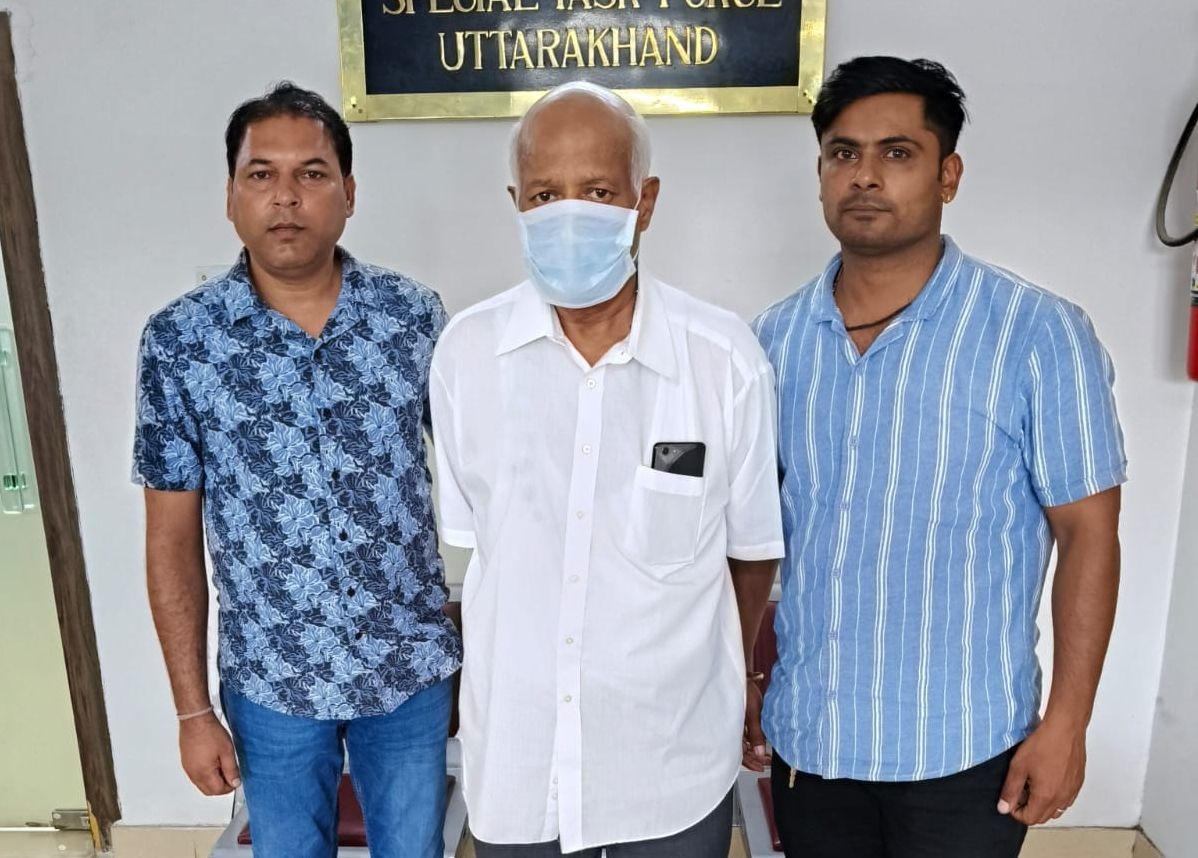
The racket came to light on 1 June when the STF seised a substantial cache of fake outer boxes, labels, and QR codes emulating major pharma brands. This led to the arrest of one Santosh Kumar. Subsequent operations resulted in the arrests of Naveen Bansal and Aditya Kala. The principal accused, Devi Dayal Gupta, a factory owner based in the Sahaspur area, had been absconding for over a month. He was arrested today following actionable intelligence provided by Bansal during interrogation.
According to Senior Superintendent of Police (SSP), STF, Navneet Bhullar, Gupta is believed to have already produced and supplied over 1.42 crore spurious tablets and approximately 2 lakh capsules between 2021 and 2025. These counterfeit medicines were carefully packaged to resemble legitimate products and dispatched across Haryana, Rajasthan, and other North Indian states using local transport channels.
What should be a matter of great concern is the fact that this is not an isolated incident of such activities. In recent months, Uttarakhand has witnessed a disturbing surge in cases involving substandard or fake pharmaceuticals. In May, the authorities had sealed a facility near Roorkee for producing unlicensed painkillers, while another factory in Haridwar was also found to be manufacturing antibiotic syrups using subpar raw materials. Earlier this year, a joint raid by the Drug Control Department and local police uncovered a godown in Kashipur storing expired medicines relabelled with forged expiry dates for resale.
Certainly, these cases reflect a deeper malaise within the pharmaceutical supply chain particularly in the unregulated and remote areas of the state. Experts warn that the actual scale of such operations may be significantly greater than currently documented. The ease with which counterfeiters replicate genuine packaging, coupled with the inadequacy of routine inspections, has emboldened such illegal activities.
While the STF’s sustained efforts have disrupted a key node of this illicit trade, the recent arrests may be just a tip of the iceberg comprising a sprawling underground network. As investigations continue, there is growing need for tighter enforcement, enhanced coordination between state and central drug regulatory authorities, and a comprehensive audit of pharmaceutical units operating in Uttarakhand. The safety of countless unsuspecting patients hinges upon swift and systemic action.