 By Ganesh Saili
As I walk past Jharpani’s Fairlawn Palace and its baluster-edged walkways, memories, lighter than dragonflies, flit across my mind, bringing alive the life and times of the last of the Ranas of Nepal. This was once home to the young Dhawal S. B. J. Rana and Pratima, who was a royal from the Tripura family. They were both students in the college where I taught. Falling in love, what better place could there be than Madelessa House, the home of his ancestors, to bring a blushing bride home? How I wish I knew more about the depth of the daughter/ daughter-in-law bonds that bind us to our northern neighbour! For generations, our erstwhile royal houses have met and mingled.
Later, in Lodge Dalhousie, I spot an old electric meter with a plaque that reads: ‘Gifted by His Highness, Deb Shamsher Jung Bahadur Rana to commemorate the wedding of Princess Madalessa to the Crown Prince of Nahan in March 1910.’

Pic courtesy: Author’s collection
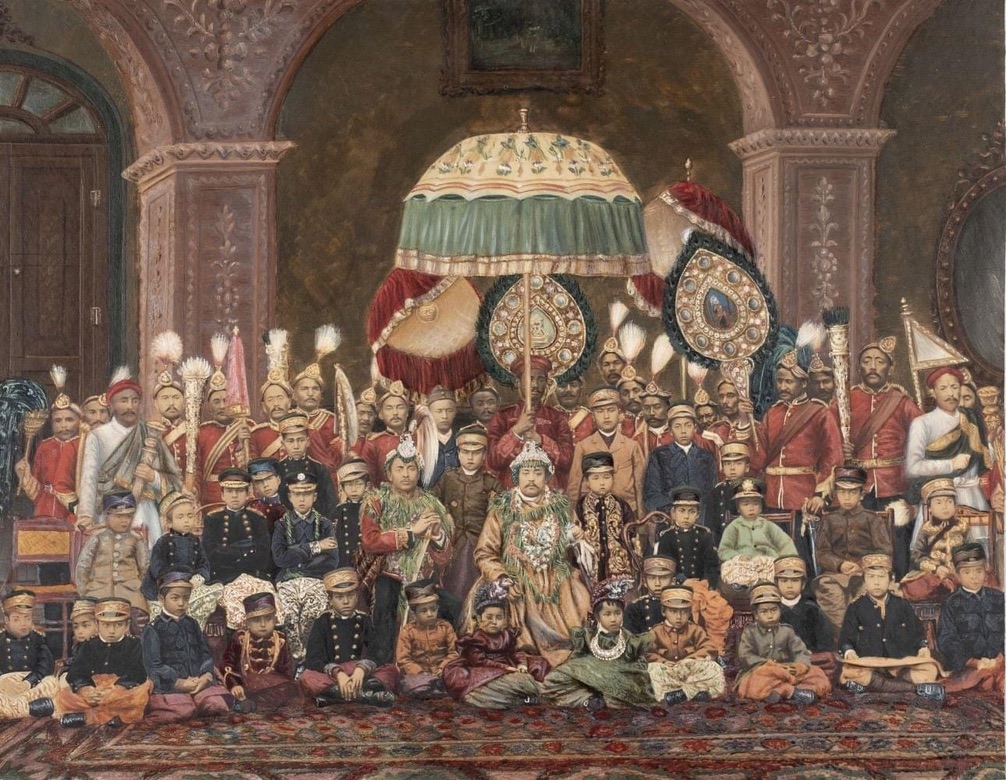
After a rule lasting only 104 days, Deb was deposed by his brother. He was the right man in the wrong place, way ahead of his time, and was ousted by his brother. He escaped to India, where the East India Company would not let him settle in Darjeeling, as it was temptingly close to the Nepalese border. Instead, he was offered either land in Delhi (later-day Connaught Place) or a place in the hills or Jharipani. He loved the latter because it reminded him of the home he had left behind.
When the estranged brothers – Deb and Chandra – met in Calcutta, this exchange took place:
‘Your Highness,’ complained Chandra, ‘you escaped and tricked me of your person.’
‘Your Highness tricked me of my rightful kingdom!’ came Deb’s tit-for-tat.

Pic courtesy: Internet
For close to a century, the Ranas were prime ministers and had reduced the King to a figurehead. Their rule ended on a winter morning of November 6, 1950. King Tribhuvan’s motorcade set out with his family on what was ostensibly a picnic in Kathmandu. Approaching the tall gates of the Indian Embassy, the king glanced around anxiously. To his immense relief, he saw what he had desperately hoped for – a predetermined signal from inside the compound. Suddenly, the vehicles veered through the gates, which were instantly slammed shut, leaving the surprised bodyguards stranded outside.
Granted asylum in Delhi, the king flew there, as the movement of national liberation, meticulously planned by the Nepali Congress, marked the end of the Rana’s rule. On 18th February 1951, King Tribhuvan ‘abrogated the 1846 treaty with Jung Bahadur Rana and declared that a constituent assembly would draft a republican constitution.’
During their years in power, the Ranas married their daughters into India’s leading ruling princely families: Kashmir, Baroda, Jaisalmer, Gwalior and Kathiawar. This trend continued up until 1947, when the last Rana Prime Minister, Mohan Shamsher’s granddaughters were married to the ruling families of Kashmir, Jaisalmer and Jamnagar.
Of course, the Rana men did marry into mainline Indian royalty, but rarely. They preferred marital bonds among families in the Western Himalaya. Whilst they ruled, the Ranas encouraged the deposed Shah’s family to marry into the smaller princely families. Tribhuvan Shah’s second daughter was married to Mayurbhanj in Orissa, while another daughter married the Raja of Poonch.
How can any tale on the royals of Nepal and the erstwhile royals of India be complete without reference to Devyani Rana, the second daughter of Pashupati Shamsher Jang Bahadur Rana, and Rani Usha Raje Scindia, daughter of Jivajirao Scindia, the last Maharaja of Gwalior, who became the first woman chief minister of Rajasthan. Rumours at the beginning of the millennium flew thick and fast, implying that Nepalese Crown Prince was in love with Devyani, whom he had met as a student in England. The resultant shoot-out changed the course of Nepalese history.
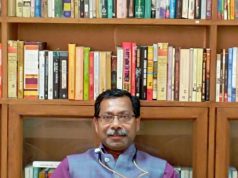
And whatever happened to Dhawal Rana and his glowing bride? You may wonder! Elected Mayor of Nepalganj, presently he is a member of Parliament with a granddaughter beside him. As they say, ‘still waters run deep,’ these bonds of daughter/ daughter-in-law have drawn India and Nepal closer together.
Ganesh Saili, born and home-grown in the hills, belongs to those select few whose words are illustrated by their own pictures. Author of two dozen books, some translated into twenty languages, his work has found renown worldwide.