 By Col Bhaskar Bharti (Retd)
Bangladesh, a nation forged in linguistic assertion, mass sacrifice, and anti-colonial resistance, is once again convulsed by political unrest and social upheaval. Bangladesh has erupted in violence this week following the controversial death of youth activist Sharif Osman Hadi, triggering anti-India sentiments, mass protests and street clashes that have disrupted normal life and raised serious regional security concerns. From attacks on the Hindu minority and media offices to blockades of major thoroughfares, the surge in unrest underscores widening political divides and presents a grave challenge to public order just weeks ahead of national elections. More than five decades after its hard-won independence, the country finds itself at one of the most precarious moments in its history. Street protests, institutional decay, economic anxieties, resurgent Islamist forces, and intensifying geopolitical contestation have converged to create a volatile internal environment. What began as political dissent has now morphed into a broader crisis, with direct implications for Bangladesh’s democratic future, internal cohesion, and the strategic stability of South Asia particularly along India’s sensitive eastern flank.
Historical Fault Lines
The roots of Bangladesh’s current instability lie deep in its fractured history. The British partition of Bengal in 1905, executed under the guise of administrative efficiency, was a textbook exercise in divide-and-rule. Though annulled in 1911 after widespread resistance, it left behind hardened communal fault lines. These fractures were formalised with the Partition of 1947, when Bengal was split along religious lines, birthing East Pakistan. The result was violence, displacement, and political alienation.
East Pakistan’s eventual break from West Pakistan was inevitable. Linguistic suppression, economic exploitation, and political marginalisation culminated in the 1971 Liberation War. Under the leadership of Sheikh Mujibur Rahman and the Awami League, Bengali nationalism triumphed, with India playing a decisive military and diplomatic role. The creation of Bangladesh was not merely a geopolitical event; it was a civilisational assertion of linguistic and cultural identity.
Emergence of Zia Factor
The assassination of Sheikh Mujibur Rahman in 1975 marked a decisive rupture for Bangladesh. Ziaur Rahman, who emerged from the ensuing chaos, fundamentally re-engineered the Bangladeshi state. Secularism was replaced with religious nationalism; the constitutional emphasis shifted to “absolute trust and faith in Almighty Allah”. This was not symbolism, it was ideology. Zia systematically diluted the liberation narrative, rehabilitated Islamist forces, and brought back Jamaat-e-Islami, whose leadership had collaborated with Pakistani forces in 1971. This reorientation served a clear strategic purpose: distancing Bangladesh from India and repositioning it closer to Pakistan and the Islamic world.
India, once a liberation ally, was recast as a hegemonic neighbour. Bilateral disputes – rivers, borders, trade, were weaponised domestically to fuel nationalist sentiment. Anti-India rhetoric became institutionalised, not episodic.
Khaleda Zia and the Normalisation of Hostility
This ideological posture hardened under Khaleda Zia. During her tenures as Prime Minister (1991–96 and 2001–06), Bangladesh–India relations deteriorated sharply. Security cooperation was minimal; Indian concerns over cross-border terrorism and insurgent sanctuaries were routinely dismissed. During the BNP–Jamaat alliance government, extremist elements gained unprecedented legitimacy. Indian insurgent groups from the Northeast operated from Bangladeshi territory – a fact later acknowledged by Bangladeshi officials themselves. Media narratives, madrasa networks, and student organisations amplified anti-India messaging, while Pakistan was quietly rehabilitated as a strategic interlocutor. Religious fundamentalism and anti-India nationalism became mutually reinforcing forces, corroding Bangladesh’s pluralistic foundations and polarising society.
Hasina’s Return: Stability with a Political Cost
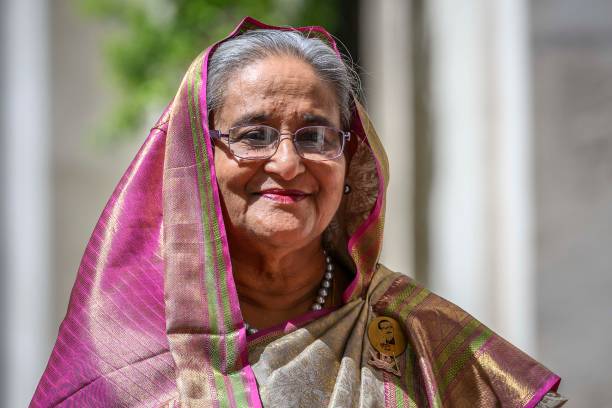
The return of the Awami League under Sheikh Hasina reversed many of these trends. Insurgent sanctuaries were dismantled, intelligence cooperation with India restored, and bilateral connectivity deepened. Bangladesh experienced sustained economic growth and regional integration. Yet Hasina’s consolidation of power came at a cost. Allegations of authoritarianism, weakened institutions, and suppressed dissent steadily eroded her domestic legitimacy. Her proximity to India, strategically beneficial but politically combustible, was exploited by opponents to portray her as externally propped up.
The 2024 Uprising and a Power Vacuum
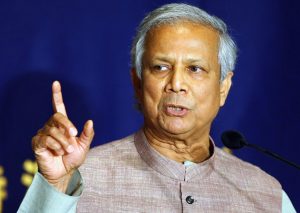
In August 2024, mass protests erupted against Hasina’s government, driven by demands for electoral credibility and accountability. The unrest forced her resignation and ushered in an interim administration under Muhammad Yunus. Hopes of democratic renewal were quickly tempered by reality. The interim setup struggled to assert authority, allowing political uncertainty and street power to fill the vacuum.
The Islamist Undercurrent
Perhaps the most dangerous dimension of the crisis is the resurgence of Islamist mobilisation. Groups such as Hefazat-e-Islam, once marginalised, have re-emerged forcefully, demanding conservative social and legal changes. In the absence of strong counter-narratives and effective governance, radical ideologies have found space to grow. The fact that Shaikh Hasina has been residing in India on extended visa has also fuelled anti India rhetoric. This threatens not only Bangladesh’s social fabric but also regional security, given the country’s deep cultural and demographic links with India’s Northeast.
External Players: Pakistan and China
Western governments, uneasy about democratic backsliding and human rights concerns, have adopted a cautious, transactional approach. This has created strategic openings. Pakistan has moved quietly to re-engage Dhaka, leveraging historical resentment and anti-India sentiment. China, meanwhile, has expanded its footprint through infrastructure, trade, and defence cooperation. Bangladesh’s growing dependence on Beijing adds another layer of strategic complexity for India. A Bangladesh drifting into the China–Pakistan orbit would fundamentally alter South Asia’s strategic balance.
India’s Stakes and Strategic Choices
For India, this crisis is neither abstract nor distant. A 4,000-km border, dense economic ties, and shared security vulnerabilities make Bangladesh central to India’s strategic calculus.
India cannot afford:
- A radicalised neighbour,
- A refugee spillover into the Northeast,
- Or the opening of a hostile eastern front.
Its response must combine restraint with resolve – inclusive diplomacy without interference, economic engagement without condescension, and firm security cooperation without escalation.
Lessons and the Road Ahead
Bangladesh’s turmoil offers hard lessons:
- Political legitimacy cannot be sustained through exclusion.
- Economic growth without institutional trust is fragile.
- Religious polarisation corrodes national identity.
- External powers must avoid turning fragile states into proxy arenas.
Bangladesh stands at a perilous crossroads. Its present crisis is not sudden, but the cumulative outcome of ideological reversals, political miscalculations, and unresolved historical tensions. The choices made now will determine whether the country reclaims its founding pluralist vision or slides into chronic instability.
For India, the challenge is strategic and civilisational. A stable, democratic, and inclusive Bangladesh remains indispensable to regional peace. Achieving that outcome will demand patience, clarity, and a refusal to surrender the neighbourhood to forces of division.
As Bangladesh once again seeks to redefine its destiny, India must walk the narrow path between engagement and restraint, firm in its interests, respectful of sovereignty, and clear-eyed about the stakes.
(The author is an army veteran and a social commentator. He is an alumnus of National Defence Academy and Indian Military Academy. He is a Post Graduate in HRM and Journalism and Mass Communication. He is based in Dehradun.)