 By Anil Raturi, IPS Retd
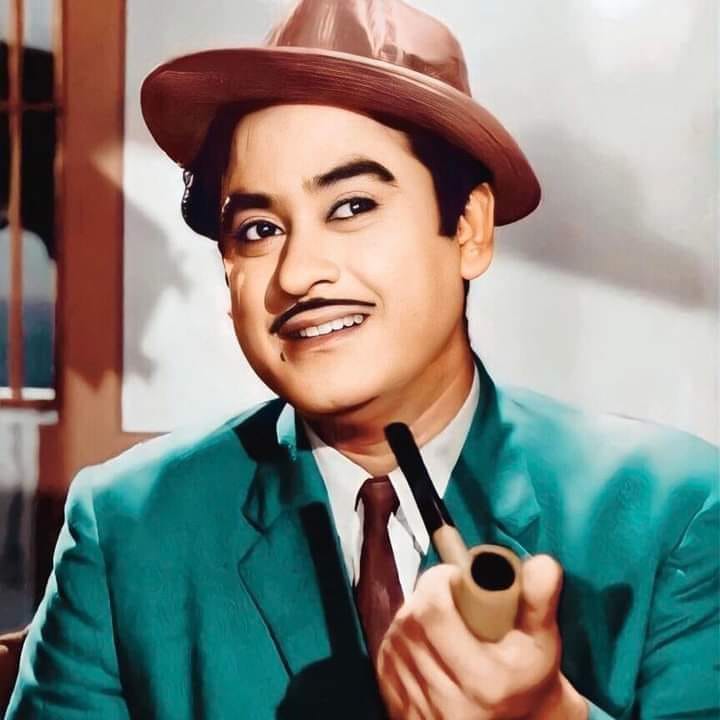
Recently, a friend posted a clip on a WhatsApp group. The clip was about a minute long in duration, which contained the beginning notes of nine popular Hindi cinema songs sung by Kishore Kumar.
It provoked me to unleash my musical bias!
In the world of Indian cinema, there have been many talented and popular singers. KL Sahgal, Talat Mahmood, Mukesh, Mohammed Rafi, Hemant Kumar, Manna Dey, Kishore Kumar, Suraiya, Noor Jehan, Geeta Dutt, Lata Mangeshkar, Asha Bhonsle, etc. Each one of them had (I’m saying “had,” as
except Asha, now, all are dead) an ability to leave a unique imprint on the hearts of music lovers.
The realm of art, aesthetics, and music does not lend itself to simple mathematical principles of grading to conclude who of these maestros was better than the other.
Amongst the female singers, however, without doubt, Lata Mangeshkar has certainly emerged as both the most popular as well as the most respected artist.
Deservingly, she is a recipient of the country’s highest civilian award, the Bharat Ratna!
About the male singers, there is no such unanimity amongst the fans, about who of the lot is the tallest.
Mohammed Rafi was a classically trained, talented singer who dominated the film industry during the 1950’s-60’s. In the same period, another talented vocalist, Mukesh, also lent his voice to many timeless compositions.
Each of these greats has contributed to the creation of magical songs, which continue to enthral millions of their fans even today!
I appreciate the skills and versatility of Asha Bhonsle’s singing. She has produced some marvellous songs. Notwithstanding that, like most other fans, I too feel compelled to concede that till date Lata remains the tallest female playback singer.
Having to choose the best male singer from the lot, two singers seem to stand out. One is faced with a dilemma to make a choice between Mohammed Rafi and Kishore Kumar.
Of the two, I will pick Kishore Kumar. For some inscrutable reason, I find his singing fascinating!
If the effect of Rafi’s trained perfect singing is akin to seeing Vinci’s “Mona Lisa,” then the magic of Kishore’s untrained spontaneous notes evoke a feeling which is something like, viewing hundreds of colourful Rhododendrons flowers swaying in their pristine sublimeness of the forest!
As uncultivated and natural as is possible!
Unaffected, instinctive and innate!
Kishore Kumar had the ability to add spontaneity to each song and make it uniquely his own. This can be discerned by the manner of how he begins many of his songs by an inimitable “alap” of assorted notes.
In the clip containing the ensemble of the nine songs, the beginning of each song brings out Kishore’s innate ability to hum or improvise the music in a very personal manner–something that neither the lyricist nor even the music director could have imagined! In these songs, like in many others, he does not begin with a word but by humming some improvised notes! It is to his credit that he never for even a second goes out of tune. The great Dhrupad maestro, Bhimsen Joshi, once while listening to one of Kishore’s records is said to have remarked,
“Yeh ek pal ke liye bhi sur nahin chorta!”
His natural talent and ability to improvise was such that while recording with other contemporary greats, many times, he would surprise them as well the composer by suddenly coming up with some beautifully and spontaneously improvised bit!
Another remarkable feature regarding his singing was his ability to consistently sing effortlessly on a very high scale. His voice never shows any strain, while all the time, one keeps wondering, where did he breathe in between?!
Despite Mohammed Rafi’s great talent and training, the discerning fan can at times gauge the strain in his voice when he goes into high pitch. It never happens with Kishore!
This is clearly evident in the song “Tum bin jaun kahan” from the 1969 film, “Pyar Ka Mauasm”. Both Rafi and Kishore have sung this song. However, it is Kishore’s effortess version that became more popular.
At some rare moments, in a duet, even the legendary Lata seems to struggle to catch up with the effortless high scale of Kishore. For instance, in “Gata rahe mera dil…” of the iconic film, “Guide!”
Kishore’s voice is versatile, it can seamlessly morph from the street urchin’s to the cultured, sophisticated deep baritone timbre of the “bhadralok!”
Kishore was a complete artist–an actor, writer, lyricist, musician, producer, director, and singer. Though his achievements in each of these assorted field’s has been great, posterity, more than anything else, will remember him for his inimitable mellifluous voice!
In an ancient country like India, classical music was exclusive to the elite, while folk music, all along, for millenniums kept invigorating the rural life of the common man!
In Kishore’s spontaneous musical expressions, perhaps centuries of innate, raw Indian musical instincts are unfettered to find mellifluous utterance!