Travelure
BY HUGH & COLLEEN GANTZER
On Saturday July 6, 2024 His Holiness the Dalai Lama celebrated his 88 Birthday. We wish him good health and many more years of enlightenment as the incarnation of the Buddha of Compassion. It was his compassion that led him to flee the Chinese occupation of his homeland. That was in 1959, and we would like to record that Mussoorie was his first choice. Later, for his continued safety, he relocated in Dharamsala. Our family recalls that time when he came to our Himalayan town and we remember the rumours that circulated quick and fast. The prime rumour that teams of highly trained monks versed in the mystic practices of Vajrayana Buddhism chanted up dust storms to cover the flight of his Holiness. It is also strongly rumoured that he did not come to India empty handed: far from it! His major spiritual contribution, however, is Vajrayana.
Vajrayana is The Way Of The Thunderbolt. Thunderbolt is a word that describes the extraordinary impact of mind-blowing inspiration. It is what happened to Gautama when he sat under the Bo Tree in Bodhgaya. In a much smaller way it happened to Isaac Newton who discovered the laws of gravity. That was a happy accident. In Vajrayana however, such moments of brilliant inspiration are carefully cultivated. We believe that such techniques were taught in the world’s first residential university Nalanda. Nalanda University was a Buddhist Mahavihara after which the state of Bihar was named. Its influence was so universal that even though it ceased to exist in 1400, its method of awarding a Doctorate is still recalled in Cambridge University. Scholars in Cambridge had to defend their thesis while sitting on a three-legged stool, a tripos. This was exactly what was done in Nalanda.
We have visited the towering ruins of Nalanda and it is clear to us that the system of education imparted in Nalanda University was an evolution of the guru-chela system elevated to Think Tank. Scholars in Nalanda lived in small groups around their Guru. They thrashed out scholarly problems in tutorial sessions before moving on to the next question guided by another guru.
This was the system carried by Indian savants and developed into the Vadrayana of Tibet.
The act of thinking can be seen as a spark that jumps between two neurons or specialised nerves. This spark is called a synapse. The human brain is estimated to have hundreds of trillions to over two quadrillion synapses. When all these fire at the same time the brain, literally, lights up. An ancient Bavarian group referred to people who had experienced this as the Illuminatie. Christians called it the Beatific Vision. Indic savants referred to it as Enlightenment. Mystics believe that when a human experiences Enlightenment, that person sees the unity of all creation and becomes God-like. In other words, the so-called Godmen are people who have this ecstatic experience.
There is no way in which a neuro-scientist can determine whether a spiritual guru has really had such a Thunderbolt Encounter.
While many other faiths, including our own, are shredded with discord, Tibetan Buddhism grows. In particular we have noted that the Tibetan Community in Mussoorie seems to be a wonderfully well-balanced society. We cannot recall any instances of crime among the Tibetans of our small town. They seem to be able to sort out their conflicts without outside intervention. Every 3 years the Tibetan community of Mussoorie elects a council called THUMI. It consists of 4 persons and the last Thumi was elected last month. Both men and women can be elected to the Thumi and the present Thumi consists of 2 men and 2 women. All problems of the community are referred to the Thumi. Above the Thumi is a person called The Welfare Officer appointed by the Government in Exile in Dharamsala.
We have a strong feeling that the Buddha of Compassion had to return to India to show our people that if compassion can produce the good order and discipline of the Tibetans in exile then compassion can still prevail to heal the suppurating wounds of sectarian discord.
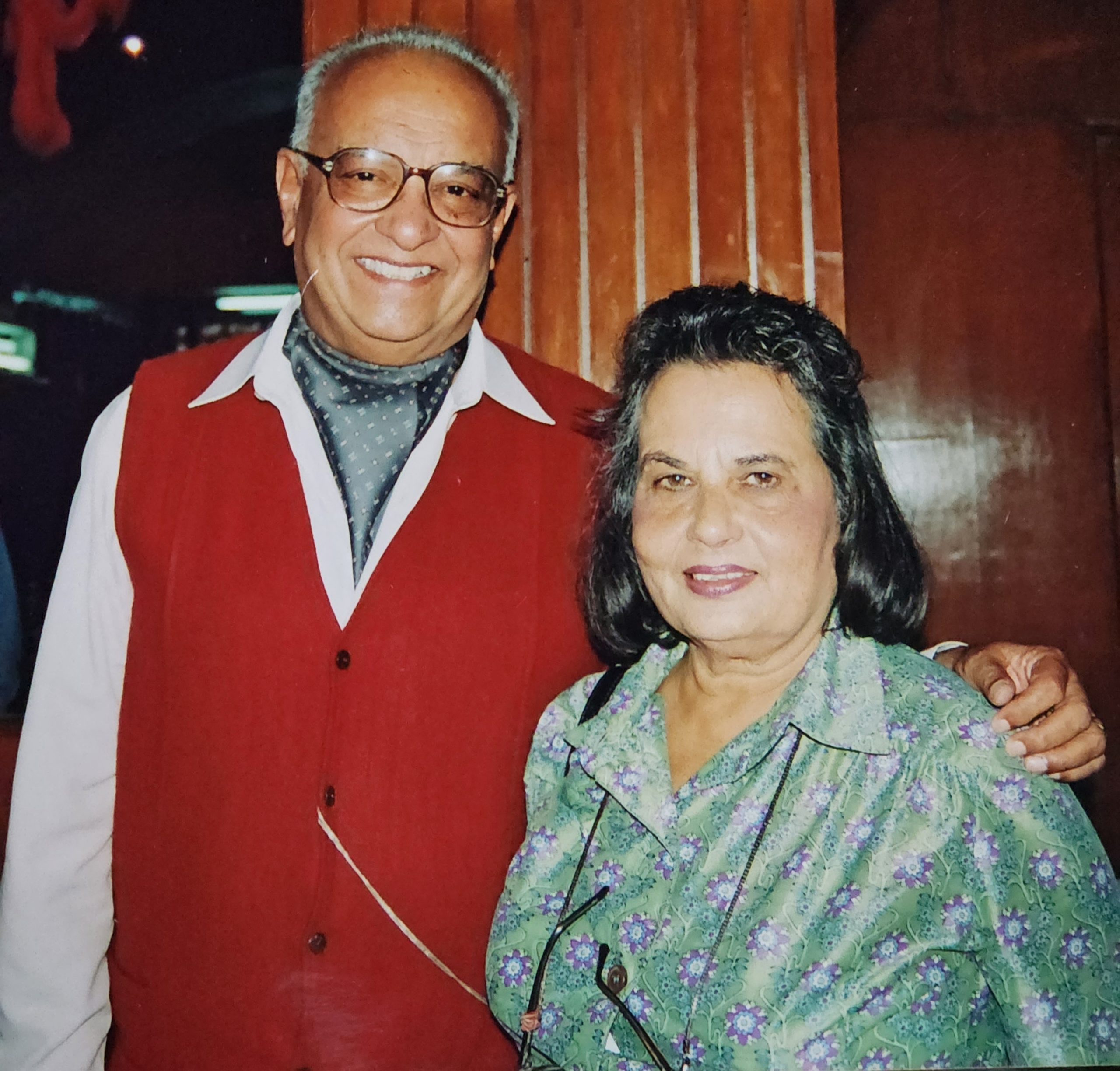
(Hugh & Colleen Gantzer hold the National Lifetime Achievement Award for Tourism among other National and International awards. Their credits include over 52 halfhour documentaries on national TV under their joint names, 26 published books in 6 genres, and over 1,500 first-person articles, about every Indian state, UT and 34 other countries. Hugh was a Commander in the Indian Navy and the Judge Advocate, Southern Naval Command. Colleen is the only travel writer who was a member of the Travel Agents Association of India.) (The opinions and thoughts expressed here reflect only the authors’ views!).