Culinary Chronicles
 By Yasmin Rahul Bakshi
While chaat was curated during the era of Shah Jahan, golgappa was crafted by Draupadi of the Mahabharata fame. Both the foods have made an impact on the Indian street vendors’ fare.
Chaat – two tales of its origin float around. So delish that one would lick the plates after devouring which in Hindi is termed as “chaatna”.
One says that chaat was created by the chefs of the royal kitchens with chosen spices recommended by the medical experts that could destroy the bacteria in the stomach which caused cholera during a breakout.
The second tale states that the Mughals, when they shifted their capital to Delhi, faced numerous challenges, of which health was one. The water of River Yamuna that flowed through the city was highly alkaline in nature, unfit for human consumption. The doctors or the “hakims” of the Mughal courts suggested that some acidic element should be included in the daily diets of the vegetarian masses (mutton nihari took care of the rest), especially the workmen. Hence, chaat came into existence.
Folklore has it that, at the behest of Kunti – the mother of the five Pandavas, Draupadi prepared a hunger contenting meal for her five husbands with leftover potatoes, wheat dough and spices while they were in exile.
She cooked air filled, crisp hollow balls with the dough. Stuffed in boiled potatoes and made a sweet-tangy water that could be filled in to satisfy the appetite of the family.
The original recipes of chaat and golgappa were so formulated that they aided in digestion, quick metabolism, reducing the cholesterol parameters along with an added enhanced piquant flavour to both the curations. A nutritional gastronomy!
In current times, these foods have taken many new avatars with significant emphasis on flavours and taste making them popular worldwide.
Ingredients:
- Potatoes – 750 gms
- Chana dal – ¼ cup
- Cottage cheese – 100 gms (optional)
- Green chilies – 1 tsp (chopped)
- Ginger – ½ tsp (fine chopped)
- Coriander leaves – 1 tsp (chopped)
- Beaten rice – 1 cup
- Salt – according to taste
- Yellow chili powder – ½ tsp
- Kashmiri chili powder. – 1 tsp
- Roasted cumin powder – 1 tsp
- Asafoetida – ¼ tsp
- Turmeric powder – ¼ tsp
- Ghee – for frying (can substitute with refined cooking oil)
- Curd – ½ litre (not sour)
- Mint chutney – ¾ cup
- Tamarind chutney – ¾ cup
Steps:
- Wash and boil the potatoes in a pressure cooker until tender. Prefer using either Lady Rosetta or a variety of mountain potatoes for a firmer texture.
- Wash and soak the chana dal for half an hour. Boil with turmeric powder until tender yet not mushy. Strain extra water.
- Dry roast the beaten rice and mill it to a fine powder.
- Peel and grate the boiled potatoes. Blend in salt, ¾ tsp of yellow chili powder and the beaten rice powder until the mixture becomes smooth and even. Keep aside.
- Chop the cottage cheese into minute cubes.
- Mix the boiled chana dal, paneer cubes, green chilies, coriander leaves, ginger, 1/4 tsp of yellow chili powder, asafoetida and salt.
- Divide the potato mixture into ten equal balls.
- Flatten each ball with your finger. Place the chana dal masala equally over each potato disc.
- Gently wrap the potato mix over the dal masala.
- Flatten the balls with your hands to give a patty (tikki) shape.
- Refrigerate for an hour.
- Heat the ghee in a shallow frying pan.
- Fry the tikkis on low flame from both the sides until golden and crisp.
- Once done, slightly press the tikkis over the pan itself and fry further for two minutes for extra crispness.
- Whisk the curd to get a smooth consistency.
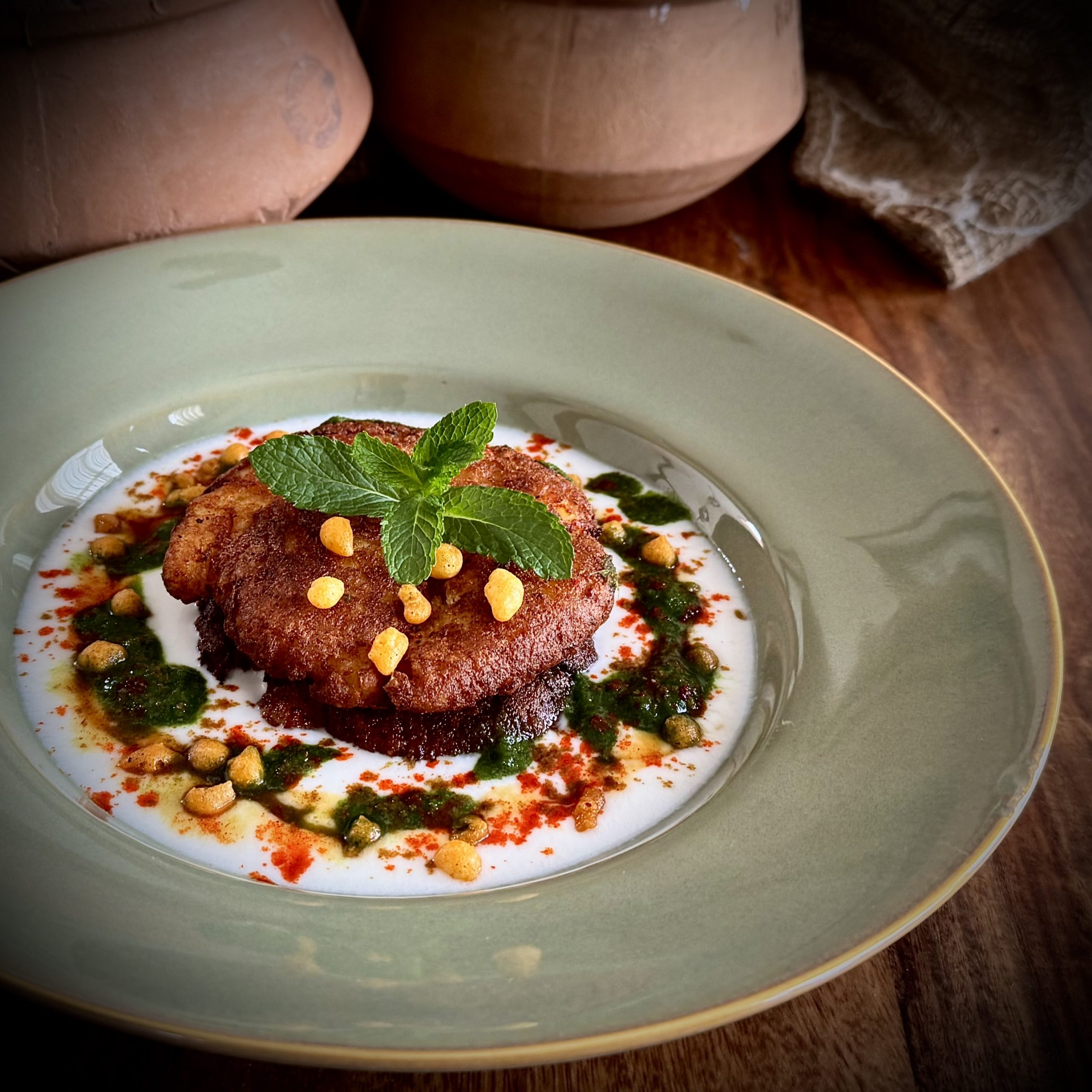
- Over the hot tikkkis pour the curd, drizzle mint and tamarind chutneys.
- Sprinkle roasted cumin powder, Kashmiri chili powder and some salt.
- Serve immediately.
(Yasmin Rahul Bakshi is a food historian and an accomplished consultant Chef. A widely travelled Army wife from the Mussoorie hills with exposure to international cuisines & preserving recipes with the medium of food photography and digital content creation in the form of stories.)