 By NITIN GAIROLA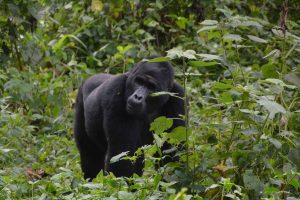
I used to think that walking up close with and studying Mountain Gorillas could only be done by Sir David Attenborough for his BBC Planet Earth series. But then I got to know that we tourists not only can do it too but we can also contribute significantly to the protection of this endangered species from poachers. Our impact is so significant that the local governments provide certificates to such tourists for their contributions (fee) to the wildlife authorities. This fee is what funds such protection. In a way, we can truly be wildlife heroes by just being wildlife tourists. And you don’t even need a cape.

Currently (as per latest 2023 census) 1,063 Mountain Gorillas remaining in the wild but this number had plummeted to just 254 in 1981 and when we visited it was only 604. One just needs to watch the Hollywood classic ‘Gorillas in the Mist’ (true life story of primatologist Dian Fossey), to understand how poachers had nearly decimated this planet’s ‘King Kong’in the 1970s and 1980s. There is another great documentary on Netflix called ‘Virunga’, which is more contemporary, being set in 2010s. When we were there 8 years ago, these animals were in the revival phase and it felt particularly satisfying to contribute for their cause and also have an experience of a lifetime. Since then their numbers have gone up significantly (from 604 to 1,063 individuals), showing that these gorillas are now ‘worth more alive, than dead’ (thus economics is the key, since at this stage the poachers become guides & rangers).
The Mountain Gorillas are 1 of the 2 species of Gorillas in the world (they are a sub-species of ‘Eastern Gorillas’ while the other species is the ‘Western Lowland Gorillas’, the sub-species of which is the Cross-River Gorilla). The Mountain Gorilla species is the most critically endangered of the lot. Today nearly 500 call Uganda their home (Bwindi Impenetrable Forest & Mgahinga Gorilla National Park) and there are also significant numbers in both Volcanoes National Park of Rwanda and Virunga National Park of ‘Democratic’ Republic of Congo (DRC).
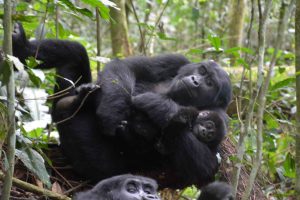
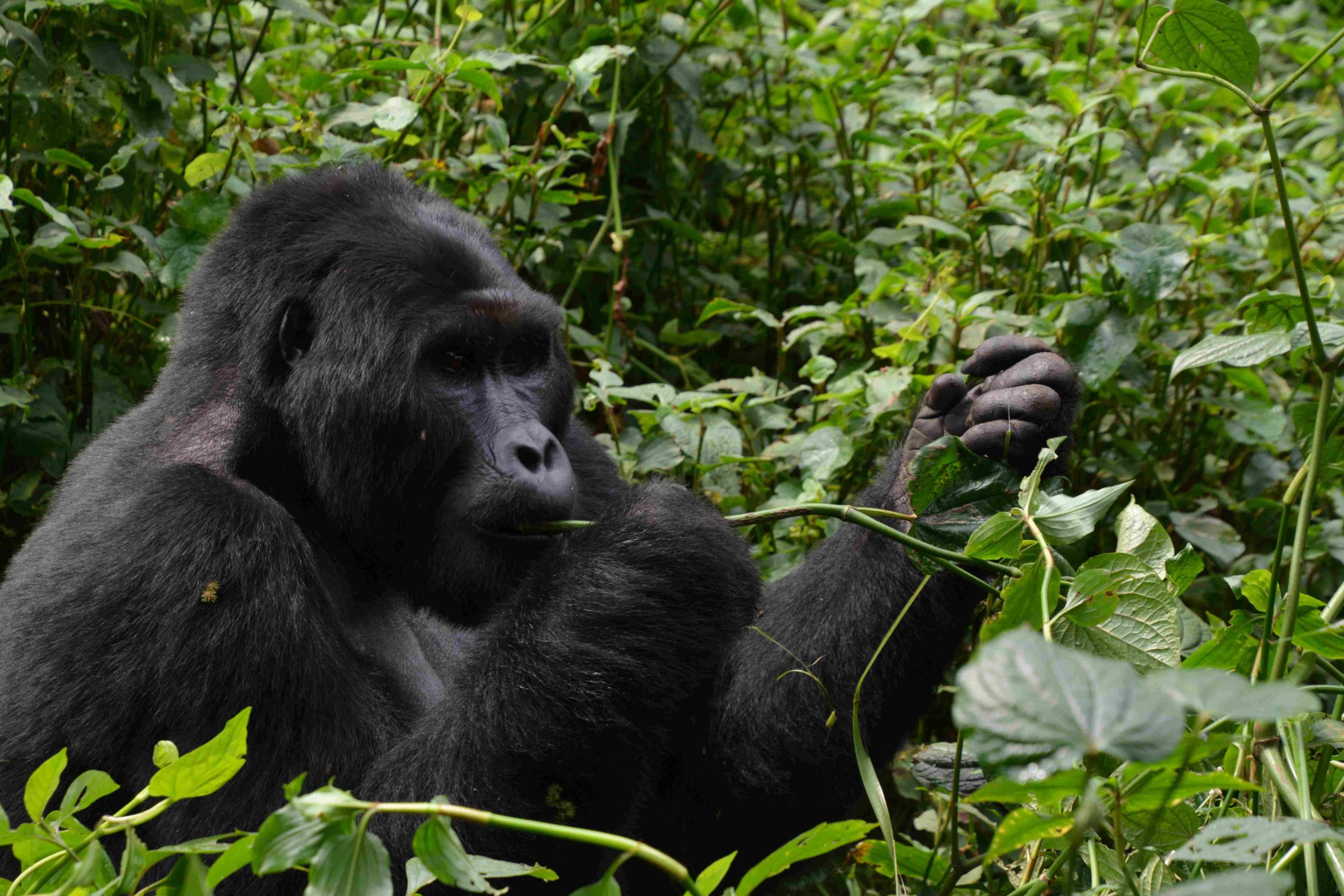
These Mountain Gorillas have longer and darker hair compared to Western Lowland Gorillas and their silverback (the alpha male) is the closest image of King Kong that you can have here on Earth. Gorillas are the largest of the 5 ‘great apes’ that includes us humans as well and the adult males are called ‘silverbacks’ because they have a patch of silver hair on their backs (what else would they be called?). And believe it or not, our first sighting of the silverback was when this King Kong swung down spectacularly from the treetop, a lot like Tarzan. This particular alpha male was the leader of the Rushegura family located in Buhoma region of Bwindi NP in Uganda. And yes, here every Gorilla family and every member within a family has a name given by the rangers. It is very personal here.

DRC is the most underdeveloped of these 3 countries, but it is nearly tourist-free and relatively cheaper. Hence it can be an amazing experience to see these magnificent primates from the DRC side. However some sound advice for sensible risk-averse travellers would be to avoid DRC due to occasional civil unrest and military hold on the nation. Remember that the ‘Democratic’ part of DRC should be taken with a grain of salt. Basically DRC is anything but democratic.

So that means we are down to either Uganda or Rwanda (or both if you are willing to splurge). Both these nations are relatively safe but they do have their challenges. They offer excellent viewing of the big apes but the advantage with Uganda is that the government permit costs 700 USD per person (used to be 600 USD in 2016) whereas it’s 1500 USD in Rwanda (used to be just 750 back then) and 1 USD = 84 INR presently. This compares against the 400 USD of DRC, but one should not get lured by the cheaper price tag for this one.

Uganda also offers off-season discounts for the months of April, May and November since it’s the rainy season there, as does DRC from March to May and October to November. Again I would still suggest July-September and the December-February peak season for the best viewings since otherwise it would be a case of being penny wise and pound foolish (with the penny being a 200 USD p.p. discount & the pound being the rain-free experience which we got in August). Basically good weather matters a lot since this steep price is only for 1 hour with the Gorillas, from the time you first find them. So you don’t want your 1 hour in wet weather. And remember, this price tag is only the cost of the government permit, and you will need to pay more for transportation, accommodation (outside the national park) and food. Many tour companies provide this as a package or it can be done independently as well. We chose the latter since we are independent I guess.
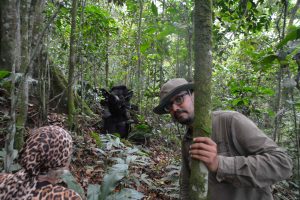
For tracking permits, it’s advised to book them well in advance during the peak season as there are only 21 Mountain Gorilla families in Bwindi that are habituated to humans and only 8 visitors per day per family are allowed. So that’s just 168 privileged souls per day and the actual count is actually much less (our group had 5). The minimum age to be allowed this wildlife experience is 15 years and the booking can be done via a local tour operator (faster option) or directly via Uganda Wildlife Authority (UWA).
Nitin Gairola is from Dehradun and has travelled the natural world more than almost any Indian ever. He has set world travel records certified by India Book of Records, has written for Lonely Planet, and holds National Geographic conservation certifications. He is also a senior corporate executive in an MNC and in his early days, used to be a published poet as well. More than anything else, he loves his Himalayan home.