Book Review
By Ganesh Saili
==============
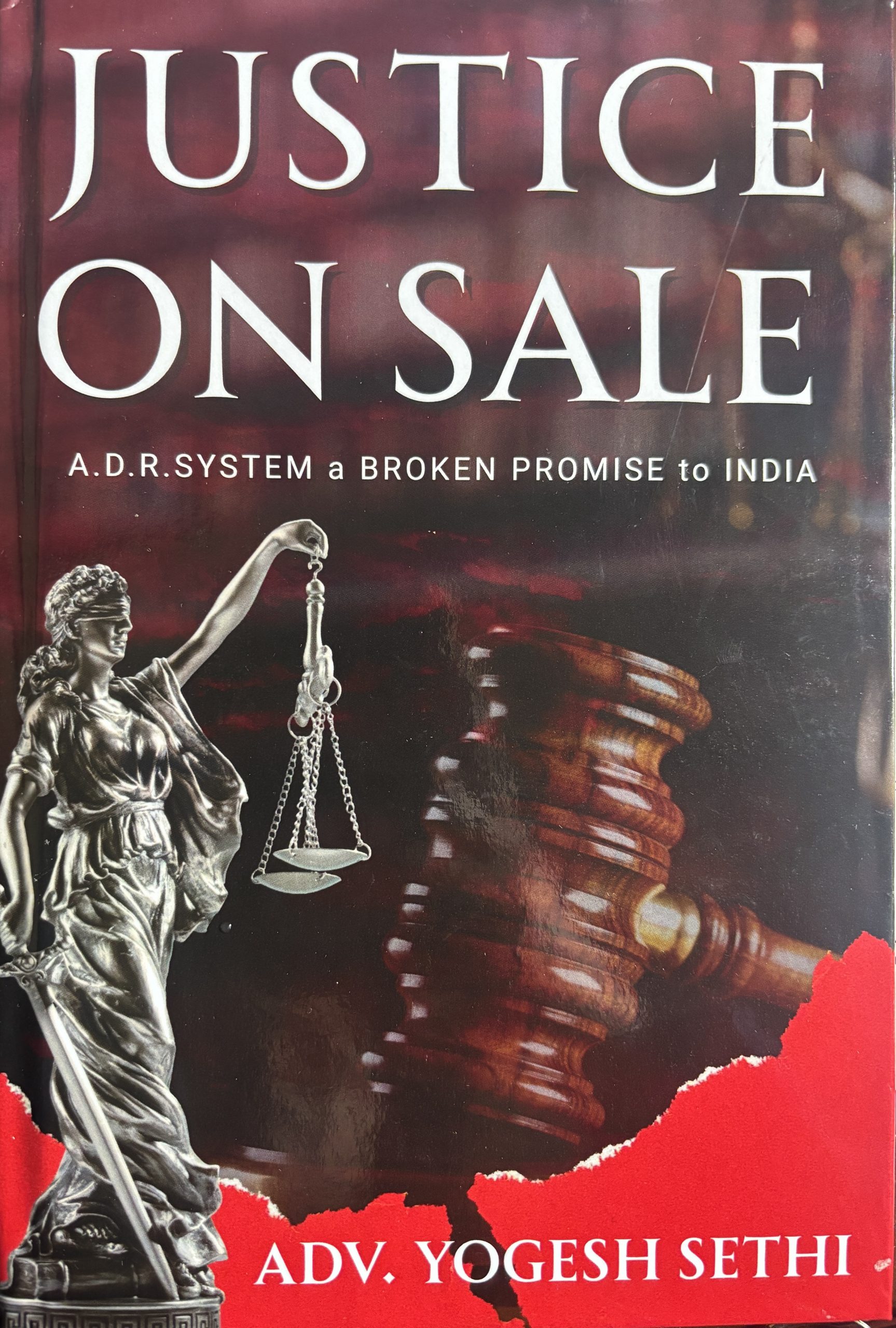
Justice on Sale
by Adv YOGESH SETHI
aHardcover
Evince Publishing
Pages 65
Rs 295
============
The title had me confused. I said to myself, here comes trouble. But I needn’t have worried.
Whilst all of us are aware that Anglo-Saxon jurisprudence was introduced in India by the East India Company, it seems as if all of us have taken to it like ducks to water. How else does one explain the staggering number of litigants clogging up our courts?

How can a reviewer avoid mentioning his Guru, Dr Sudhakar Misra, who now lives in the Doon in retirement? Let me tell you a story that he told me of a man from his village who made a living as a professional witness. The man apparently enjoyed the whole game of turning up in court. He seemed to be there no matter what the case was about.
One day, he was heard to brag, ‘I got the better of that smart new lawyer. He almost had me foxed today. It was the moment he asked: ‘Where was I when I saw the crime being committed inside a room?’
‘Now I didn’t know if I was supposed to say. Was I inside the room or outside? So I thought for a second and answered: ‘On the threshold! I was standing on the threshold! Neither inside nor outside! And I got away with it too!’
The author of the book points that there has been a dramatic rise in ‘compromise’ settlements, and yet the courts are clogged with litigation. The alternative dispute resolution has led to a situation whereby the solution seems to be worse than the problem. Often, litigants bury their differences temporarily, and these flare up later in the most disruptive ways.
In the Mahabharat, Lord Krishna tries to play peacemaker; he visits the court of Duryodhana. It is his valiant effort to throw oil on troubled waters. To avoid the war that will eventually lead to much suffering. He uses a mix of reason, moral rebuke, and historical reminder to warn him of the dire consequences. But Duryodhana, in his arrogance, refuses to listen, saying: ‘As long as I live, even that much of our land which may be covered by the sharp point of a needle shall not be given to the Pandavas.’ And he, time and again, continues to refer to him as a ‘cowherd’. It is his way to try to demean Lord Krishna.
Unflinchingly, the author looks at what will bring the ADR system back on track again. He compares this failure with other Western models. In a searing look at the derailment of justice, as it is exploited routinely by the various agencies, and exploited by judges keen to reduce the number, the author goes on to show how ultimately statistics prove little. And takes take, at best, remains a far cry.
The book goes beyond criticism and becomes a plaintive cry for action by those who deal with the law; it is a wake-up call for judges, our policymakers and every person who believes that justice must be sought and not sold like spurious goods across the counter. While summing up, one can safely say that the book makes an engaging read.