WCDM – Day 3
By RATNAJYOTI DUTTA
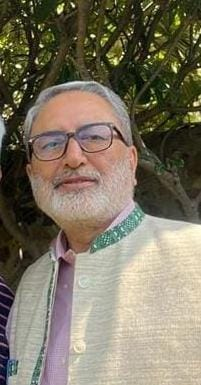
DEHRADUN, 30 Nov: In sync with its special coverage of the Sixth Edition of the World Congress on Disaster Management (DCDM), Garhwal Post brings an exclusive interview with Ramesh Negi, President of Delhi-based Integrated Mountain Initiative (IMI).
IMI is a civil society-led network platform with the mission to mainstream concerns of the Indian Himalayan Region (IHR) and its people in the development dialogue of India.
It functions as a platform to integrate the knowledge and experiences of multiple stakeholders working across the IHR and uses this to inform and influence policy at the national and state levels.
Negi, a retired civil servant, served as the Chief Secretary of the Himalayan state of Arunachal Pradesh. During his two-year stint as the head of administration in the Himalayan state, Negi laid special emphasis on the development of Infrastructure in remote areas and the conservation of the rich Environmental and Cultural heritage of the state for future generations.
Some excerpts from the Interview:
What are IMI’s focus areas vis a vis climate change issues?
IMI is focused on building community resilience to address the impacts of climate change in the Himalayas with an
agro-ecological lens and water security.
IMI is concerned with the increasing frequency and severity of disasters in the Himalayas that are exacerbated by climate change and focuses on highlighting the specific issues and challenges of the mountains and the need for mountain-sensitive policies, practices and resources that acknowledge the socio-ecological importance and fragility of the Himalaya.
IMI has a specific conversation around Sustainable Mountain Cities that have climate change as a cross-cutting issue.
How is IMI promoting the concept of Disaster Risk Resilience (DRR) in the Himalayan region and Bangladesh?
We have had special sessions on DRR in the Himalayas in our Sustainable Mountain Development Summits in Nagaland and Uttarakhand that have delved into disaster events and issues of DRR for the Himalayas. A working group in Kalimpong, West Bengal developed IMI’s DRR strategy,
What is IMI’s Himalayan Cleanup 2023 movement?
The Himalayan Cleanup is a movement anchored by IMI and Zero Waste Himalaya where experts across the Indian Himalayan Region come together during May 26-30 to clean up an important site followed by a waste and brand audit. A waste audit provides granular data on enabling evidence-based waste management interventions. The brand audit names the top companies that produce plastic waste and calls on them to take responsibility for their waste.
This Himalayan Cleanup started in 2018 and the data has been important evidence to call on mountain-sensitive waste policies, plastic policy briefs for the IHR and the implementation of the Extended Producer Responsibility in the IHR.
IMI and Zero Waste Himalaya recognise that the waste crisis in the Himalayas has to be redressed at a systemic level and the issues intersect with the food we eat (increasing junk food) as well as the climate crisis.
How can this movement help mitigate climate change issues in the Himalayan region?
The IMI is a civil society movement that brings in key stakeholders like the elected representatives, civil society, academia, and youth highlighting the issues of the Himalayan Region to inform policy and action that promotes resilience. This is done through the annual events: Sustainable Mountain Development Summits, Mountain Legislators Meet and Meet of the Mountain States as well as ground-based interventions. Thus, the platform’s events and interventions help mitigate climate change.
What is your take on developing a common disaster management approach for the Himalayan region?
The IHR is experiencing increased frequency and magnitude of disasters that require urgent action which includes a common disaster management approach that is transdisciplinary and landscape-based. IMI recognises that the disaster discussion has to be taken within the context of the development paradigm and pathways in the Himalayas.