Vasantotsav 2025 hues with Doon University students – Day 1
By Akshat Kala, Kaumudi Bisht and Nikhilesh Banerjee
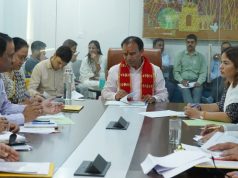
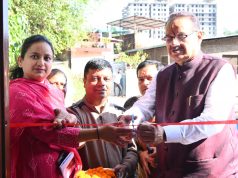
Dehradun, 7 Mar: The much-awaited spring festival, Vasantotsav 2025, inaugurated at Raj Bhavan by Governor Lt General Gurmit Singh (Retd), started with vibrant cultural performances and a grand exhibition showcasing a variety of flowers. As Kalidasa beautifully described in Ritusamhara, “Spring comes along as a mighty warrior, at the sight of whom the hearts of men flutter. He beautifies everything he touches—the flowering trees, the water in the ponds.” Vasantotsav embodies this transformation, bringing colour, fragrance, and joy to Raj Bhavan and beyond.
Vasantotsav at Raj Bhavan over the years has grown into a defining festival of Dehradun, marking the arrival of spring with a grand celebration of nature’s beauty. What started as a simple flower show has now become an annual event that promotes floriculture, supports local flower producers, and showcases Uttarakhand’s horticultural potential. The state’s unique climate and geography makes it ideal for flower cultivation, and over the years, awareness and interest in floriculture have increased significantly among farmers and the general public. Before the formation of Uttarakhand, flower production was limited to just 150 hectares, but today it has expanded to over 1,600 hectares, generating an industry worth Rs 250 crore. This festival not only celebrates nature but also serves as a platform for economic opportunities, skill development, and cultural exchange.
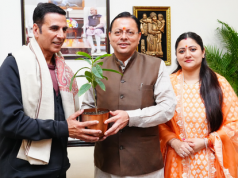
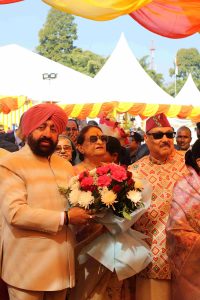
On this occasion, the Governor unveiled a special postal cover featuring Jatamansi, a medicinal plant chosen for this year. The event also included a postage stamp exhibition organised by the Department of Posts, Dehradun. The event was attended by several dignitaries, including the First Lady, Gurmeet Kaur, spiritual leaders, government officials, and representatives from the agriculture and horticulture sectors.
The Indian Spring Festival, known as Vasantotsava, has been celebrated for centuries, though its exact timing and traditions vary across different texts. Some writings describe it as a single grand celebration, while others mention multiple festivals occurring around the same time. Many of these festivals, like Holi and the worship of Kama, share similar customs, making it difficult to distinguish them clearly. Scholars have different views on whether these are separate events or just variations of one larger festival. Despite these differences, the arrival of spring has always been a time of joy, love, and celebration in Indian culture.
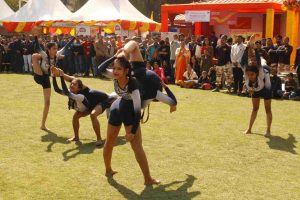
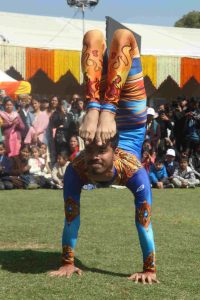
The festival’s opening day was filled with colourful performances. Military bands played soulful tunes, while traditional folk dances captivated the audience. Girls of Dev Sanskriti Vishwavidyalaya demonstrated their flexibility and skill through yoga displays, and martial artists showcased energetic performances. The Governor interacted with all participants and praised their efforts. Also, the soldiers of IMA, PAC and Home Guards mesmerized everyone with the melodious tunes of the band. But the centre of attraction was the Harul dance by the artists from Jaunsar and Khukuri dance by Gorkha Rifles gave a captivating performance whose beats remained memorable till the very end of the day for the people in Vasantotsav.
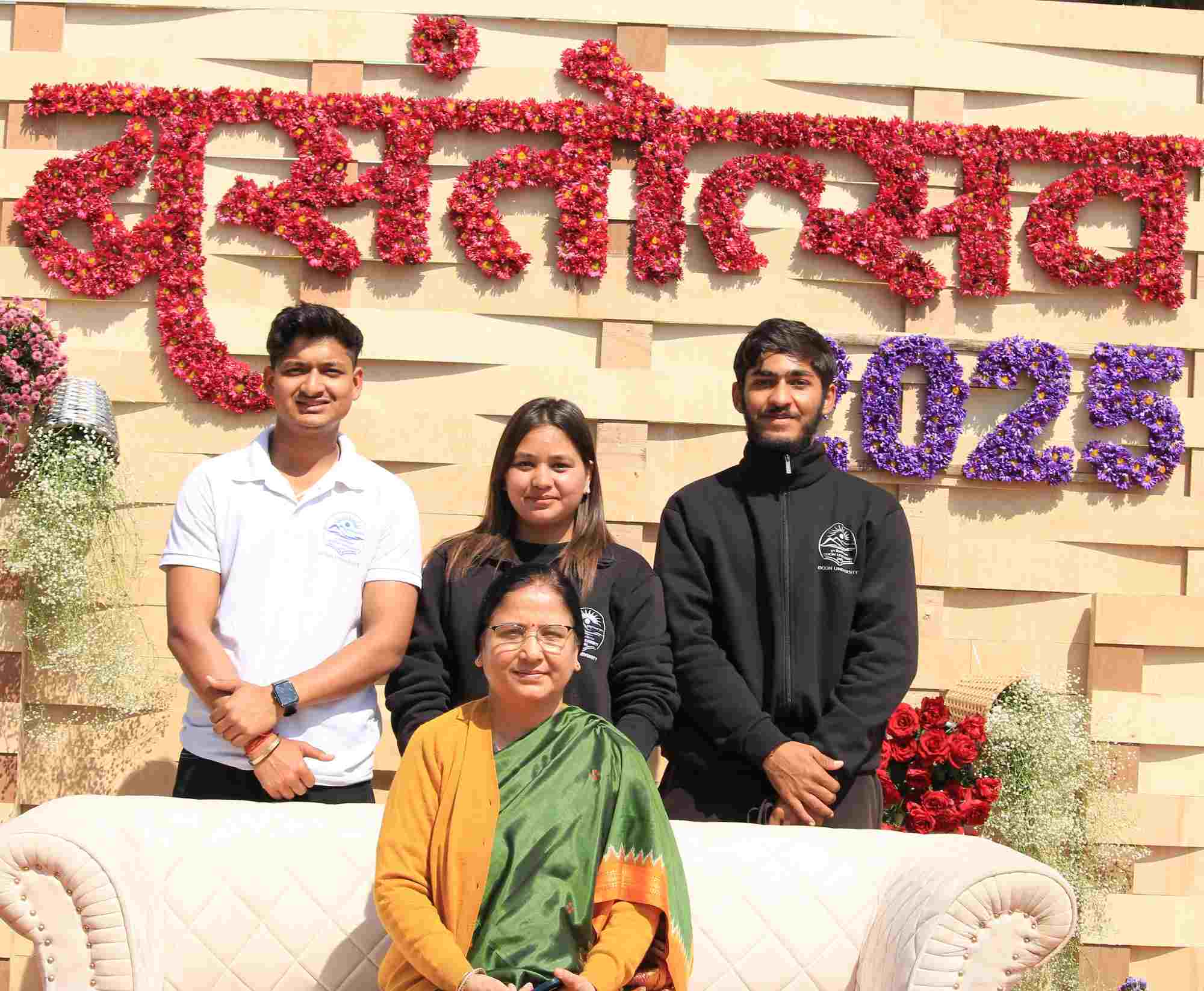
Children eagerly took part in a painting competition, where the Governor personally encouraged them and admired their artwork. The event also featured an exhibition of fresh fruits and various stalls displaying regional products. A beautifully decorated photo corner attracted many visitors who stopped to take pictures.
The three-day festival has drawn great enthusiasm from people across the state. This year, 2231 participants have registered in 15 different competition categories. A total of 214 stalls have been set up by individuals, organizations, and government bodies, displaying agricultural products, horticultural tools, and other related items. The best entries will be awarded on March 9, 2025, after evaluation by the judges.
A special session on floriculture techniques was also held, with experts guiding farmers and officials on modern agricultural methods. Various self-help groups and organizations displayed their work in horticulture and related fields. For visitors, a variety of local food options have been made available, including millet-based dishes.
Vasantotsav 2025 is not just a celebration of flowers and culture but also a platform for various organisations, institutions, and innovators to showcase their contributions to Uttarakhand’s heritage, agriculture, and sustainable development. The festival brings together a remarkable mix of government departments, research institutes, environmental groups, self-help collectives, and private enterprises, each adding a unique dimension to the event.
One of the highlights was the participation of the Department of Posts, which set up a philatelic counter featuring a special postal cand an exhibition, Dak Ticket Pradarshani 2025, offering insights into the history of postal services. The India Meteorological Department also drew interest with its awareness stall on climate science, reinforcing the connection between environmental changes and agriculture.
The event showcased Uttarakhand’s commitment to sustainable agriculture, with institutions like Govind Ballabh Pant University of Agriculture and Technology, Pantnagar, and B. Chandra Singh Garhwali Uttarakhand University of Horticulture and Forestry, Pauri Garhwal, leading technical discussions on advanced farming techniques. The Krishi Vigyan Kendra, Pauri Garhwal, and Uttarakhand Organic Commodity Board, Dehradun, promoted organic farming and innovative crop management strategies, while the Uttarakhand Tea Development Board highlighted the potential of locally grown tea.
Beekeeping and honey production emerged as significant themes, with participation from the Madhumakkhi Anusandhan Evam Prashikshan Kendra, Pantnagar, JGS Honey from Beekeeper, and Langha Valley Natural Honey, which advocated for preservative-free, organic honey. Meanwhile, Doon Silk (Resham Nideshalaya, Uttarakhand) presented silk products, emphasizing traditional weaving and sericulture practices.
Horticulture and environmental conservation played a major role, with the Rashtriya Bagwani Board and the Horticulture and Food Processing Department of Uttarakhand providing information on floriculture, organic produce, and sustainable food production. The Van Vibhag Uttarakhand (Forest Department), alongside Garhwal Eco Warriors and the Uttarakhand Forest Resource Management Project (JICA-supported initiative), showcased efforts in eco-tourism and forest conservation. The Herbal Research and Development Institute (HRDI), Gopeshwar, Chamoli, promoted traditional medicinal plants and their applications in Ayurvedic healing.
Education and research institutions also had a strong presence, with the Wadia Institute of Himalayan Geology, Dehradun, engaging visitors in discussions about Uttarakhand’s unique geological formations. The Jalagam Vibhag Uttarakhand (Watershed Department) and the Rural Development Institute for Health, Education, Water, and Sanitation Relief and Rehabilitation highlighted the importance of water conservation and rural health initiatives.
The festival provided a platform for local businesses and small-scale entrepreneurs as well. ODTP (One District, One Product) under the Micro, Small, and Medium Enterprises (MSME) initiative featured millet-based gluten-free bakery products, while Shivalik Natural Products presented organic food items. The Ayush Education Department set up a free Ayurvedic medical camp, offering traditional health consultations.
Art and creativity were equally celebrated, with Abhivyakti – The School of Fine Arts and Crafts displaying an exquisite collection of paintings and interior décor pieces. Additionally, attractions such as the Bonsai Garden, Hanging Pots Exhibition, and a special Eco-tourism Photo Corner provided visitors with aesthetic and immersive experiences.
Social service organizations, including the Indian Red Cross Society, Uttarakhand State Branch, and the Rajkiya Mahila Kalyan Evam Punarvas Kendra, KedarPuram, also contributed, emphasizing welfare initiatives and community participation. Legal awareness was promoted through a session conducted by the District Legal Services Authority, Dehradun, focusing on citizens’ rights and legal literacy.
Keeping in mind the wide participation, initiatives like that of Artificial Intelligence based Visitor Counting and QR code feedback system were incorporated within the festival. With such a wide range of participants, Vasantotsav 2025 proved to be more than a cultural festival—it was a convergence of knowledge, sustainability, tradition, and innovation, reflecting the true spirit of Uttarakhand.
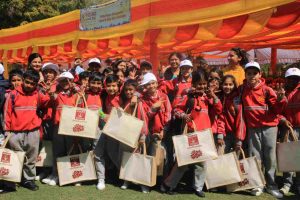
Above all, the festival has something truly special—something that touched hearts and healed souls. A large session on happiness and its significance became a beacon of hope, addressing mental health challenges like stress and depression. Led by a dedicated mental health coach, this session was not just a talk but a mission—Mission 800 Crore, an initiative striving to ensure happiness for every individual across the globe. But if there was a true embodiment of joy that day, it was the children—their laughter, their boundless energy, and their innocent delight they had been present at their Governor’s House since the very morning. Toddlers, schoolchildren, and specially-abled kids enjoyed, danced, giggled, and hopped through the sprawling lawns of Raj Bhawan, turning the place into a living symphony of joy. Their laughter rippled through the air, their tiny hands clapped in excitement, and their uninhibited delight reminded everyone of what pure, unfiltered happiness looks like. In their whispers and shouts, in their playful cries and radiant smiles, they were the heartbeat of the event—a celebration of life itself. The first day of the festival came to an end with a Cultural Evening Programme, that proved to be an invigorating and enthralling experience for all the visitors.
The festival will continue for three days, bringing together nature lovers, farmers, and cultural enthusiasts from across the state. We hope to see you all there!
“It was one of those March days when the sun shines hot and the wind blows cold: when it is summer in the light, and winter in the shade.” (From Great Expectations by Charles Dickens)
(Writers of this report are Doon University students)