By Our Staff Reporter
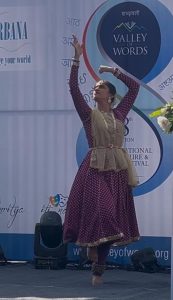
Dehradun, 16 Nov: On the inaugural day of the eighth edition of the Valley of Words Arts and Literature festival that began at Hotel Madhuban here today, 25 sessions were held including the inaugural session. These sessions included launch of 6 books, a mesmerising Kathak dance performance by well known Classical dancer Kirti Kurande, Sitar recital by Kalyan Majumdar accompanied by Ashoke Mukherjee on Tabla and 23 interesting sessions on various diverse subjects. These sessions explored career opportunities, the evolution of scientific thought, and the role of these institutions in shaping a progressive India.
The “Bharat: Borders and Bluewater” session, chaired by Lt Gen PJS Pannu (Retd), delved into India’s maritime strategies and territorial borders, with Commodore Hardas, Sanjeev Chopra, and Jyoti Dhawan providing insights into geopolitical and cultural dimensions.
Another engaging session, “All Things Bright and Beautiful” was chaired by MC Ghildiyal that celebrated biodiversity and conservation, with contributions from Vijaya Ratre and Virendra Tiwari from FRI and Wildlife Institute of India respectively.
The festival also hosted several VoW Awardee sessions, including Ambar Pariyan (Hindi Translation from Punjabi), translated by Subhash Neerav, and discussed by Someshwar Pandeya and chaired by Indrajeet Singh. In response to a question, Pandeya conceded that in Indian literature, positive messages are preferred unlike in the western literature and this was why the original author chose to show that a husband finally returns to his wife even after extra marital affairs.
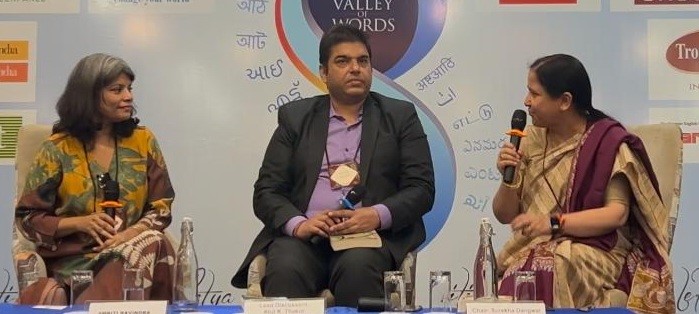
In the English Fiction category, Smriti Ravindra’s The Woman Who Climbed Trees was the focus of an engaging dialogue with Atul K Thakur as the lead discussant. This session was chaired by Vice Chancellor of Doon University, Prof Surekha Dangwal who liberally praised the book and called upon the students present in the session to read it. The author felt that India is having a maximum number of women suffering from depression. In response to a question, she asserted that unless one leaves the troublesome situation and explores the outside world, he or she can’t get experience and the capacity to overcome depression and learn new perspectives in life.
A notable discussion on the UCC in Uttarakhand explored its implications for the state. Moderated by Yogesh Kumar, the session featured panellists Surekha Dangwal, Manoj Mitta, Badri Narayan, and Mufti Shamoon Qasmi, Chairman UMEB. Another session, The Legend of Doon, offered a rich narrative on Rash Behari Bose, presented by Tarun Vijay and chaired by N Ravi Shanker.
The Candid Conversation series provided further thought-provoking discussions. In A Touch of Salt, author Anita Agnihotri engaged with lead discussant N Ravi Shanker, moderated by Anjum Katyal. This book is based on the famous Dandi Salt March led by Mahatma Gandhi and a relatively unknown participant Tribhuvan Pate. The “Beyond Biryani” was another candid session which featured a dialogue with author Dinesh C Sharma and lead discussant Manoj Mitta. Adding a regional flavour, Stories of the Hills took the audience on a journey through Uttarakhand’s museums, with insights from Lady Kishwar Desai and moderated by Anjali Bhartari Ravi.
In Candid Conversation, the Turkish Ambassador to India, Firat Sunel, shared his perspectives on cultural resilience through the lens of his novel The Lighthouse Family, in conversation with Ratna Manucha. The discussion resonated deeply with attendees, especially those from Partition families, highlighting the enduring bonds of cultural heritage despite geopolitical shifts.
The day also examined the challenges of traditional media in the session Present Tense and Imperfect Future of Offline Media. Moderated by Navneet Gairola and chaired by Sanjay Jasola, the session included discussions by Satish Sharma, Sanjay Abhigyan, and Ankita Uniyal.
The first book launch “Hug Yourself: Body Positivity & Empowerment Stories for Teenagers” with lead discussants as Ratna Manucha and Vibha Batra and chaired by Veena Krishnan. Author Mona Verma’s “The Scent of Himalayas: Stories from the Mystical Mountains”, was discussed by Pooja Marwah with the Chair as Manoj Barthwal. Deepanjali Singh discussed and Ira Chauhan chaired Bijoya Sawian’s “Hill Songs of Love and Longing.” Author Shalini Sawkar’s “Confessions of an IT Employee” was discussed by Sarishma Dangi and Prateek Jain. Indrajeet Singh’s “Bharat Kay Pushkin-Shailendra” was discussed by Mamta Kiran and chaired by Prof Manmohan Chaddha. Iqbal Chandra Malhotra’s “The Nukes, The Jihad, The Hawalas and Crystal Meth” was discussed by Lead Discussant Srishtee Sethi and Chaired by Lt Gen Pannu. Themes ranged from folklore and resilience in the Himalayas to humorous reflections on modern corporate life.
The evening Mushaira brought together poets like Popular Meeruthi, Waris Warsi, Shubham Tyagi, and Amber Kharbanda, moderated by RK Bakshi and chaired by S Farooq, all of whom mesmerised the audience with their eloquent verses blending tradition and modernity.
The day concluded with a Musical Soiree featuring Sitarist Kalyan Majumdar and Tabla Maestro Ashoke Mukherjee, leaving the audience mesmerized by the rich tapestry of Indian classical music. The guest of honour for the session was Vijay Dhasmana, SRHU.
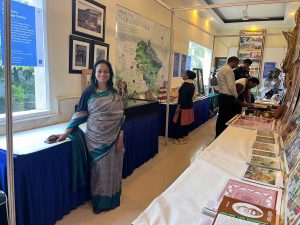
Six exhibitions enriched the festival experience, showcasing rare manuscripts, literary artefacts, and Uttarakhand’s cultural heritage. These displays included contributions from the Museums of Uttarakhand and self-help groups affiliated with Hesco and Beggar’s Corporation offering a blend of history, artistry, and community spirit.