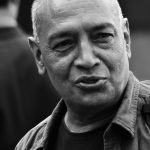
 By: Ganesh Saili
On my walks, no matter which way I go, I see Gen-Z shaking their bottoms, twisting and turning while making faces, taking selfies to post on Instagram.
It takes me back to the first rungs on life’s ladder, among those who taught me the ‘how’ of holding a camera. I was fortunate to have Raymond Louis Steiner as a Guru. He had arrived here from Baton Rouge, Louisiana, floating on whispers of having cut his teeth alongside Steven Spielberg in the iconic film The Duel.
Thank you Raymond (wherever you are), for letting me fiddle around with your spring-wound, (made-in-Nippon) wide-lux camera. You showed me the magic of shutter speed and aperture. I have walked with that gift beside me all these days.
In 1983, Maya and Victor Banerjee accompanied Lekh Tandon to shoot Dusri Dulhan at Elcott Lodge. They fell in love with a gingerbread cottage, the Parsonage, along the Upper Chakkar. And that is where they chose to spend the rest of their lives.

‘Why not travel with us? ’ asked Victor. And thus I was nominated to shoot stills for a documentary made for the Indian Railways called Where No Journeys End. For sixty days I took picture-book-perfect images of India, from Kashmir to Kanyakumari, and from Haflong to Jaisalmer. Around the same time, I met publisher Pramod Kapoor of Roli Books, who happened to be living next door in St. Asaph. He used the pictures to produce my first coffee-table book appropriately titled A Passage Through India in honour of Victor’s stellar role as the hero of A Passage to India.
Shortly thereafter followed two decades of teaching photography to all-India officers, where, unfailingly, the first question I was asked was: ‘Sir! What camera should I get?’
I wish they had already invented a one-size-fits-all camera! I just nodded my head, trying to look profound, waffling: ‘What’s your budget?’ or: ‘What kind of pictures do you want to take?’
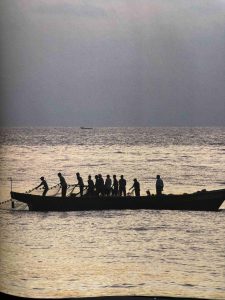
Pic courtesy: Keshav Chandra
Of course, cameras lie; the very act of pressing the shutter release is a personal decision. I guess that answers a myriad of questions like: Why do you want this picture? What will the impression be? How do you best record this moment? What do you want out of this image? Anything more tweaking would wreck the romance of the shutterbug.
‘ I’ve got GAS,’ moaned Amit Agarwal, when I saw him last.
‘GAS? What’s that?’
‘Afflicts the best of us – Gear Acquisition Syndrome!’
Technology does help, but it’s what you do with it that really matters. Study great photographers till you learn to make your own. Find your Third Eye as you move along. Sometimes there are no rules. Who can teach you the ‘how-to’ of writing Hamlet or The Seven Pillars of Wisdom?
Wise men tell you that every picture has a main light, just as each meal has a main dish. The rest are trimmings.
‘How can one develop this instinct or impulse?’
‘Go find images!’ I told my charges.
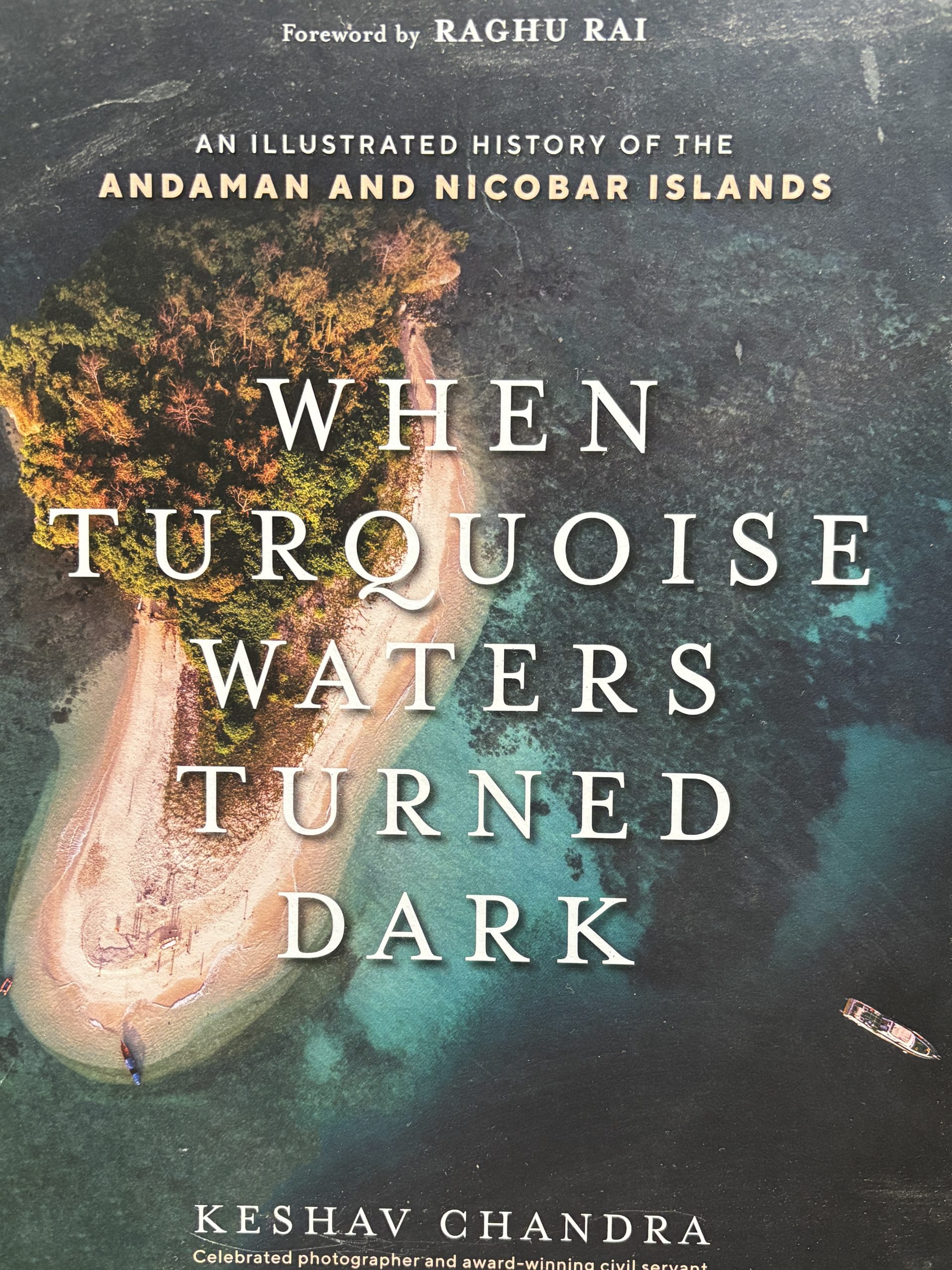
Among those who returned to make me proud: Nawin Sona Natesan (Maharashtra) came back with his pictures of forms and reflections in glass-fronted buildings; or the true fakir Keshav Chandra (AGMUT), who captured the mystery of Andaman’s solitude in Where Turquoise Water Turn Dark; or Himani Pande (Jharkhand) who returned with pictures of Jharkhand, where she isolated themes by removing excess.
Which reminds me of Michelangelo, saying: ‘The sculpture is already complete within the marble block, before I even start my work. It is already there, I just chisel away the superfluous material.’
It remains the essence of the ‘less is more’ school of thought. Get rid of what is irrelevant: a russet leaf or a fraying pine cone may sum up autumn better than words. You see it in the word images of my friend of old, author Ruskin Bond. He, too, would have made a great photographer, but fate intervened. Whilst he watched the next-door school sports, a thief broke into Maplewood Cottage and stole his twin-lens Rolleiflex.
‘After that, I gave up,’ he muses. ‘But I do hope the thief became a good photographer!’
Ganesh Saili, born and home-grown in the hills, belongs to those select few whose words are illustrated by their pictures. Author of two dozen books, some translated into twenty languages, his work has found renown worldwide.