Garhwal Post Bureau
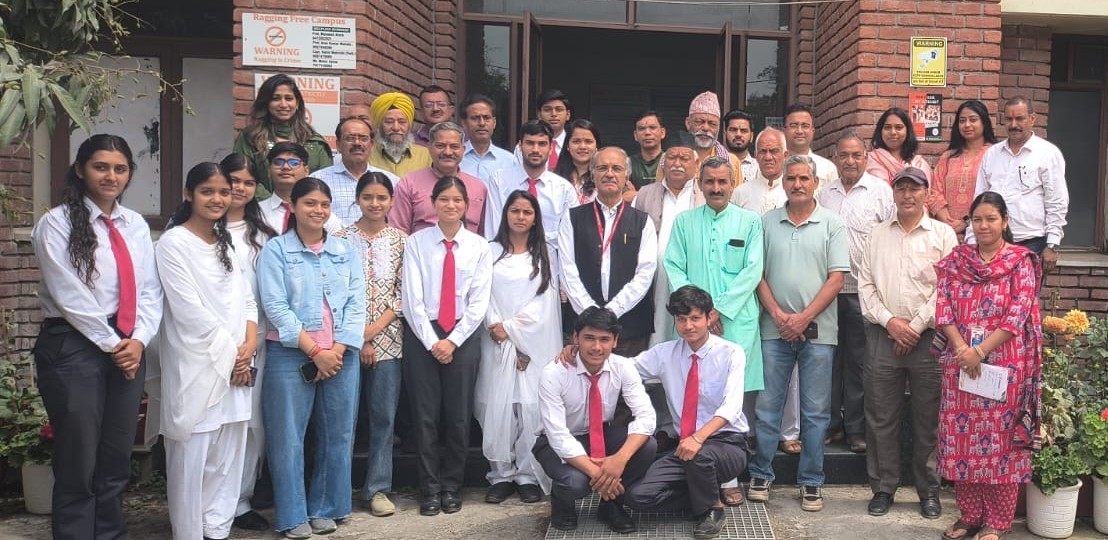
Dehradun, 17 Apr: In a significant initiative toward promoting sustainable agriculture and environmental stewardship, Sardar Bhagwan Singh University (SBSU) organised an awareness campaign on “Soil Nourishment and Conservation”, here, today. The campaign brought together agricultural scientists, university faculty, students, and local farmers to deliberate on the urgent need for sustainable land management and the adoption of integrated farming practices to ensure long-term food security.
Delivering the keynote address, Prof (Dr) J Kumar, Vice-Chancellor, presented a reflective overview of the evolution of agriculture from traditional practices to modern intensive farming systems. He highlighted that population growth has historically driven innovations in agriculture, including the Green Revolution, which significantly increased food production. However, he cautioned that the continued and excessive use of chemical fertilisers has led to soil degradation, nutrient depletion, and declining soil health. Emphasising the way forward, he stressed that future agricultural development must be anchored in sustainability, balancing productivity with environmental conservation.
Prof Kumar further underscored the importance of Integrated Farming Systems, noting that the integration of crops, livestock, and allied activities such as aquaculture can create resilient and self-sustaining agricultural ecosystems. He encouraged academic institutions to play a proactive role in guiding farmers toward practices that restore soil fertility while reducing dependence on chemical inputs.
The programme commenced with an address by Lalit Badakoti, State Coordinator, Gramin Krishi, who emphasised the central role of soil health in maintaining ecological balance. He stated that the primary objective of the campaign was to bridge traditional agricultural wisdom with modern scientific knowledge, thereby empowering farmers to adopt sustainable and climate-resilient practices.
Adding practical insights, Deepak Upadhyay, along with participating farmers, shared field-level experiences regarding declining crop yields due to soil exhaustion. They described how gradual reduction in chemical usage and the adoption of integrated farming methods had helped restore soil fertility, improve soil texture, and enhance microbial activity, thereby strengthening long-term agricultural productivity.
In another technical session, Dr RK Bhatt highlighted the growing impact of climate change on cropping patterns. He explained that rising temperatures and irregular rainfall patterns are compelling farmers to adopt climate-resilient crop varieties and diversified cropping systems. He also introduced the concept of carbon credits, noting that environmentally responsible farming practices can create new economic opportunities for farmers while contributing to climate change mitigation.
A particularly engaging session was conducted by Dr Nidhi S Belwal, who elaborated on the critical role of soil microorganisms in maintaining soil fertility. She explained that soil is a living system in which microbes facilitate nutrient cycling and convert atmospheric nitrogen and minerals into forms accessible to plants. She cautioned that excessive chemical use can suppress beneficial microbial populations, gradually reducing soil vitality. To address this challenge, she advocated the increased use of bio-fertilisers and microbial inoculants to rejuvenate soil health and improve water-retention capacity.
The programme concluded with a formal vote of thanks delivered by Anil Panwar, who emphasised the importance of financial literacy and awareness of government agricultural schemes among farmers. He noted that such initiatives help establish regional benchmarks for sustainable, science-based farming practices. He also reiterated the University’s commitment to adopting a “Microbe-First” approach in its agricultural research and demonstration plots.
The campaign conveyed a clear and compelling message: to secure the food needs of future generations, it is essential to protect, nourish, and conserve the soil today while strengthening awareness among farmers about sustainable agricultural practices.