Around the World with the Most Travelled Indian
 By Nitin Gairola
One evening long ago at Mumbai’s Juhu Beach, Richa asked me what comes right after the Arabian Sea when looking westwards towards the setting sun. I told her it was Africa and there was nothing else in between, but water. And after that we just wanted to go to Africa, the continent India geologically broke away from around 150 million years ago. It’s hard to forget your first safari in Africa and that is what I want more and more people to experience for themselves as we experienced ourselves and how it changed our perspectives, our personas and our lives in the years to come.

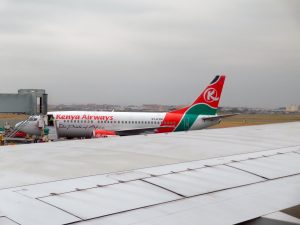
We had done a lot of preparations for this trip, right from Yellow Fever vaccinations to Malaria preventive pills to carrying a first aid kit, and we finally felt ready to step into the birthplace of humanity. We had been given all sorts of warnings about Africa as well, which we later realized were absolutely unwarranted for Kenya. The convenient Kenya Airways direct flight was from Mumbai to Nairobi (the capital) and it was a rainy morning in Mumbai that August. We took off on time and soon were flying over the Arabian Sea and there was a great anticipation to enter a new continent, as back then we had only been to Asia and Europe (which sounds very strange now after visiting all continents and nearly 150 countries).

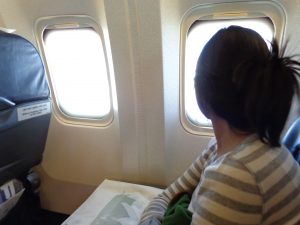
We enjoyed a good selection of beverages and meals on-board and what excited us the most was when we got our firs/t glimpse of the African continental landmass from the airplane window, as we could clearly see the outline of the ‘Horn of Africa’ when we entered their airspace from the Ethiopian side in the north-east of Africa. From there the plane turned south for Kenya and I got a clear view of the snow-capped Mount Kenya on my right, which is the second highest peak in Africa after Mount Kilimanjaro that straddles across the Kenya – Tanzania border.
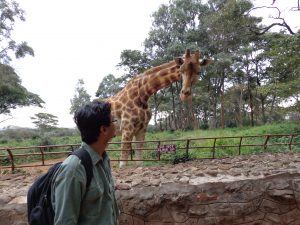
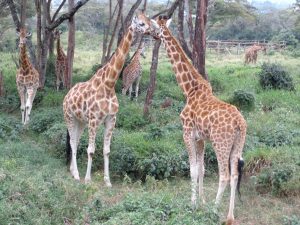
Upon landing and after the easy visa formalities (there is the simple e-visa for Indians now), we exited the airport and thought this would be like a meandering extra day in the city before we headed out to the Masai Mara and other national park adventures. However, Nairobi itself turned out to be a good bit of fun with a lot of animal encounters available for all age groups. We had visited the Lang’ata Giraffe Centre (now called the Nairobi Giraffe Centre) where tourists can feed these graceful and gentle giants. And it is hard to describe just how amazing, and a bit unnerving, it is when their giant heads come towards you. Even stranger was when one British stranger decided that she would keep the giraffe food in her mouth so that their unusually long tongues could pick it up directly from her mouth. Richa almost threw up looking at the scene and I was left wondering if this lady did not worry at all about any giraffe bacterial infection?
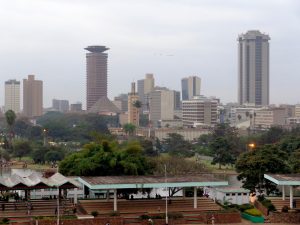
The capital also has the Nairobi National Park well within city limits where you can actually do a proper jeep safari to view all the wildlife you can imagine, including the strangely popularised ‘big 5’ of Africa – Lion, Leopard, Elephant, Rhino & Cape Buffalo (this ‘big 5’ is actually a hunting term but that explanation is for another day). However, in Nairobi National Park you will still have the city skyline in the background and the feel will be nowhere as wild as it would be in Masai Mara National Reserve or the other remote wildernesses. I can’t overemphasize what a difference numbers make in wildlife viewing i.e. to see a couple of wildebeest and to see thousands of them on the endless Savannah. The same goes for the big wild cats as the big numbers matter when it comes to having a big wildlife viewing experience. So, my two bits are to visit the Nairobi National Park at the end of your visit and not at the start of it, just to ensure the grandeur and scale of the Masai Mara really hits you hard.
That evening our driver took us to a few of the other popular places around Nairobi as well, such as the drum shaped & elite Kenyatta International Convention Centre and to Kibera, which is the largest slum in all of Africa. I felt this lent a little perspective on life in Africa and Kenya in particular – Which is a place growing economically and as in all growth stories, this one also leaves many behind.
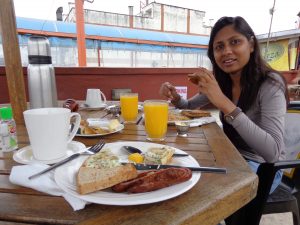
We had booked a moderate accommodation in Nairobi (we don’t book 5 stars in our world travels) and had a sumptuous breakfast next morning on the rooftop overlooking other rooftops. I had never eaten sausages that big and today I would reconsider it for sure, given the cholesterol in them and the awareness in us now.
And it’s quite ironic that I feared Africa so much before visiting and was going around researching about the risks of Malaria and other tropical diseases and how to ensure they don’t happen to us (it did give me some handy medical knowledge). However, my paranoia is a bit ironic since I got Dengue for the first time in my life in India itself, just 10 days before we left for Kenya. Luckily, I recovered quickly as it was a mild case.
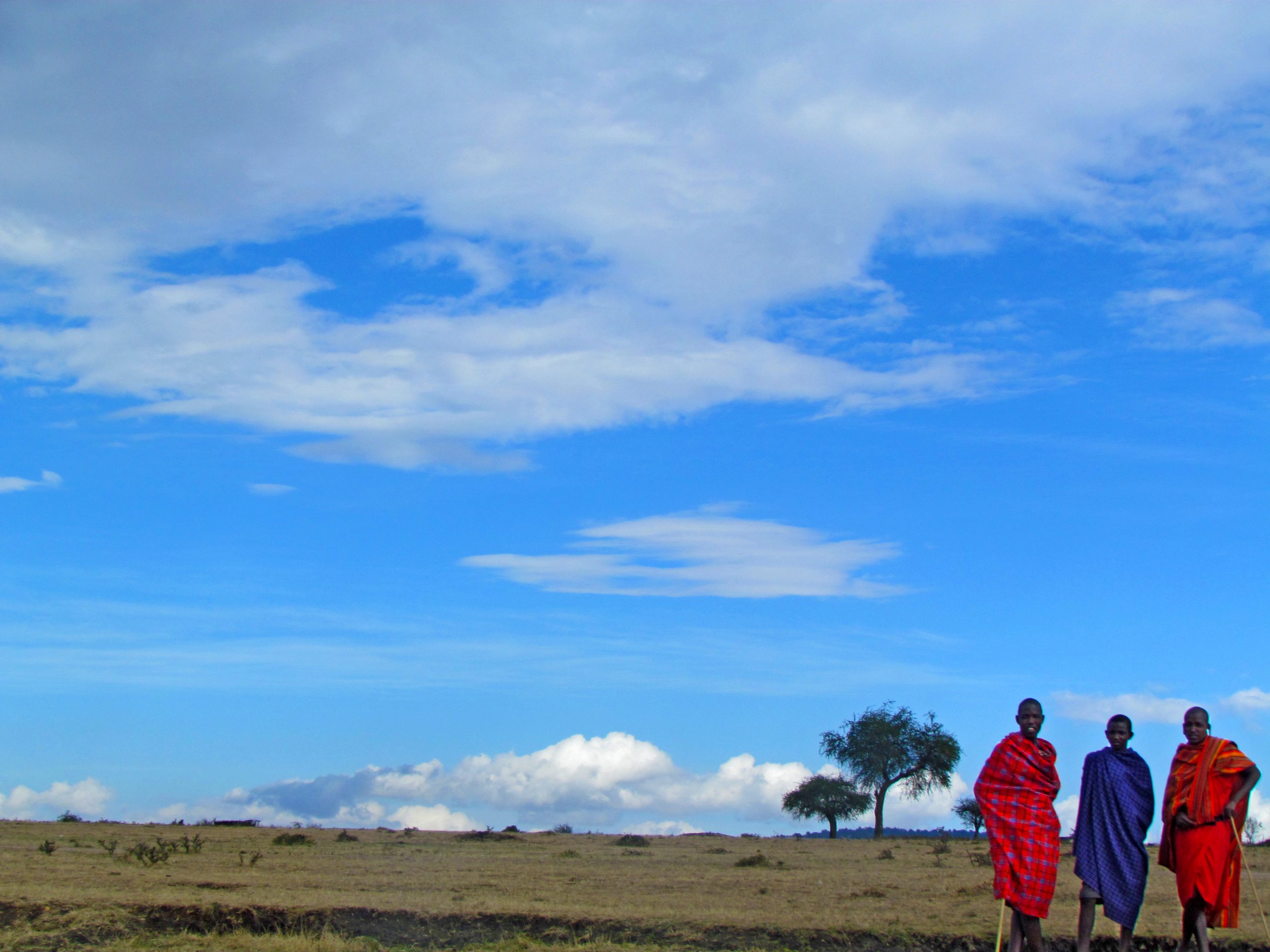
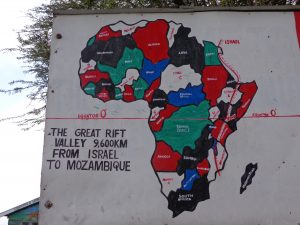
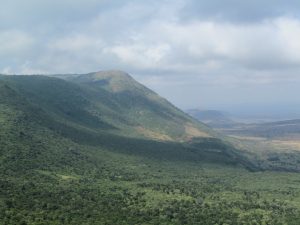
After enjoying Nairobi, the next day came and we geared up for our Masai Mara trip. The tour company’s vehicle had come to our hotel in the morning and we were on our way, moving from the south-centre to the south-west of Kenya. The reserve was around 7 odd hours towards the west but had the most scenic route via the Great African Rift Valley and through the lands of many tribes, one of which were the famed ‘Maasai’ people themselves. The Rift Valley which we crossed en-route, is that part of Northern Africa (and a bit of Asia) that is slowly being split apart by tectonic plate movement over millions of years. It goes from Kenya all the way to North Africa and then to West Asia or what is popularly known as the Middle East.
And so, the call of the wild had got us to Kenya but we had no idea of the sensory overload that was waiting for us here in East Africa. My only understanding of African wildlife at that time was whatever I saw in my Hollywood favourites from childhood – Hatari & Savage Harvest and later what I saw in the classic called ‘Out of Africa’. Back then I didn’t even know that the reference point of the movie’s name was the theory of man’s movement ‘out of Africa’ and into the rest of the world (and the fact that the movie’s well-meaning protagonist went ‘out of Africa’ eventually, as did her ‘not-always well-meaning’ European countrymen). For us back then, it was a case of going ‘into Africa’ and today I have to say that we are really ‘into Africa’. So much so that it will take a pride of hungry lions set loose on us to get us ‘out of Africa’.
Nitin Gairola is from Dehradun and is often considered the most travelled Indian of the natural world. Inspired by Sir David Attenborough, he is on a quest to become the first person to travel to the entire natural world of every major forest, desert, grassland, tundra & ice biome on Earth, besides every major country. This multi-year project is called ‘Borderless Biomes’ and besides this, Nitin has set world travel records certified by India Book of Records, has written for Lonely Planet, holds National Geographic conservation certifications and loves bio-geography. He is also a senior corporate executive in an MNC and in his early days, used to be a published poet as well. Join him @ www.instagram.com/MostTravelledIndian/