By Arun Pratap Singh
Garhwal Post Bureau
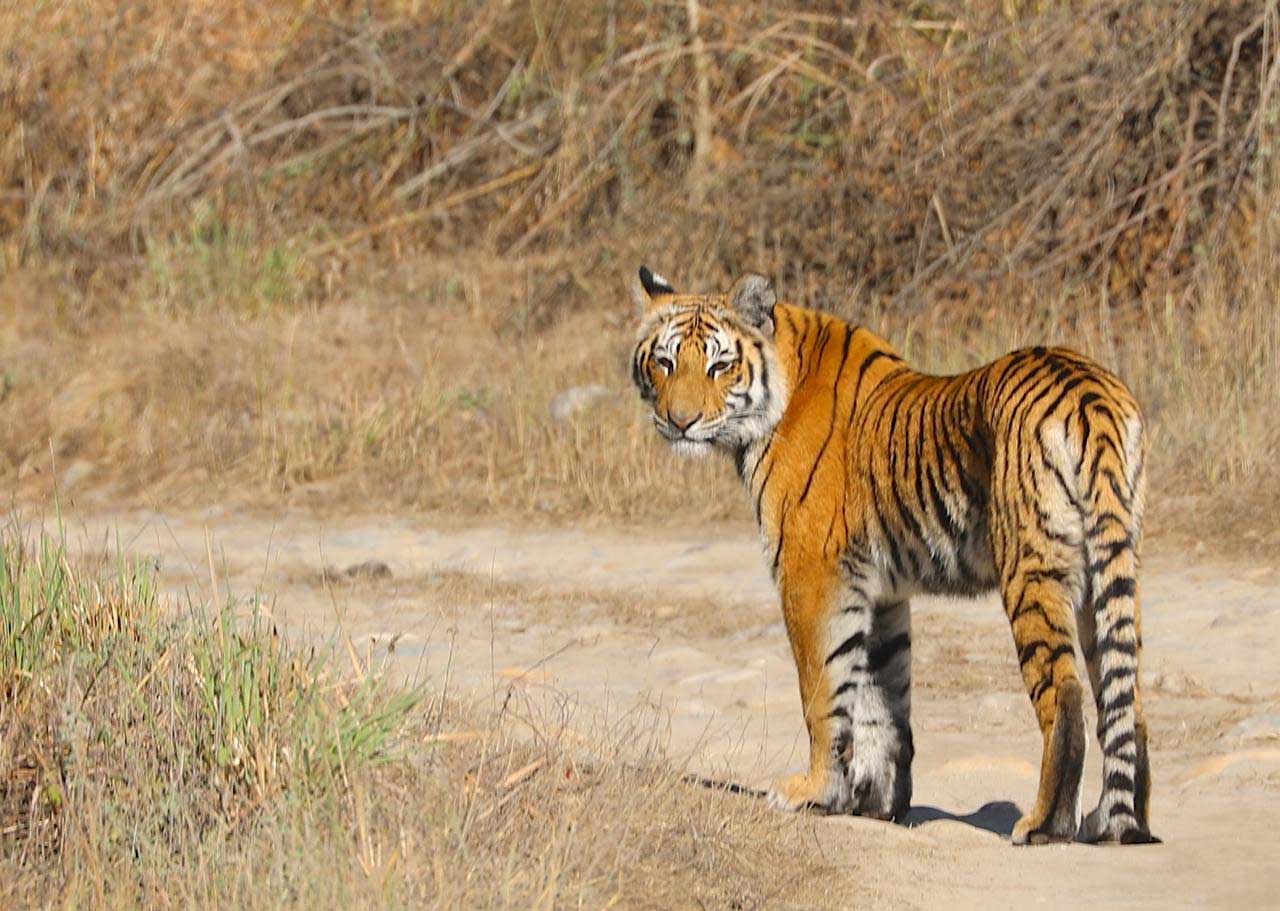
Dehradun/ Ramnagar, 10 Jun: The world-renowned Corbett Tiger Reserve and the Rajai Tiger Reserve are currently undertaking a scientific assessment of its tiger population. However, alongside the tiger census, leopard population is being estimated at both the tiger reserves. This marks a significant step forward in wildlife conservation and management. For the first time, data collected during tiger estimation exercises will also be utilised to determine the population of leopards in tiger-dominated habitats. The annual tiger census conducted has long been regarded as a crucial exercise for wildlife management. This year, however, the exercise is expected to gain additional significance as it will also facilitate a scientific estimation of the leopard population.
Speaking to Garhwal Post, Director of Corbett Tiger Reserve, Dr Saket Badola, shared that the data of tiger and leopard population is being estimated through the same camera traps that have been installed at various places in the Corbett Tiger Reserve. The data to be collected is to be shared with Wildlife Instituted of India (WII) Dehradun. He added that while the estimated figures of tiger population inside the Corbett are likely to be released early, leopard population estimation figures will be released later.
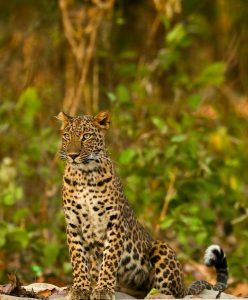
Dr Badola said that the leopard is an important apex predator in the forest food chain and plays a vital role in maintaining ecological balance. He stated that the field data and camera trap data collected from Corbett under the All India Tiger Estimation programme have already been forwarded to the Wildlife Institute of India for detailed analysis.
According to Badola, camera traps installed during the tiger census capture not only images of tigers but also a substantial number of photographs of leopards. These images, combined with scientific analytical methods, will now be used by the WII to estimate leopard numbers in areas where tiger populations are high. He said that the initiative represents an important advancement in wildlife conservation and management as it will provide a clearer understanding of the actual status and distribution of leopards in tiger-rich landscapes. The information generated through this exercise will also assist in estimating the overall leopard population across Uttarakhand.
Speaking to Garhwal Post, Director of Rajaji Tiger Reserve, Dr Koko Rose, a trained veterinarian, also confirmed that the data collected at Rajaji from the camera traps is being forwarded to WII and said that in the camera, not only the tigers but also leopards and a large number of other species of wild animals are captured. The camera traps that were installed at Rajaji have now been removed already. However, he added that it would take some time for the WII to reach an accurate estimation based on the data collected at both the parks and release the figures. He said that the tiger and leopard census figures can be expected to be released next year.
Wildlife experts believe that both tigers and leopards play critical roles in maintaining the ecological integrity of forest ecosystems. Accurate population estimates of both species will enable authorities to formulate more effective conservation strategies. The initiative being undertaken in Corbett and the Rajaji is also expected to serve as an important model for other tiger reserves across the country.
It may be reminded here that the All India Tiger Estimation is conducted once every four years and is regarded as the world’s largest wildlife monitoring exercise. The census combines extensive field surveys, pugmark and scat analysis, prey estimation, habitat assessment and large-scale camera trapping. During the 2022 national estimation exercise, more than 32,000 camera trap locations were deployed across the country, generating millions of wildlife images and helping scientists estimate tiger populations with greater precision.
Corbett continues to be India’s premier tiger reserve in terms of tiger abundance. According to the latest All India Tiger Estimation 2022 report, Corbett Tiger Reserve recorded an estimated 260 tigers, the highest among all tiger reserves in the country. The reserve had earlier recorded 214 tigers in 2010, 215 in 2014 and 231 in 2018, reflecting a steady increase in tiger numbers over the past decade.
Rajaji Tiger Reserve has also witnessed a remarkable recovery in its tiger population over the years. Earlier estimates indicated that Rajaji had only around 16 tigers in 2015, which increased to 34 by 2017 following sustained conservation efforts and habitat protection measures. Wildlife experts believe the reserve has continued to benefit from improved protection and increasing connectivity with adjoining forest landscapes, making it an important component of the Shivalik-Gangetic tiger landscape. It may also be reminded here that some tigers from Corbett region have also been in recent years relocated to Rajaji thus further increasing the tiger population.
The significance of the proposed leopard assessment is particularly high because Uttarakhand is one of India’s most important habitats for both tigers and leopards. While tiger populations are periodically estimated through the national census, leopard estimation has traditionally been more challenging because of the species’ wider distribution and highly adaptable nature. Wildlife scientists believe that the extensive camera trap database generated during tiger estimation exercises offers an effective opportunity to assess leopard abundance as well.
Experts point out that tigers and leopards are both apex predators and key indicators of ecosystem health. Accurate information on their populations enables forest managers to better understand prey availability, habitat quality and species interactions. The proposed assessment is expected to generate valuable insights into how leopard populations coexist with growing tiger numbers in landscapes such as Corbett and Rajaji.
The initiative assumes greater significance in light of Uttarakhand’s growing tiger population. According to official data, the state’s tiger population increased from 178 in 2006 to 560 in 2022, making Uttarakhand the top tiger-bearing state in the country. The Shivalik-Gangetic landscape, which includes Corbett and Rajaji, recorded one of the strongest increases in tiger numbers during the latest national estimation exercise.