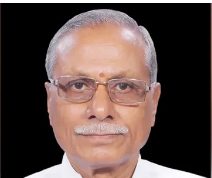
 By Satish Aparajit
Launching the world’s first, most reliable, precision-driven, supersonic delivery service, guaranteed on target and on time, every single time. Please welcome, in its newest avatar, the one and only Indian Air Force – The Courier Wala.
The youth of India erupted in collective relief. “Finally,” they exclaimed, “the rescuers have arrived. No more worries!”
After all, when there is a crisis in the country, who better than the Indian Armed Forces, trusted, dependable, disciplined, and famously free from hidden agendas? Their motto may not officially be ‘Nation First, Question Papers Later’, but close enough.
The smiles on the faces of lakhs of anxious students were priceless. Authorities too breathed easier, not even a cockroach, let alone a human, would dare come near the sacred cargo. Imagine this: perhaps for the first time, military aircraft carrying something more precious than missiles or strategic supplies, the dreams of millions of young minds packed neatly into sealed cartons called Question Papers.
No one would demand resignations now. Not that ministers resign too easily anyway, but one imagines even they slept better that night.
Now, let me walk you through this grand military operation. The Indian Air Force, naturally, would not work alone.
The Indian Army would deploy its finest armoured vehicles because ordinary vans simply cannot be trusted with such national treasure. Escort duty? None other than the fearsome Ghatak Battalion — soldiers so battle-ready that even an overcurious bystander might reconsider eye contact.
The examination headquarters would resemble a high-security war zone. Battle-hardened men in camouflage, bandanas tied dramatically, securing the perimeter. Civilian officials, accustomed to tea and paperwork, suddenly finding themselves under the silent scrutiny of a 24-year-old Lieutenant with the expression of someone who does not appreciate procedural lapses.
“The package?” he asks.
“Question papers, sir.”
The young officer nods gravely. SOPs are followed with military precision. Every seal checked, every signature verified. Nothing left to chance. The cargo is immediately loaded into armoured vehicles. Engines roar alive. Convoys move.
Military Police escort the precious shipment because one cannot take risks with leaking papers while wearing khaki.
At the airbase, the spectacle escalates.
The armoured convoy rolls toward the giant cargo ramp of an Air Force transport aircraft. Army guards take positions. Cargo is transferred. Engines rev. Pilots exchange crisp acknowledgements. Within moments, the aircraft hurtles skyward.
Destination? Every corner of India. Remote villages. Mountain states. Desert outposts. Far-flung islands.
And why should the Navy be left behind?
Aircraft land near coastal regions where cargo is ceremoniously transferred to warships and, where required, perhaps even submarines — escorted by the elite MARCOS commandos. Both aircraft carriers stand ready, just in case some mysterious “foreign hand” develops an unhealthy curiosity about undergraduate entrance examinations.
Missile squadrons remain operational. Anti-drone systems activated. Radar screens monitored with unwavering vigilance. National security? Important. Question paper security? Apparently, equally so.
Finally, after this magnificent display of military logistics, the sacred cargo reaches examination centres nationwide.
A thought occurs.
Perhaps we should introduce new military trades under Agniveer recruitment:
- Air Courierwala in the Air Force
- Courier Guards in the Army
- Sea Lions of Logistics in the Navy
Employment generation solved. But after all this military magnificence, will paper leaks stop?
Sadly, no.
Because the leak rarely happens while transporting papers. It often originates much earlier, at the source itself: printing presses, question setters, compromised insiders, or institutional loopholes.
And then there is the NTA, jokingly renamed here as the National Tempering Agency, an organisation that somehow manages to be blamed by everyone and accountable to no one. Registered under the Societies Act, responsibility becomes a travelling parcel: the Ministry blames the agency, agencies blame vendors, states blame one another, political parties blame whichever side is convenient. Meanwhile, students continue to suffer.
So, to every student appearing for examinations: work hard, keep faith, avoid shortcuts, and never resort to unfair means.
And remember, as long as the Armed Forces stand guard, your question papers may remain secure. Protecting exam logistics may not be their mandate, but commitment to the nation has never stopped them from stepping in when systems fail.
Though perhaps, just perhaps, the real battle lies elsewhere.
(Satish Aparajit is a retired Wing Commander and Shaurya Chakra awardee.)