MDDA holds Dehradun Master Plan public hearing
Garhwal Post Bureau
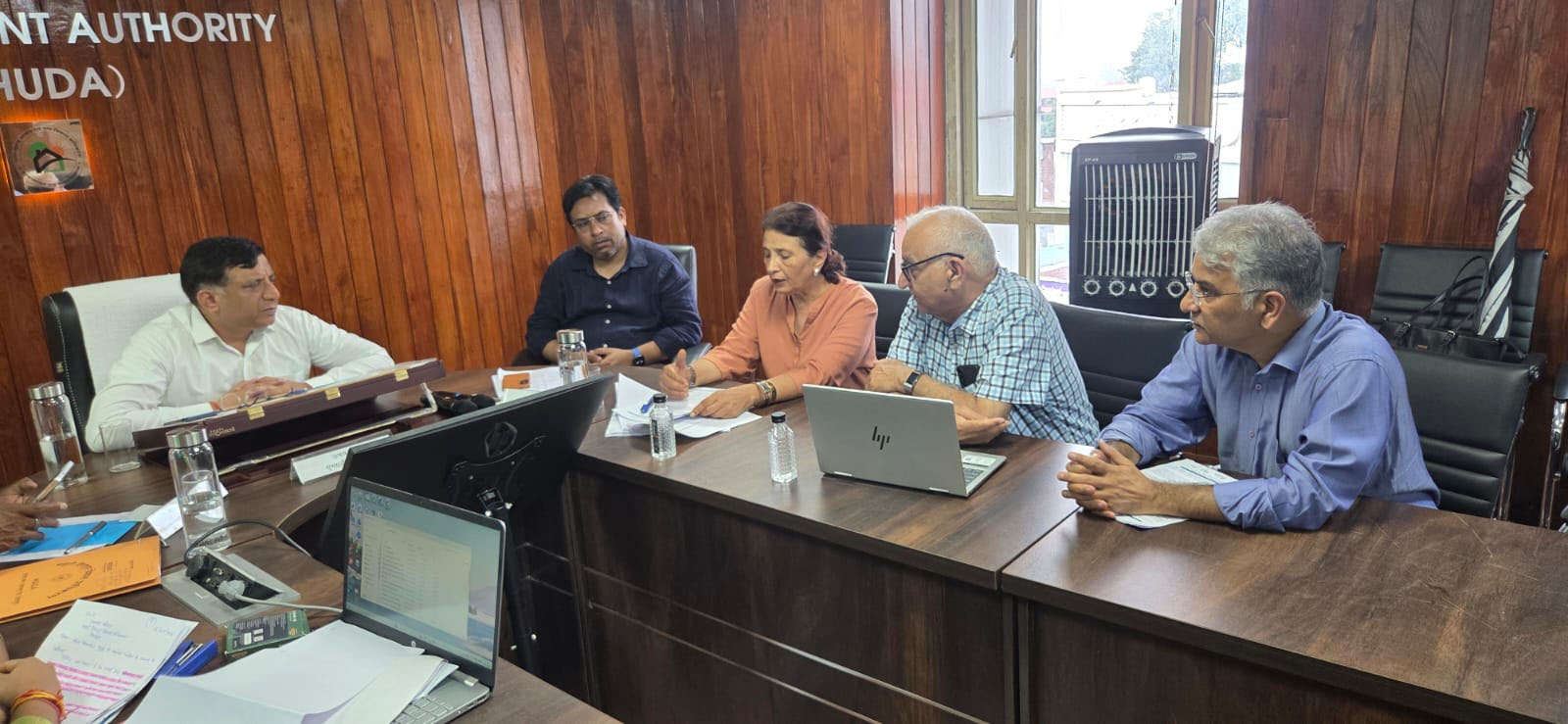
DEHRADUN, 18 Jul: During the public hearing on the Dehradun Master Plan organised by the Mussoorie-Dehradun Development Authority (MDDA), the Dehradun Citizens Forum (DCF) on Saturday submitted two important memorandums concerning the city’s future to MDDA Vice Chairman Bansidhar Tiwari. The Forum was represented by Jagmohan Medhiratta, Retu Chatterjee and Anoop Nautiyal.
In its first memorandum, the Dehradun Citizens Forum proposed the formation of a “Dehradun Citizens Advisory Council”, stating that citizen participation should not remain limited to periodic public hearings. The Forum proposed creating an 11-member permanent citizen advisory council under MDDA, comprising representatives from different sections of society and fields of expertise.
The proposed council would meet periodically with MDDA, Dehradun Municipal Corporation, Police Department and other relevant agencies to provide constructive suggestions on issues related to urban development, environmental conservation, mobility, waste management and city planning. The Forum emphasised that while governments, elected representatives and officials may change over time, citizens are the only stakeholders who remain connected with their city across generations. Therefore, institutionalising citizen participation is essential for creating transparent, accountable and locally relevant urban development plans. MDDA Vice Chairman Bansidhar Tiwari appreciated the suggestion.
In its second memorandum, the Forum submitted a detailed 20-point representation highlighting key concerns and recommendations for the Dehradun Master Plan. These included maintaining a balance between green spaces and concrete expansion, developing safe infrastructure for pedestrians and cyclists, protecting natural streams, water channels and drainage networks, and restricting high-rise buildings and large-scale construction in geologically sensitive areas and around fault lines.
The Forum also emphasised the need for a scientific solid waste management system, segregation of waste at source, modern recycling infrastructure, and ensuring adequate waste management capacity before approving large residential and commercial projects. It further suggested an integrated plan for rainwater drainage and sewage systems, a comprehensive stormwater management strategy to prevent urban flooding, and an effective policy to control increasing noise pollution.
The memorandum stated that widening roads alone cannot solve Dehradun’s traffic challenges. Instead, the city requires stronger public transport systems, intelligent traffic management solutions, last-mile connectivity and greater promotion of walking and cycling. The Forum also recommended restrictions on high-rise buildings and large commercial complexes on narrow roads and called for independent technical feasibility, carrying capacity and environmental impact assessments before approving new roads and bypass projects.
Highlighting the importance of protecting Dehradun’s ecological assets, the Forum stressed the need to conserve forests, green spaces and wildlife corridors. It suggested linking important green areas such as Malsi, Galjwari, Dudhli, Danda and other biodiversity-rich zones through ecological corridors to safeguard wildlife and natural ecosystems. The Forum also recommended prioritising native Himalayan species in urban plantation programmes.
The Dehradun Citizens Forum welcomed MDDA’s initiative of conducting public hearings and expressed hope that the suggestions submitted by the Forum, including the proposal for a Dehradun Citizens Advisory Council, would receive serious consideration in the final Master Plan. The Forum stated that protecting Dehradun’s natural identity, water resources, green spaces and quality of life is essential for building a safe, inclusive and sustainable future for the city.