 By Ganesh Saili
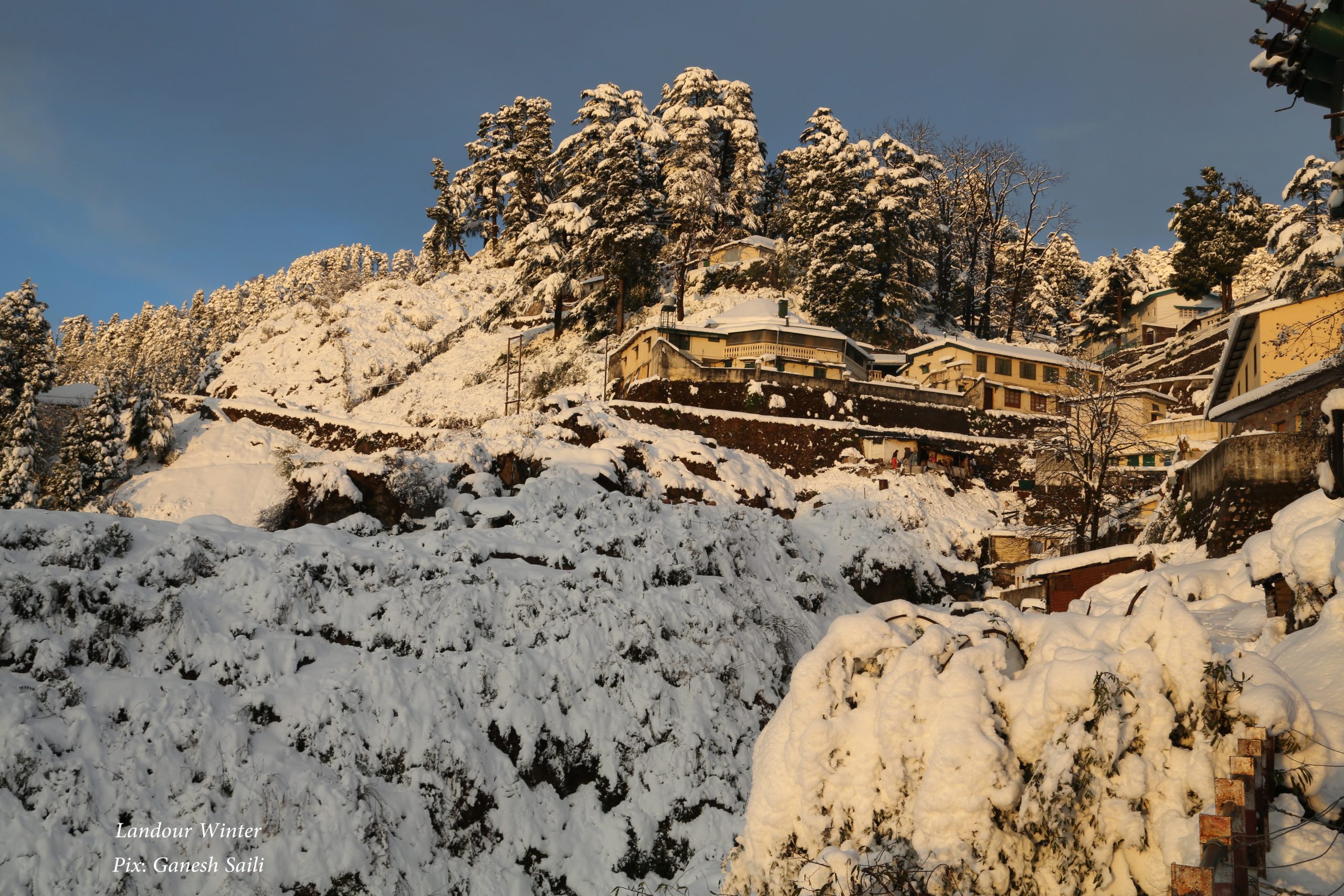
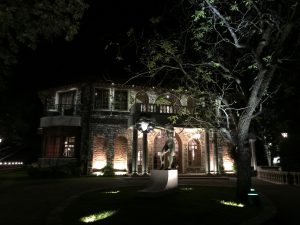
If you take the road from Sisters’ Bazaar and go beyond the last hill and keep going, you will find, below the road, the barracks of the old British Military Hospital built over two hundred years ago. Eastwards lies Oakville, which is home to the Alter family and stands at 2,250 metres above mean sea level. This colonial bungalow is made of lime mortar, and random rubble, and a roof built using the local rhododendron and oak beams. It earlier had a thatch-roofed house which burnt down, according to author Stephen Alter. After that the place was rebuilt in 1836.
Had you walked here in the 1970s, you would have met much younger versions of famous actors Naseeruddin Shah, Tom Alter and film director Vishal Bharadwaj. Along with them was local boy Ajay Mark. He and Brij Lal spent a lifetime teaching in Woodstock School. Why had they gathered there? They were staying with Tom to play cricket tournaments with our local teams.
At the end of the ramp to the right there used to be the hulk of Dahlia Bank, where The Diary of a Civilian’s Wife in India 1877-1882 was written. This is where the author Mrs Elizabeth Ross King lived. She was the wife of Robert Ross, the Judicial Magistrate of Meerut, who later became District Judge of Saharanpur. She wrote: ‘Numbers of wild flowers have sprung into existence, and mauve and white orchid bloom on every bank. But the dahlias are the glory of the place. I don’t think there can be a finer wild flower than your dahlia, both on account of the splendid variety of its colours, the dense mass in which it grows, and the length of time it is in bloom – from July to October. The khud below the house is simply an unbroken sea of dahlias – crimson, white, scarlet, yellow, pink, purple, orange and a deep, almost black, maroon.’
Sadly, Dahlia Bank doesn’t exist now; it was demolished by the local administration for reasons best known only to them. Sanjay Narang, an entrepreneur who settled in these parts and did exemplary work in restoring many old buildings, and created employment for some 300 local boys, tried valiantly to stop the demolition by approaching the courts, but to no avail.
Pic courtesy: Author.
‘You get upset when a bird’s nest falls’ said the little boy, and added, ‘How can you celebrate when someone else’s home is being wrecked?’
That quote, more than anything else, sums up the general feeling after the courts ruled to uphold the decision to demolish Dahlia Bank.
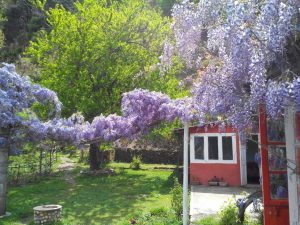
To your right is an old-fashioned trellis thrown over a gate with a beautiful banksia bush clinging around it. The last crumbling Cantonment boundary pillar, which seems almost to lean on the wall opposite, marks the entrance to Mount Hermon. This is where forty years ago, in the 1980s, Abha, Ruskin and I were destined to meet the actor Victor Banerjee, who later bought a house nearby. Later we became good friends. He was shooting a Lekh Tandon biopic Doosri Dulhan.
Suddenly a girl in a rustic ghaagra, with a beedi clenched between her teeth, rushed out of the set to exclaim, ‘Arrey! Ruskin Bond? Good to see you alive and well. I used to read you in school. I presumed you must also be dead like all the other authors in the book!’
And that is how we first met actress Shabana Azmi.
Later, I discovered that Anna DeFreeze, who had come here from South Africa, had rented the place along with its lovely garden. Like Dahlia Bank it too sits on a ridge; to one side is spread the Doon valley, and northwards rear the long line of the eternal snows. An avid and gifted gardener, hands roughened by the calcareous soil, she had maroon irises springing amongst the rocks, and a most amazing proliferation of poppies.
The tall deodar trees that grow around Oakville were probably planted when this town got a cover of pines. ‘You can barely get a glimpse of sunshine where there’s a break in the canopy of trees these days,’ complains Ameeta, with a shiver.
(Ganesh Saili, born and home-grown in the hills, belongs to those select few whose words are illustrated by their own pictures. Author of two dozen books, some translated into twenty languages, he has found renown worldwide.)