The Books from My Shelves
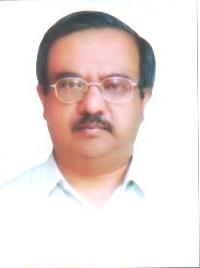
By Dr S.S. Negi
Books are perhaps the most important companions of human beings right from childhood through to student and professional life and, later, in old age. As a person grows older, his or her book shelf grows with addition of titles based on changing times, age and professional interest though most titles stay on the bookshelf throughout life.
India has a varied geography and culture, amongst them the Andaman and Nicobar group of islands in the Bay of Bengal being one of the most interesting and important. These islands are home to many tribes that have inhabited these islands for thousands of years. The Jarwas of the Andamans authored by Dr RC Kar is a comprehensive account of these stone-age dwellers of the Andamans. The author rendered remarkable services to this ancient and vulnerable tribe for many years, learnt their language and thus has been able to write about different facets of the life and ways of this Negritos community of the Andaman group of islands. It contains a detailed analysis of various hypothesis of the origin of the Jarwa community in the Bay of Bengal archipelago. The book is full of interesting facts about the Jarwa community, their way of life; habits; settlements and contact with the outside world.
The Himalaya is another interesting geographical region of our country and its varied aspects and change have been aptly captured in the book titled The Himalaya – Aspects of change, edited by J.S. Lall in association with A.D. Moddie. It is a collection of interesting contribution on the Himalayan mountain system, focussing mainly on the Indian Himalayan region and also Nepal and Bhutan; written by experts of the stature of Salim Ali (Ornithology); M.K. Ranjitsinh (Himalayan fauna); A.G. Jhingran (Geology); C.P. Vohra (Glaciers) and I.K. Barthakur (Shifting Cultivation). Many other aspects including changes taking place in the Himalayan region have been covered which include earthquakes; social change; art and culture; population and society and man versus environment. Changes in the Himalayan environment particularly in respect to the process of development have also been brought out by contributing experts. Though this book was published way back in 1981, its data and analysis are very relevant even today, given the challenge of climate change, glacial retreat and the march of development.
The Thar Desert located in the western part of India occupies a significantly different ecosystem supporting rare flora, fauna, geology and ecology. A part of this desert has been declared a Desert National Park for conserving this rich heritage. The coffee table book, Desert National Park – A Jewel in the Vibrant Thar, authored by two prominent Indian wildlife experts – G.S. Bhardwaj and A.R. Rahmani includes breath capturing pictures of the Thar desert including its rich landscape, flora, fauna and geology along with textual description of the Desert National Park including steps being taken to protect and conserve this unique ecosystem.
Varied ecological conditions in India support rich flora and fauna including microorganisms. These have been aptly covered in the book, Magical Biodiversity of India by D. Mukherjee and A.R. Rahmani. This pictorial book presents stunning photographs of different parts of India along with comprehensive text which adds to the immense value of this work. The book showcases the richness and variety of the bio-diversity of India which represents an important part of the flora and fauna of the entire continent. It provides extensive coverage of the biodiversity from the Himalayan region to the fertile Indo-Ganga plains; the dunes of the Thar Desert; the mountain chain of the Western Ghats; Chhota Nagpur plateau; North East India and the coastal mangroves along the oceans. It takes the reader along a rich and fascinating journey encompassing the biological richness of our country.
Another pictorial book that showcases the richness of our country is Hidden India – A Journey to Where the Wild Things are, authored by L Nathe and S Nath. This book captures the extraordinary landscape and wildlife in India, including rare photographs of wild animals many of which are endangered. The authors have also dwelt upon our relationship with nature and the need to preserve and protect it for the well being of our planet earth. This book has over 300 rare photographs taken by one of India’s famous wild life photographers- Latika Nath.
Our country’s rich biodiversity includes terrestrial and aquatic birds which are an integral part of our living heritage and play a vital role in sustaining life on planet earth. The world-renowned ornithologist Dr Salim Ali’s – The Book of Indian Birds is a monumental contribution to the varied bird life of India. It gives a comprehensive and illustrated description of 538 different types of birds found in the different ecological regions of India including the Himalayan region including the cold deserts of Ladakh and Spiti; Indo-Ganga plains, North East India; the Thar Desert and its surrounds; coastal areas; Western and Eastern Ghats and the thousands of lakes and river ecosystems in different parts of India. This book has aptly been called a field guide.
(Dr S S Negi is a retired Indian Forest Service officer of the Himachal Pradesh cadre. He is a former Director General of Forests and Special Secretary to the Govt of India and has also been Director and Vice Chancellor of the Forest Research Institute, Dehradun. Dr Negi is a prolific science writer with more than 130 books on Himalayan studies, Forestry and Environment, to his credit.)