Around the World with the Most Travelled Indian
 By Nitin Gairola
Indigenous people are the original settlers of the land, whatever original means in the deep paleo-history of humankind, as is so evident in ancient Africa. But purely in terms of the modern world of today, these ethnic groups offer outsiders a glimpse into their nation’s vast cultural heritage. These communities carry the last stories of past generations as the western global influence creeps closer every moment in every country, ironically, in part brought by the visitors themselves. Besides, since these people generally live closer to and with nature, their preservation indirectly means the preservation of the environment and biodiversity itself.
Indigenous populations (around 370 million globally and representing over 5,000 cultures) account for just 5% of global population numbers, but they protect around 80% of the world’s natural habitats. Hence their survival is critical not just for boosting tourism revenue of a nation but for maintaining the fragile ecological balance of the planet itself. This balance is maintained by the containment of deforestation and also the containment of the degradation of other wildlife habitats, besides forests, such as the Savannah grasslands of Africa. Like many know, the grasslands are home to some of the largest land-based carnivores and herbivores on Earth today.
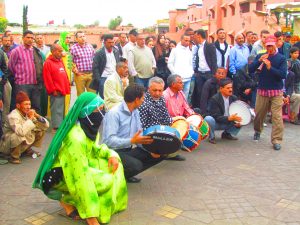
And that’s why ethno-tourism can be a force for good. As long as we are sensitive about how we engage with the tribes that are opening up to tourism, this tourist money can go a very long way in sustaining & reviving the myriad colourful cultures around our world, not to mention in preserving the last refuges of the Earth’s flora and fauna.
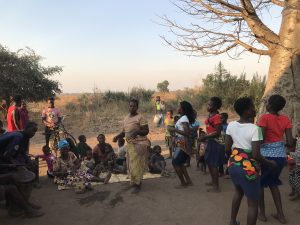
When it comes specifically to Africa, I must say that this was the place that introduced me to ethno-tourism, and at that time I had little understanding of the implications of my actions as a traveller. Upon reflection, I must say that not all of my experiences with African tribes have been wholesome and enriching. In some places I felt the experiences were honest and the people were genuinely happy to see us. In others, more than a cultural exchange, it was a money exchange. But I still take solace in these not-so-enriching experiences as well. What makes me a bit glad is that, even though I couldn’t bring warmth at times, at least I got them the resources – even though they were meagre.
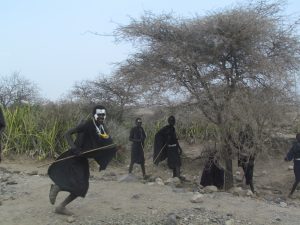
We all know that our planet’s second largest continent has lots and lots of indigenous people and many of them have been impacted by European colonists of the 19th century. Today, in most of the 54 countries that make up this mega landmass, the ethnic populations are welcoming outsiders again. One of the first to do so long ago, and prosper from it, are the celebrated & colourful Maasai tribe of Kenya and Tanzania in East Africa. I have described my interactions with the Maasai as part-touristy but also part-educative. Being one of my earliest interactions with any such tribe, I truly enjoyed my time with the Maasai and yes, I did join them in Adumu – their high jumping dance. I also terribly lost at this game of ‘dance’ to the Maasai men, who are masters of the vertical leap.
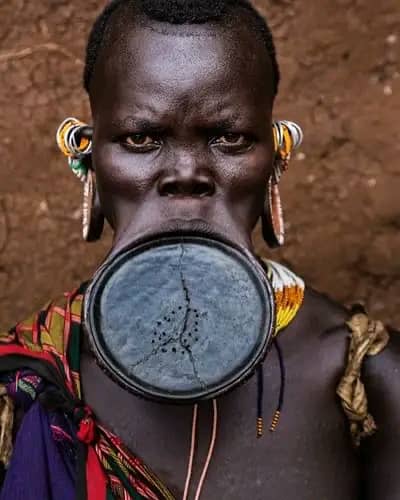
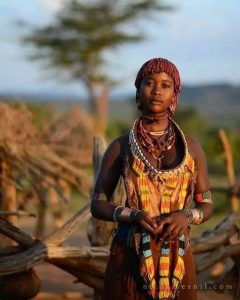
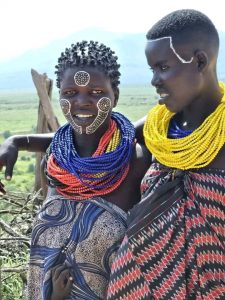
Going further up north into Ethiopia, we have so many tribes that dwell in the Omo valley, which is a place not so far from the northern borders of Kenya and reasonably accessible from Addis Ababa, the capital of Ethiopia. It is actually quite a raw engagement here and on the touristy scale, I would give it just 20% compared to Maasai’s 80%. It is just about touristy enough for them to take your money instead of impaling and toasting you over a fire. Omo is the home of the famous Mursi tribe that wear enormous lip plates, the ‘bull-jumping’ Hamer tribe with their ochre dreadlocks, the Karo tribe and the Banna people who walk on ridiculously long wooden stilts (to wisely escape snakes & lions). We also became good friends with Demise, a smart city man who takes tours to the Omo Valley, and I can assure you that it is wise to take a guide there.
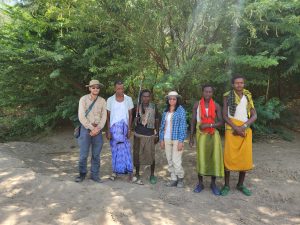
But the north-eastern side of Africa is not just limited to these fearsome yet famous tribes since there are a lot of indigenous people who are not open to tourism at all (i.e. 0% touristy, if you will). I found that out the rude way in two places when they picked up rocks when I wanted to take their photograph. You see, in many areas of what is known as the Middle Awash, the Danakil Depression and parts of Eretria, Djibouti & Somali, people believe that taking an image of theirs is an act to take away a part of their soul. Now who am I to reason with them otherwise, especially when that person is slinging an AK-47 and holding a rock in his hand. Many of these people there are sometimes simply referred to as the Afar people (since it’s the Afar region) and they move across borders without passports, unlike you and I. What a luxury it is to have such freedom.
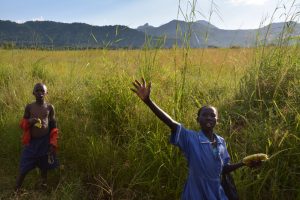
Things are quite sketchy in the brown Sahel zone right below the Sahara Desert and towards the upper-central part of Africa. This is since the Sahel zone is home to some of the most dry, landlocked, poor and unstable countries on Earth. My interactions with the people here were in South Sudan (during the civil war in 2016) and I do want to visit Central African Republic and Chad soon, but it is generally ill-advised to do so right now.
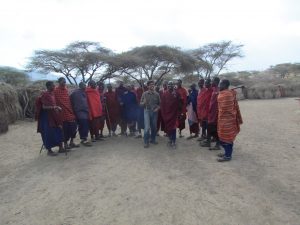
The lower-central part of Africa is another story. We move from water scarcity of the desert lands to deep jungles, which come with their own unique challenges such as malaria and tropical infections from other bugs, besides crossing paths with militants and poachers. Surprisingly, the mega fauna in the rain forests are not too dangerous for humans since we are more dangerous to them. The Gorillas, Chimpanzees, Bonobos, Forest Elephants and others have us to worry about. The green lower-central part also has the so-called pigmies, which are not any tribe but the colonialists labelled them as such in order to describe a very short, sub 3-foot person (someone who is no less a Homo Sapien than you and I). Many of these people speak a language derived from the Bantu group of languages and hence they are also called the Bantu people. But that is a very wide term as well used to define over 400 indigenous people in the muddy middle.
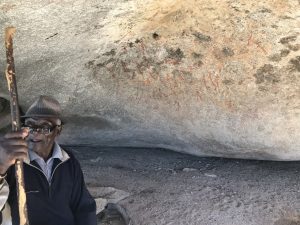
Towards the far south are the San Bushmen of the Kalahari Desert, who are not that far removed from ancient hunter-gathers. But don’t expect all of the indigenous people of the relatively more prosperous south to look like our version of the stone age man, since many now wear western clothes, and that is a good thing. It’s not that they lost their culture, just that they decided who they want to be or look like. But the Himbas of Namibia do yet look very ‘tribal’ as they smear ochre all over their bodies and are really not that well clothed, to put it mildly. But when it comes to taking the tourist-o-meter to the maximum, the popular Zulu of South Africa score a hundred on hundred.
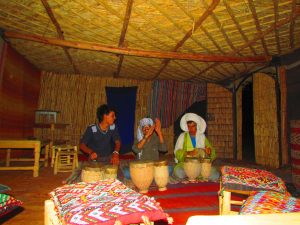
The ones I have to see a lot more of are the people of the countries in the far west of Africa. While I have met the Berber & Tuareg ethnic groups in western parts of the Sahara across 4 countries, I am looking forward to ‘interacting’ with the Yoruba of Benin, Togo & Nigeria and the Ashanti tribe in Ghana. Then there are those who practice real Voodoo (called Vodun in Benin) which is a whole new level of extreme travel.
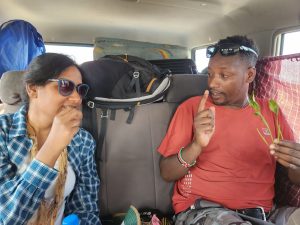
Now since I am a world traveller (or a tourist), I really try to see how we all can contribute as travellers, given our privilege in being able to witness this wonderful world in one lifetime. But specifically, in the case of ethno-tourism, I don’t know if it actually saves dying cultures and in doing so saves our last wild places on Earth. Would local governments have protected these people anyway without the tourist revenue? And so while I may not have the answer to this one, one thing I am sure of is that, if done sensitively, ethno-tourism can provide incentive to indigenous people around the world to showcase their culture and their way of life to travellers and in turn make a living from it. And the traveller in turn gets to play the role of an amateur anthropologist, just for a day or two. So, this is a win-win-win for both the tourist & the tribe and the wilder world at large.
Nitin Gairola is from Dehradun and has travelled the natural world more than almost any Indian ever. He has set world travel records certified by India Book of Records, has written for Lonely Planet, and holds National Geographic conservation certifications. He is also a senior corporate executive in an MNC and in his early days, used to be a published poet as well. More than anything else, he loves his Himalayan home.