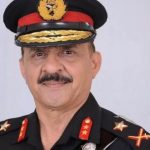
 By Major General Sanjay Sharma (Retd)
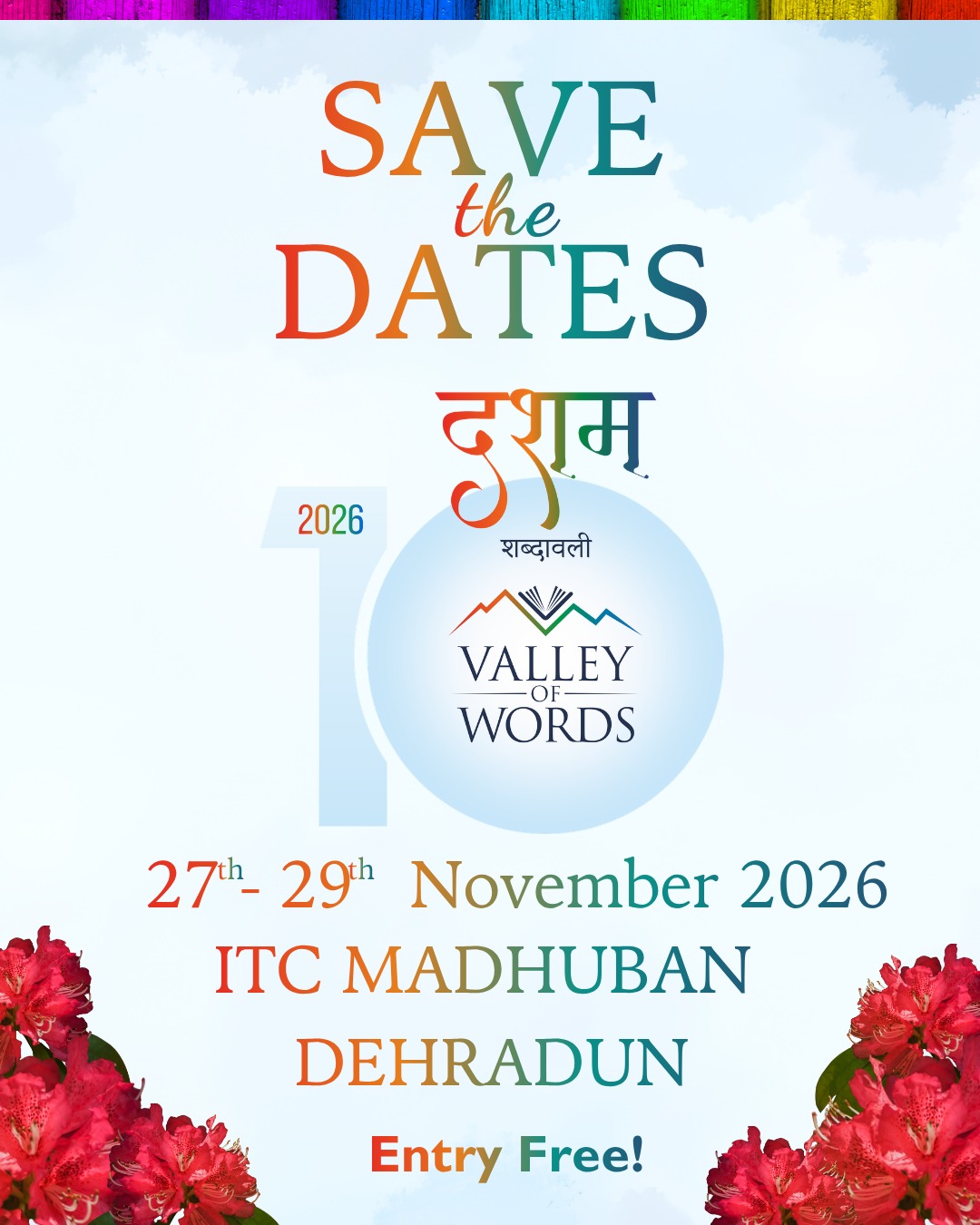
Before a general plans his strategy, he studies the terrain: the ridgelines, the river crossings, the approaches that people have used for centuries. The Doon Valley is ground I know well, and from 27 to 29 November 2026 it will host the tenth edition of Valley of Words, Dasham: Ten Years of Listening in the Doon Valley, at Hotel ITC Madhuban. I will be there. I hope many of you will be too.
When Valley of Words (VoW) began in 2017 as Dehradun’s first literature and arts festival, few expected it to become a pan India celebration of the word. Led by the scholar administrator, Sanjeev Chopra, supported by a professional board, and run by volunteers of the Valley of Words Foundation Trust, it has since held partner editions from Indore, Mumbai and Pune to Chennai, Kolkata and Auroville. But its centre of gravity is anchored in this picturesque valley.
Military History is not a separate subject
I want to dwell on one feature of VoW that I think sets it apart: how it treats military history. At most literary festivals, the “defence session” sits in a corner of the programme, attended by veterans and largely ignored by everyone else. That approach is a mistake, and it is a costly one for a country like ours. VoW recognizes that India’s borders, its federal map, its politics and even its ecology have been shaped by war and the threat of war. One cannot understand the Northeast without Kohima and Walong. Likewise, no understanding of Punjab is possible without 1947, 1965 and 1971. You cannot read Uttarakhand’s villages without counting the sons they have sent to the Garhwal and Kumaon Regiments for generations. Military history is part of the national story, not a supplement to it. When it is kept apart, citizens grow up thinking of security as something done for them by others, rather than something they must understand and debate.
VoW has understood this. Guided by Lt Gen PJS Pannu (Retd), former Deputy Chief of Integrated Defence Staff, its Military History and Strategy vertical has moved well beyond regimental reminiscence. It has taken on “The Northern Boundary – History & Management”, “The New World Order – Great Game 2.0”, defence self-reliance and capability building, and humanitarian partnerships. More importantly, these sessions sit alongside fiction, translation, folk music and children’s writing, and the audiences mix. In an earlier edition, I was part of a panel “For a Fit Fighting Force” with V Adm Vinay Badhwar, Capt Yaashika Tyagi and AVM Deepak Gaur. The sharpest questions came not from veterans but from schoolchildren and their teachers. That is how it should be. Generals do not come here to lecture. They come to be questioned in plain language, with history as the anchor and the future as the question.
I specially recommend two sessions that every student of strategy should attend.
The first features Lt Gen Rostum K Nannavaty, former Northern Army Commander, alongside Air Vice Marshal Arjun Subramaniam, whose military biography of him, Shooting Straight, has been widely reviewed. It is rare for the subject of a biography and the biographer to share a stage, rarer still when the subject is a soldier known for speaking truth to power. Gen Nanavatty’s career runs from Nagaland and Sri Lanka to Siachen and Jammu and Kashmir, and he commanded the Northern Army during Operation Parakram. Having the man and his chronicler in conversation means the audience can test the written account against living memory.
The second is Probal Dasgupta’s account of General K. Sundarji, General Brasstacks: The Sundarji Story. Dasgupta, a former Gorkha officer whose Watershed 1967 restored a forgotten victory over China to public memory, now turns to the most cerebral, and most debated, Army Chief of the 1980s. Sumdorong Chu, Exercise Brasstacks, Operation Blue Star, the IPKF in Sri Lanka, Bofors: Sundarji’s tenure was tied to the politics of the decade. It is an ideal example of why military history cannot be taught in isolation from the nation’s political story.
Ecology as a matter of security
Equally close to my heart is the R.S. Tolia Forum on environment and ecology, named for Dr R.S. Tolia, one of the finest administrators the state has produced. I am glad that the Chintan Research Foundation, helmed by none other than one of the most well respected DMs of Doon, Shishir Priyadarshi is collaborating with VoW for these sessions. For those of us who have served on the Himalayan frontier, ecology is a practical concern rather than an abstraction. Glacial retreat, landslides, cloudbursts and the stress on roads and water sources affect how we live, how we develop and how we defend these mountains. A festival that brings foresters, scientists, administrators and soldiers together on this subject is doing serious national work.
An Intergenerational Platform
VoW draws students from more than thirty institutions every year into its debates conversations, book discussions, music and theatre platforms. And it also gets serving and superannuated officers, besides senior citizens who relish delving into the deeper philosophical questions and enjoying the strains of classical music besides Bobby Cash’s songs of the years bygone. From children who enjoy their scribbles on picture books to young adults who are adept at questioning and examining anything and everything, to university students – VoW has something to offer to everyone.
A valley in the Himalayan foothills that has given so many soldiers to the nation can also give it a more thoughtful public conversation about security, history and the land we defend. I look forward to seeing you on the lawns of ITC Madhuban, from 27 to 29 November 2026.