FILMS FOR ENRICHING LIFE – 2
 By Dr Kripa Ram Nautiyal
Dehradun had thirteen cinema halls when I was a student here, and my friends and I visited every one of them, again and again. Some had creaking seats, some had sound that crackled, but all of them gave us the same gift: two or three hours in the dark where the world fell away. I was born in 1960, the year Mughal-e-Azam was released, and cinema has walked beside me ever since, like a friend who never asked for anything in return.
When I tried to choose just five films, the list closed quickly: Garm Hava, Aandhi, Umrao Jaan, Pretty Woman and Schindler’s List. Many films I love were left out, so here is the story of my life through these five, with the others mentioned in passing, like old friends waving from the next row. And behind every film there was a song, because for my generation the melody often reached the heart long before the story did.
Boyhood: Garm Hava (1973)
In my early years, cinema meant songs and wonder. Anand and Pakeezah reached me first, long before I understood grief or beauty. I did not know why “Kahin door jab din dhal jaye” made the evenings feel so tender and so sad, or why “Chalte chalte yunhi koi mil gaya tha” lingered in the air like a train whistle at dusk. I only knew that something inside me had been touched. But the film that quietly changed how I saw the world was Garm Hava.
MS Sathyu’s Partition drama follows Salim Mirza, an Agra shoe-maker played by Balraj Sahni, who refuses to abandon the land his family has lived on for generations. His business shrinks, his friends leave, and his own children begin to wonder where they belong. Sahni, who died soon after finishing the film, gives a performance of such stillness that it hurts. In the last scene he steps into a crowd of protesters, and I remember an entire audience sitting silent as the lights came up, nobody quite ready to return to the street outside.
It taught me that history is not only battles and borders. It is also an old man deciding whether to leave his home, and the silence of a family that must decide with him.
Teenage Years: Aandhi (1975)
Then came the mid-seventies, and with them the noise of Sholay and Deewar, and the Dehradun halls overflowing with whistles. We argued over Jai and Veeru, sang “Yeh dosti hum nahin todenge” with arms around each other’s shoulders, and laughed through Chupke Chupke. Yet, when I finally saw Aandhi, something quieter stayed with me longer than all of it.
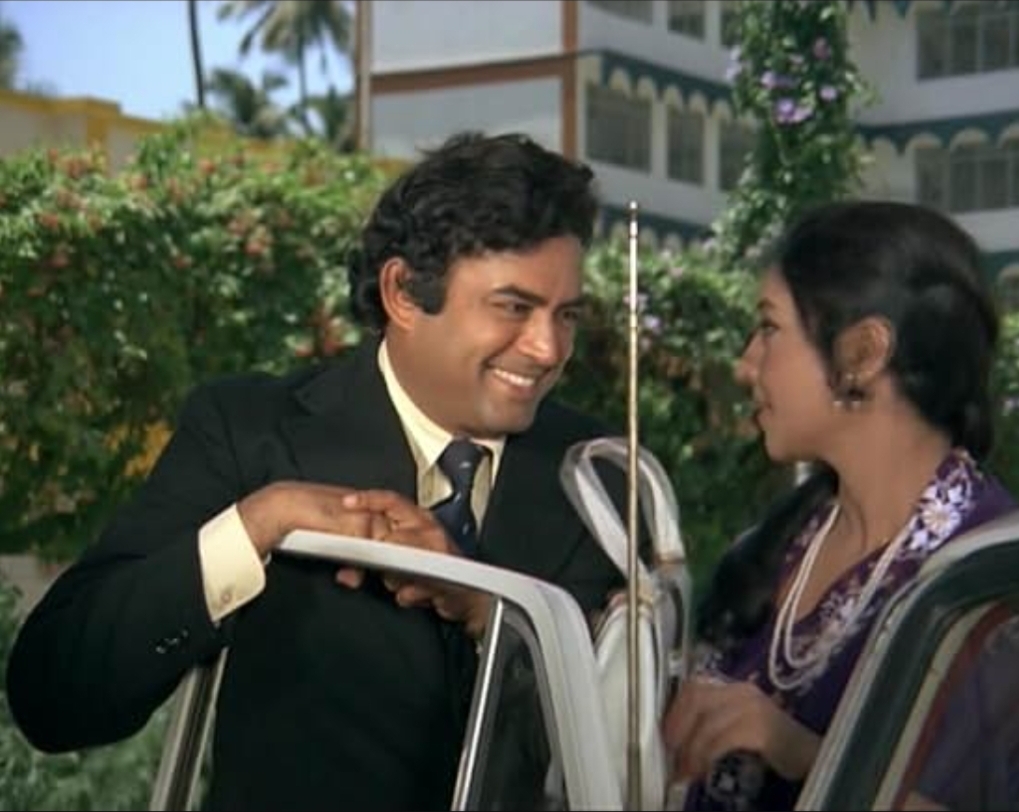
The film was withheld during the Emergency and returned after 1977, so it reached me a little later, just when I was old enough to feel it. Gulzar tells the story of Aarti Devi, a politician played by Suchitra Sen, who meets her estranged husband (Sanjeev Kumar) during an election campaign. Their past and present keep brushing against each other, and the question hangs in the air: can ambition and love live in the same house?
RD Burman’s songs became the soundtrack of my own first heartaches. “Tere bina zindagi se koi shikwa to nahin” is a complaint that is really a confession, and when Lata and Kishore sing “Tum aa gaye ho, noor aa gaya hai”, it feels as if a candle has been lit in a dark room. “Is mod se jaate hain” is the song I played when someone I cared about had gone a different way. I learned from Aandhi that two people can love each other and still not be able to stay together, and that this too can be beautiful.
College Days: Umrao Jaan (1981)
The late seventies and early eighties were my years of friendship, first loves and long walks between halls. Noorie and its Kashmir snow, Chashme Buddoor and its easy laughter, and Nadiya Ke Paar with its village sweetness all belonged to those days. We watched them with the same gang, sharing tickets and arguments, and the songs came home with us: “Aaja re aaja re”, “Kahan se aaye badra”, and “Kaun disa mein leke chala re batohiya”, hummed on cycles and in hostel corridors.
Then there was “Tu is tarah se meri zindagi mein shamil hai”, from ‘Aap To Aise Na Thhey’. Bhupinder’s warm, unhurried voice and Usha Khanna’s gentle tune say what young love cannot say aloud: that another person has quietly become part of your every breath. I still cannot hear it without the years falling away, and for a moment I am twenty again, unsure of my feelings but certain of the song.
We also watched war films like Haqeeqat, and left the hall a little more silent than we entered. When Rafi sang “Kar chale hum fida jaan-o-tan saathiyo”, nobody in the audience moved, and I remember friends wiping their eyes in the dark and pretending they had not.
But it was Umrao Jaan that made me feel suddenly grown up. Muzaffar Ali’s film, based on an Urdu novel, follows a young girl taken from her home and raised as a courtesan in Lucknow, where she becomes the poetess Umrao. Rekha’s performance earned her a National Award, and it is easy to see why: her eyes carry every unspoken sentence.
Khayyam’s music, with Asha Bhosle’s voice in “In aankhon ki masti” and “Dil cheez kya hai”, is the soul of the film. The ghazal “Yeh kya jagah hai doston” still leaves me quiet. In Umrao I saw a woman who was admired by everyone and understood by no one, and I began to see loneliness differently. Perhaps that was when I stopped being a boy.
Working Life: Pretty Woman (1990)
By the time I was thirty, the Dehradun evenings had given way to responsibilities, and films became a rarer treat. Pretty Woman arrived like a warm cup of tea after a long day. Garry Marshall’s romantic comedy brings together Richard Gere as a guarded businessman and Julia Roberts as the big-hearted Vivian, with Hector Elizondo stealing scenes as a kindly hotel manager.
It is a Cinderella story, and I have never pretended otherwise. But Roberts’ laugh and the music, especially Roy Orbison’s title song and Roxette’s “It Must Have Been Love”, reminded me that a serious heart needs tenderness too. Sometimes, after a hard day, I put on that song and let myself believe that kindness can still change a life. It is the film I turn to when life feels heavy.
In My Thirties: Schindler’s List (1993)
Then, at thirty-three, came Schindler’s List, and I understood what a film can do to a grown man. Spielberg shot it largely in black and white, and the effect is unforgettable: Liam Neeson’s Oskar Schindler, a businessman who begins by seeking profit and ends by saving more than a thousand lives, with Ben Kingsley and Ralph Fiennes in unforgettable roles. A small girl in a red coat, the only touch of colour, still breaks my heart whenever I remember her. And John Williams’ violin theme, played by Itzhak Perlman, is a song without words that says what no words could.
In those years I also met the war films that taught me about the cost of courage: The Bridge on the River Kwai, Apocalypse Now, Platoon, and, later, Saving Private Ryan and Border, whose “Sandese aate hain” turned every soldier’s letter into a lump in the throat. But Schindler’s List was different. It did not glorify anyone. It simply asked, in the middle of unimaginable darkness, what one decent person could do.
Watching it, I thought of Garm Hava, and realised that the two films, made oceans apart, were asking the same question about ordinary people caught in the machinery of history.
The Ones Waiting Outside
Five was never going to be enough. Anand taught me to live fully, Sholay taught me friendship, Pakeezah taught me beauty, and Noorie and Nadiya Ke Paar taught me tenderness. They deserve their own evenings, and I have a feeling they will get them.
But these five are the ones that grew with me. A boy in Dehradun, one of thirteen halls, a ticket in hand and the whole of life ahead of him, would be proud of the man who chose them. And whenever an old song drifts in from somewhere, I know that the boy is still sitting in the dark, waiting for the lights to dim.
(The author is an anthropologist and defence and strategic studies expert.)